What does “arigato” mean and where did this word come from
“Arigato” (ありがとう) means “thank you.” Literally — “rarely happens,” from 有り難い (arigatai): what happened is so unusual that it deserves gratitude. The polite form is ありがとうございます (arigatō gozaimasu). “Domo arigato” (どうもありがとう) — “thank you very much.”
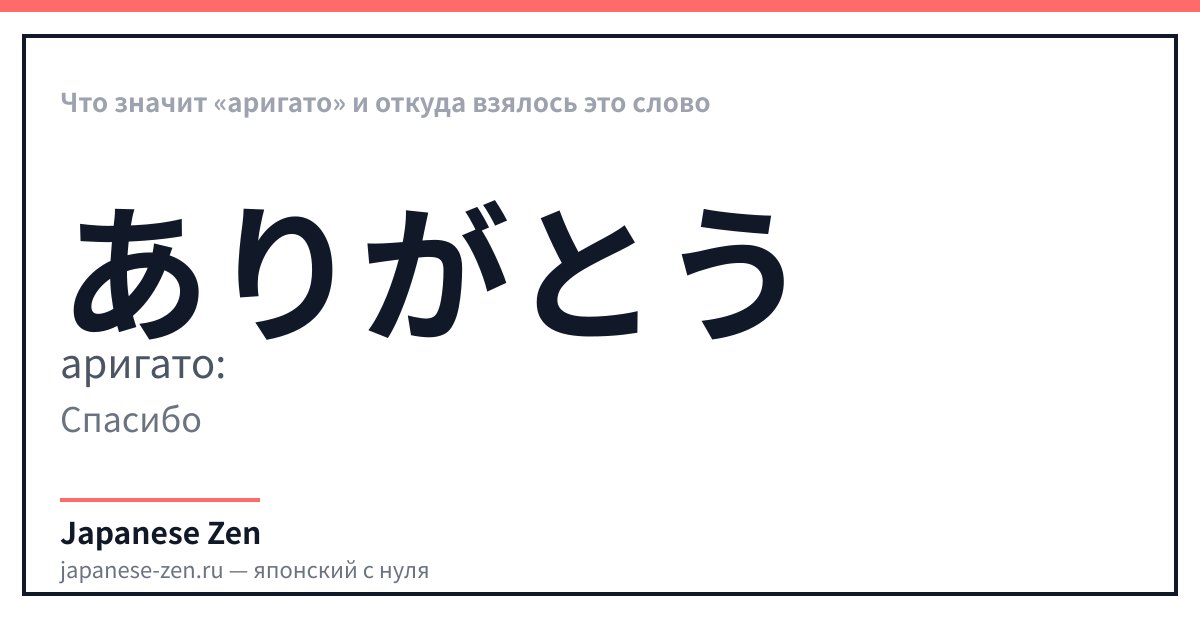
Japanese gratitude grew out of surprise. 有り難い — “hard to be,” that is, “such a thing rarely happens.” By saying “arigato,” a Japanese person literally notes: what you did was not at all obligatory. This is the whole difference from a mechanical “thank you.”
What “arigato” literally means
The word consists of 有る (aru) — “to be, to exist” and 難い (katai) — “difficult.” Together 有り難い (arigatai) — “that which is hard to happen,” a rarity. Over time, the adjective turned into a formula of gratitude, and the kanji spelling 有難う was left aside: today it is written in hiragana.
Forms: from “arigato” to “domo arigato gozaimashita”
| Japanese | Reading | Translation |
|---|---|---|
| ありがとう | arigatō · arigato: | Thank you (to friends and peers) |
| ありがとうございます | arigatō gozaimasu · arigato: gozaimasu | Thank you (polite) |
| どうもありがとうございます | dōmo arigatō gozaimasu · do:mo arigato: gozaimasu | Thank you very much |
| ありがとうございました | arigatō gozaimashita · arigato: gozaimashita | Thank you (for something already done) (past tense: the service is completed) |
| どうも | dōmo · do:mo | Thanks (short) |
How “arigato” sounds in anime and in life
- A lone ありがとう from a younger person to an older one sounds careless — the full form with ございます is needed.
- The past tense ございました is used when the service is already completed: a shopkeeper says it to you as you leave.
- “Domo” by itself is a short “thanks” on the go, but with a boss it’s better not to say goodbye like that.
- In anime you often hear ありがとね (arigato ne) — a soft friendly “thanks” with the particle ね.
Is it true that “arigato” came from the Portuguese obrigado?
No, that’s a popular urban legend: the words sound similar by chance. 有り難い appears in Japanese texts long before the arrival of Portuguese missionaries in the 16th century.
Say “arigato” out loud
A long “o” at the end: “arigato:”, not “arigato”.
FAQ
- What does “arigato” mean?
- “Thank you.” Literally — “rarely happens”: from 有り難い (arigatai), meaning what you did was not something taken for granted.
- How is “arigato” different from “arigato gozaimasu”?
- ございます adds politeness. The short ありがとう is for your own people, the full ありがとうございます is for elders, colleagues, strangers, and in service.
- What does “domo arigato” mean?
- どうも intensifies: “thank you very much.” By itself, どうも is a short “thanks,” appropriate among friends and in quick situations.
- Is it true that the word came from Portuguese?
- No. The coincidence with obrigado is accidental: 有り難い appears in Japanese sources long before contact with the Portuguese.
Updated: 2026-07-25