Japanese Phrases with Transcription: 15 Basic Expressions
Basic Japanese phrases with Russian-letter transcription: こんにちは (konnichiwa) 'hello', ありがとう (arigatō) 'thank you', すみません (sumimasen) 'excuse me', はい (hai) 'yes', いいえ (iie) 'no', わかりません (wakarimasen) 'I don't understand'. A colon in the transcription indicates a long vowel.
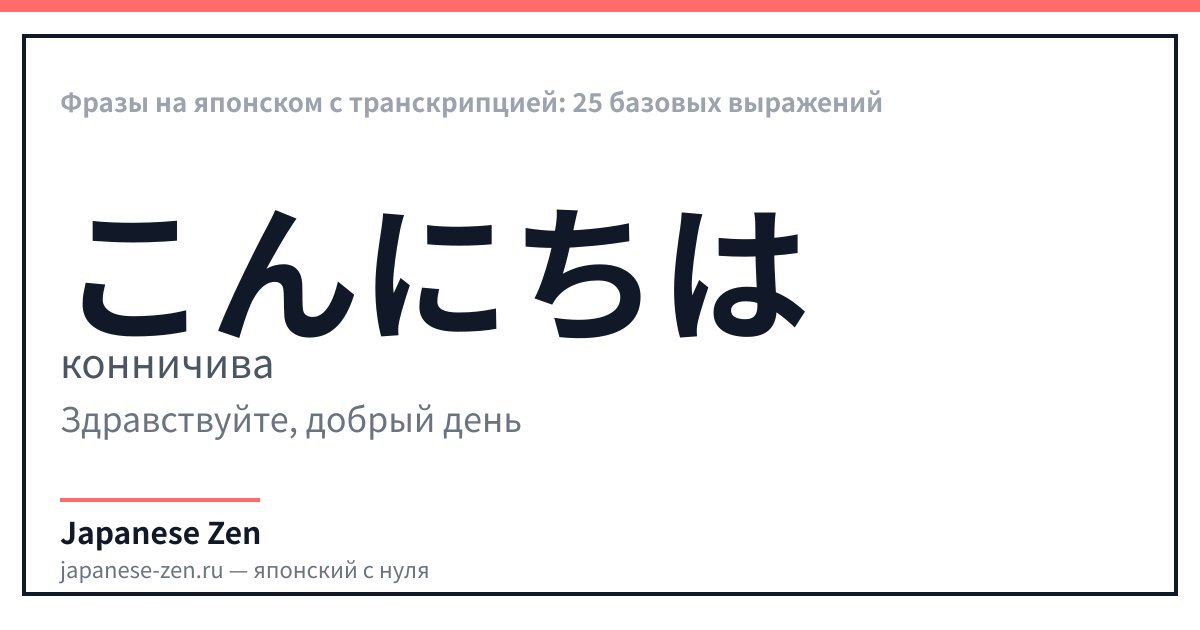
Fifteen phrases are enough to not get lost: greet, thank, apologize, ask, and admit that you didn't understand. The last one is the most useful phrase of all: 分かりません honestly ends a conversation that would otherwise reach a dead end.
Most Needed Phrases
| Japanese | Reading | Translation |
|---|---|---|
| こんにちは | konnichiwa · konnichiwa | Hello, good afternoon |
| ありがとうございます | arigatō gozaimasu · arigatō gozaimasu | Thank you |
| すみません | sumimasen · sumimasen | Excuse me; may I? |
| はい | hai · hai | Yes |
| いいえ | iie · iie | No |
| お願いします | onegai shimasu · onegai shimasu | Please, I ask of you |
| はじめまして | hajimemashite · hajimemashite | Nice to meet you |
What the colon in the transcription means
Vowel length. 'Arigatō' — the 'o' at the end is drawn out twice as long as usual, and this is not decoration: length distinguishes words. 叔父さん (ojisan) is uncle, 御爺さん (ojīsan) is grandfather. The only difference is the length of the sound.
Phrases That Save You
| Japanese | Reading | Translation |
|---|---|---|
| 分かりません | wakarimasen · wakarimasen | I don't understand |
| 日本語が分かりません | nihongo ga wakarimasen · nihongo ga wakarimasen | I don't understand Japanese |
| 英語が話せますか | eigo ga hanasemasu ka · eigo ga hanasemasu ka | Do you speak English? |
| もう一度お願いします | mō ichido onegai shimasu · mō ichido onegai shimasu | Please repeat that |
| ゆっくり話してください | yukkuri hanashite kudasai · yukkuri hanashite kudasai | Please speak more slowly |
| これはいくらですか | kore wa ikura desu ka · kore wa ikura desu ka | How much is this? |
| トイレはどこですか | toire wa doko desu ka · toire wa doko desu ka | Where is the toilet? |
| 大丈夫です | daijōbu desu · daijōbu desu | It's fine; no thank you |
Why Russian-letter transcription is only a crutch
Russian letters convey Japanese sounds approximately: 'si' is actually softer, 'e' after consonants is slightly different, and 'u' at the end of words almost disappears — 'des', not 'desu'. Transcription helps you start speaking, but your ear must be trained with audio.
Say the Phrases Aloud
Say the phrase into the microphone — check vowel lengths and the reduction of final "u".
FAQ
- What basic Japanese phrases should I know?
- Greeting こんにちは, gratitude ありがとうございます, apology すみません, 'yes/no' はい/いいえ, 'I don't understand' 分かりません, and request お願いします.
- What does the colon in the transcription mean?
- A long vowel: 'arigatō' — the 'o' is drawn out twice as long. Length is meaningful, so it is marked separately.
- Can I learn Japanese using Russian transcription?
- As a crutch at the start — yes. But Russian letters convey sounds approximately, so pronunciation should be learned from audio, not from writing.
- Which phrase is most useful when traveling?
- 日本語が分かりません — 'I don't understand Japanese'. It immediately switches the conversation to a mode both sides understand and avoids awkwardness.
Updated: 2026-07-25