Japanese Kanji for Happiness: 幸 — How to Write and Read
The Japanese kanji for happiness is 幸, 8 strokes, N4 level. On'yomi is コウ (kō), kun'yomi are さいわ.い (saiwai), さち (sachi), しあわ.せ (shiawase). As a standalone word, 'happiness' is written 幸せ (shiawase) or 幸福 (kōfuku). The second character with the same meaning is 福 (fuku), 'well-being'.
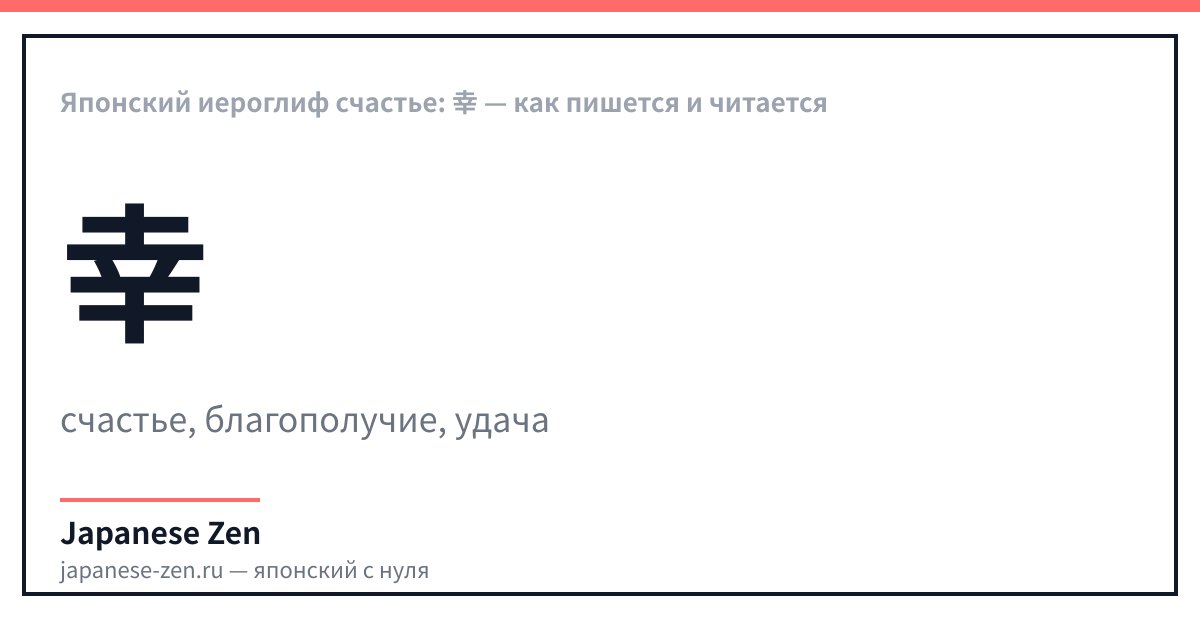
幸 — eight strokes that form a neat grid, with no hint of joy. Originally, the character depicted shackles: happiness was considered avoiding punishment. Over three thousand years, the meaning flipped, but the form remained — happiness in Japanese is still a bit about 'it turned out fine'.
How to Write the Japanese Kanji for Happiness
幸 — значение: happiness, well-being, good fortune — онъёми: コウ — кунъёми: さいわ.い、さち、しあわ.せ — 8 штрих(ов). N4 level, 8 strokes. Click 'Show order' — strokes will appear in handwriting order.
Three Readings of One Character
幸 is a rare case where a kanji has three living kun'yomi. しあわせ (shiawase) — happiness as a state, さいわい (saiwai) — happiness as 'fortunately, lucky', さち (sachi) — bookish and often a female name. The on'yomi コウ works in compound words: 幸福, 幸運, 不幸.
Words with the Character 幸
| Japanese | Reading | Translation |
|---|---|---|
| 幸せ | shiawase · shiawase | Happiness; happy (the most common 'happiness' in speech) |
| 幸福 | kōfuku · kōfuku | Happiness, well-being (more bookish and solemn than 幸せ) |
| 幸い | saiwai · saiwai | Fortunately; well-being |
| 幸 | sachi · sachi | Happiness, blessings (of the sea, mountains) (海の幸 — 'blessings of the sea'; also a female name Sachi) |
| 幸運 | kōun · kōun | Luck, fortunate turn of events |
| 不幸 | fukō · fukō | Misfortune, grief (the same character with the negation 不) |
幸 or 福 — What's the Difference
幸 is about an inner state: a person feels good. 福 (fuku) is about external abundance: a full cup, prosperity, a gift from above. That's why New Year's amulets and cat figurines bear 福, while words about personal happiness use 幸.
The Happiness Symbol for Tattoos and Inscriptions
- A standalone 幸 reads as 'happiness' and looks appropriate — it's not slang or a word fragment.
- 'To be happy' is 幸せ, with the hiragana せ at the end. Without it, it's a root, not a word.
- If you want the theme of prosperity and luck, it's more honest to take 福 or 幸運.
- Stroke order matters visually: horizontal lines go from top to bottom, the long vertical is second to last.
Write 幸 Yourself
Trace 幸 along the guides: eight strokes, and everything rests on the central vertical.
FAQ
- Are 幸 and 福 both 'happiness'?
- 幸 — 8 strokes, N4 level. As a word 'happiness', use 幸せ (shiawase) or 幸福 (kōfuku). The character 福 (fuku) is also translated as happiness, but it's closer to 'well-being'.
- How is the kanji 幸 read?
- On'yomi is コウ (kō): 幸福, 幸運. There are three kun'yomi: しあわ.せ (shiawase), さいわ.い (saiwai), さち (sachi). The reading is chosen by the word, not by preference.
- How do you say 'I am happy' in Japanese?
- 幸せです (shiawase desu) — 'I am happy'. In conversation, often just 幸せ with the right intonation; the pronoun is not needed.
- How is 幸せ different from 幸運?
- 幸せ is a state of happiness, long-lasting. 幸運 is luck, specific good fortune in an event. You can be 幸せ without any 幸運 and vice versa.
- Is it true that 幸 is a name?
- Yes, in the reading さち (Sachi) it is a common female name, and also part of names like 幸子 (Sachiko) and 幸雄 (Yukio). Therefore, a Japanese person might read the standalone character as a name too.
Updated: 2026-07-25