Compliments in Japanese: What Is Appropriate to Say
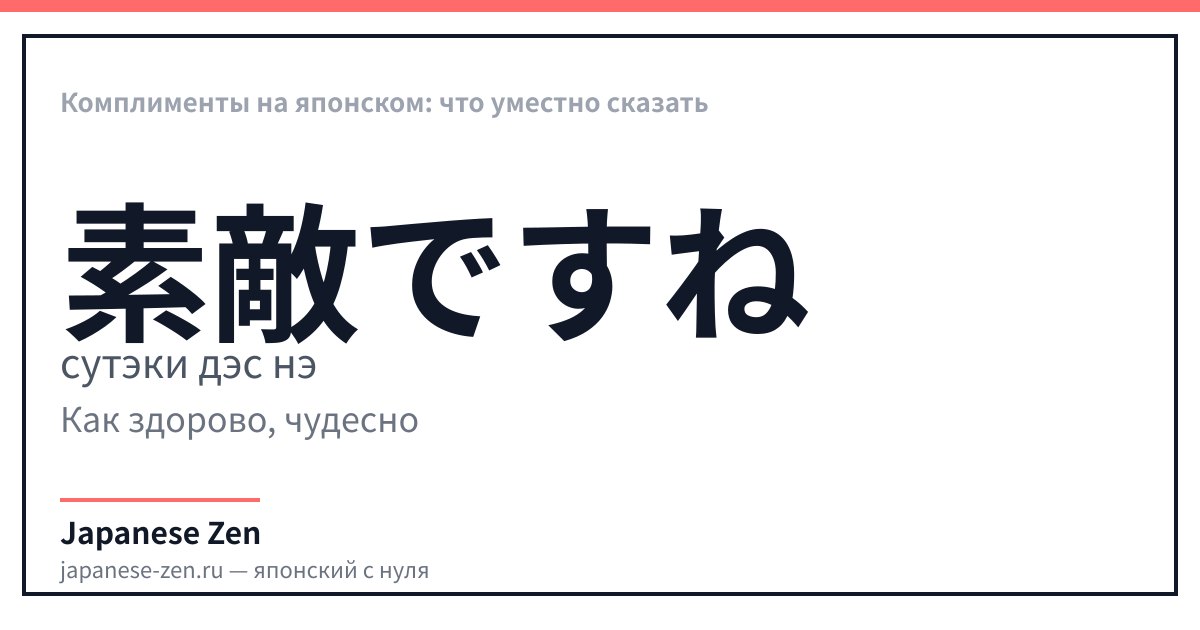
Compliments in Japanese are more restrained than in Russian: instead of praising appearance, people often praise choices, taste, and work — 素敵ですね (“how nice”), お似合いです (“it suits you”), 上手ですね (“you are good at it”). Direct 綺麗ですね (“you are beautiful”) is appropriate between close people, but from a stranger it sounds intrusive.
Praise in Japanese is about respect for effort, not admiration of appearance. Let's look at phrases that sound natural and how to respond to them.
Compliments That Sound Natural
| Japanese | Reading | Translation |
|---|---|---|
| 素敵ですね | suteki desu ne · suteki desu ne | How nice, wonderful |
| お似合いです | oniai desu · oniai desu | It suits you very well |
| 上手ですね | jōzu desu ne · jōzu desu ne | You are good at it |
| 優しいですね | yasashii desu ne · yasashii desu ne | You are a kind person |
| センスがいいですね | sensu ga ii desu ne · sensu ga ii desu ne | You have great taste |
| 綺麗ですね | kirei desu ne · kirei desu ne | Beautiful; you are beautiful (careful: about appearance — only to close people) |
Why They Praise Choice, Not Appearance
Praising a thing, taste, or skill means acknowledging a person's decision, not their attributes. This is more respectful and doesn't put the interlocutor in an awkward position. Therefore 「そのバッグ素敵ですね」 (“what a nice bag”) sounds warmer in Japan than a compliment on appearance.
How to Respond to a Compliment
A direct “thank you” in response to praise is used less often by Japanese people: it is customary to modestly deflect, showing humility. This is not coquetry, but a norm of politeness.
| Japanese | Reading | Translation |
|---|---|---|
| いえいえ | ie ie · ie ie | Oh no, not at all |
| そんなことないです | sonna koto nai desu · sonna koto nai desu | Not at all, you exaggerate |
| ありがとうございます | arigatō gozaimasu · arigatō gozaimasu | Thank you very much (appropriate if the work was praised) |
| 恐縮です | kyōshuku desu · kyōshuku desu | I feel awkward from such praise (business register) |
One Compliment Better Not to Make
「日本語上手ですね」 (“you speak Japanese well”) is said to foreigners so often that the phrase has become a meme: it emphasizes that you are an outsider. When you hear it, respond まだまだです (“I still have a lot to learn”) — it is both modest and appropriate.
FAQ
- What compliments are appropriate in Japan?
- 素敵ですね (how nice), お似合いです (it suits you), 上手ですね (you are good at it), センスがいいですね (great taste).
- Can you compliment appearance?
- Between close people — yes. From a stranger, a compliment on appearance sounds intrusive: they more often praise taste and choice.
- How to respond to a compliment in Japanese?
- It is customary to modestly deflect: いえいえ or そんなことないです. For praise of work, you can thank directly.
- What to answer to “you speak Japanese well”?
- まだまだです — “I still have a lot to learn.” A modest answer here is more appropriate than gratitude.
Updated: 2026-07-25