Tea Ceremony — What This Tradition Is and How It Goes
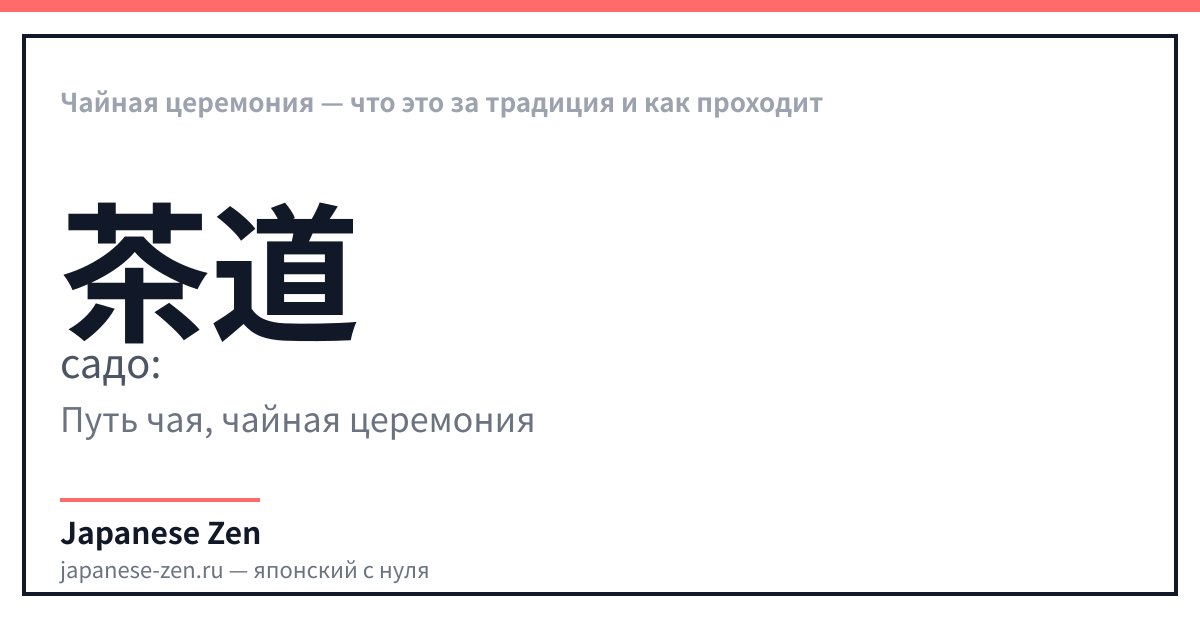
The tea ceremony (茶道, 'way of tea') is not a tea party, but a precise sequence of movements: the guest enters through a low door, admires a scroll in the alcove, the host whisks powdered matcha tea with a bamboo whisk in front of everyone and serves the bowl with a specific side facing the guest. The meaning is not in the drink, but in attention to a moment that will never happen twice.
From the outside, it looks like a slow ritual of politeness. In fact, every movement of the host is rehearsed for years and is subordinated to one principle: the guest matters more than oneself at this moment.
What Is a Tea Ceremony and When Is It Held
The tea ceremony is a formalized ritual of preparing and serving powdered matcha tea in a tea room (chashitsu) or a separate pavilion. The host thinks through everything in advance: from the scroll in the tokonoma alcove to the shape of the sweet served before the tea — and all of this is adapted to the season and occasion, not repeated according to a template.
- When: on occasion — from a private reception to seasonal events of chado schools, no special date is required.
- Who: the host who prepares the tea, and one or more guests, one of whom is the main guest, shokyaku.
- Where: a tea room (chashitsu) with tatami and a low entrance (nijiriguchi), or a tea pavilion in the garden.
- What is served: a wagashi sweet before thick or thin tea — the sweet softens the bitterness of matcha.
From Zen Monks to Sen no Rikyu
Powdered tea came from China along with Zen Buddhism in the 12th century, and the actual Japanese ritual was formalized by masters of the 15th–16th centuries — Sen no Rikyu played a key role, establishing the principle wa-kei-sei-jaku: harmony, respect, purity, tranquility. Since then, the form has hardly changed, although several schools (ryu) have developed, and the details of movements differ among them.
How It Goes Step by Step
- Guests pass through the roji garden, symbolically leaving worldly concerns at the entrance.
- They enter the tea room through the low door nijiriguchi — everyone, including noble guests, must bow when entering.
- They examine the scroll and flower arrangement in the tokonoma alcove — this is the theme of the gathering set by the host.
- The host cleans the utensils in front of the guests with strictly defined movements — this is part of the ritual, not behind-the-scenes preparation.
- He whisks matcha with a bamboo whisk (chasen) until frothy and serves the bowl with a specific side, with the pattern facing the guest.
- The guest turns the bowl so as not to drink from the pattern, takes a few sips, and passes the bowl on or returns it.
What Annoys the Host
- Rushing the host or commenting on the process — the ceremony proceeds at its own pace, conversations are kept to a minimum.
- Entering the tea room in street shoes or with strong perfume that overpowers the smell of tea.
- Drinking from the side of the bowl with the pattern — the side is specially turned toward the guest as a sign of respect.
- Leaving immediately after tea: it is customary to stay for a while and thank the host for choosing the theme of the gathering.
Words and Characters: 茶道
| Japanese | Reading | Translation |
|---|---|---|
| 茶道 | sadō · sadō | Way of tea, tea ceremony |
| お茶 | ocha · ocha | Tea |
| 抹茶 | matcha · matcha | Powdered tea for the ceremony |
| 茶碗 | chawan · chawan | Tea bowl |
| 一期一会 | ichigo ichie · ichigo ichie | Once in a lifetime, one encounter (motto of the tea ceremony) |
茶道 — Way of Tea
茶道 consists of two characters: 茶 'tea' and 道 'way, path, life's work' — the same character as in 剣道 'way of the sword' or 柔道 'way of softness', judo. The suffix 道 turns a craft into a discipline of self-improvement that is studied for decades.
茶 — значение: tea — онъёми: チャ、サ — 9 штрих(ов). 茶 — 'tea': at the top is the grass radical 艹, indicating a plant. The same character appears in 茶色 'chairo', brown color, literally 'tea color'.
Listen to the words ocha and matcha, repeat them — the app will evaluate your pronunciation.
Tea Ceremony in Anime
A tea ceremony scene is often inserted as a pause — a moment when the plot slows down and characters speak without words.
- Whisking matcha with a bamboo whisk in close-up — a detail that artists love to show slowly.
- Turning the bowl before drinking — a small gesture that in the frame reads as respect for the host.
- A room with tatami and a tokonoma alcove with a scroll — a background by which the scene is instantly recognized.
- A strict teacher correcting a student's movements — a common way to show the long-term discipline of a chado school.
What Movies Almost Never Show
Adaptations rarely show how many years it takes to master the basic movements: preparing utensils, folding the fukusa cloth, the order of steps — all of this is learned over years, not mastered in one visit, as it is usually filmed.
FAQ
- Why can't the tea ceremony be called simply a tea party?
- Because the essence is not in the drink: it is a rehearsed sequence of the host's movements aimed at attention to the moment — from the guest's entrance through the low door to turning the bowl with the pattern toward him.
- What is a tea ceremony?
- A formalized ritual of preparing and serving powdered matcha tea in a tea room. The host thinks through the scroll, sweet, and utensils in advance, tailored to the season and the occasion of the meeting with the guest.
- When is a tea ceremony held?
- On occasion — no special date is required: from a private reception to seasonal events of chado schools. Many conduct it as a regular practice rather than a one-time event.
- How does a tea ceremony go?
- Guests pass through the garden, enter through a low door, and examine the scroll in the alcove. The host whisks matcha with a bamboo whisk in front of everyone and serves the bowl with the pattern facing the guest.
- How do you write 'tea ceremony' in Japanese?
- 茶道 (sadō), literally 'way of tea': 茶 'tea' plus 道 'way, discipline'. The same suffix 道 appears in 剣道 'way of the sword' and 柔道 'way of softness', judo.
- Can a tourist attend a ceremony?
- Yes, many cities offer short introductory sessions for guests without prior training. The host will explain the basic gestures in advance, and the strict etiquette of the full ceremony does not need to be followed literally there.
Sources
Updated: 2026-08-24