Types of Kimono — What They Are and When to Wear Them
Types of kimono differ not by fabric but by occasion and the wearer's status: the word 着物 covers both a wedding outfit and a light yukata for a festival. In everyday use, there are eight recognizable types — from the formal tomesode to the short haori — and each has its place in the calendar and wardrobe.
Kimono is not a single outfit but a system of signs: sleeve length and the way the obi is tied convey status before a person even says hello.
What Types of Kimono Are There
| Type | Kanji | Occasion | Who Wears It |
|---|---|---|---|
| Kimono (general) | 着物 | Any formal occasion | Women and men |
| Furisode | 振袖 | Coming-of-age, wedding guest | Unmarried women |
| Tomesode | 留袖 | Wedding, short sleeves | Married women |
| Homongi | 訪問着 | Tea ceremony, visits | Women |
| Yukata | 浴衣 | Summer festivals, onsen | Everyone |
| Haori | 羽織 | Jacket over kimono | Men and women |
| Hakama | 袴 | Graduation, kendo | Men and women |
| Tabi | 足袋 | Socks for geta and zori | Everyone |
Sleeve, Pattern, and Occasion
Kimono are distinguished by three features at once: sleeve length, density of the pattern along the hem, and the occasion for which they were made. Wedding and everyday versions are confused only in photographs — in person, it's the sleeve and the density of the design that reveal formality, not the color of the fabric.
Where to Start
- 着物 — the basic word: without it, you can't understand the other names in this list.
- Yukata — the most accessible entry point: cotton, minimal layers, sold to tourists at the park entrance.
- Haori — the easiest to add to regular clothes: a short jacket without a mandatory obi.
- Furisode — the most recognizable in photos: long sleeves almost to the floor are visible from afar.
- Tabi — the only type worn every day, even without the rest of the outfit.
What Not to Start With
Furisode and tomesode are not bought to understand the topic: they are outfits for a single event, expensive and requiring help to put on. For an introduction, a yukata or a haori over regular clothes is enough — both can be put on without help.
Kanji on Labels and in Names
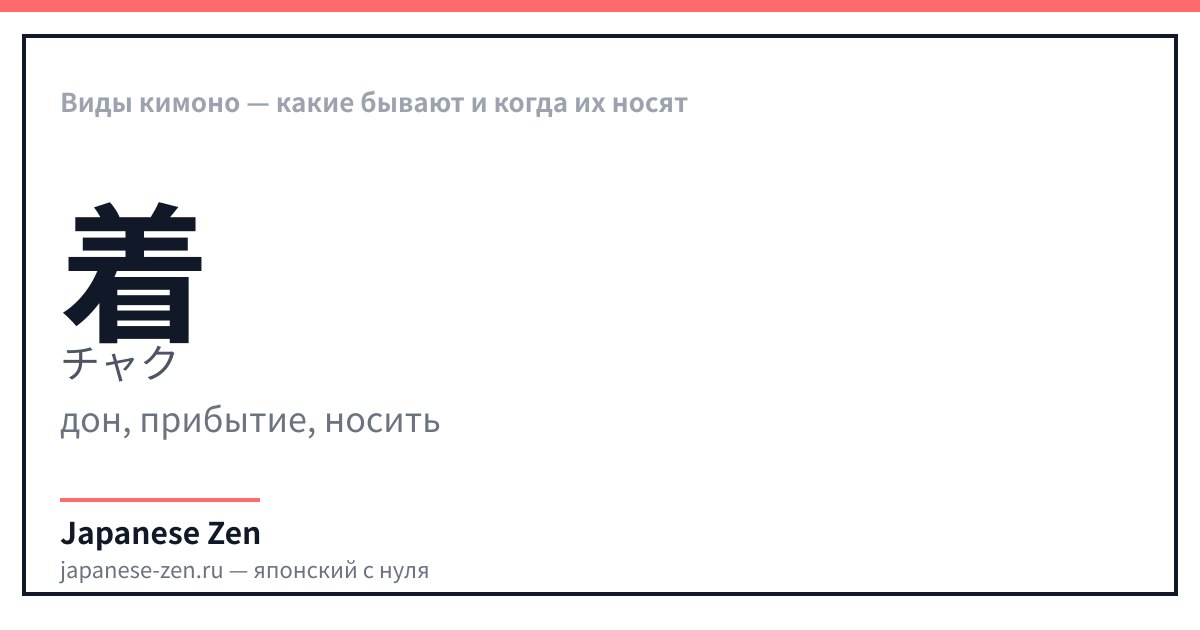
着 — значение: don, arrival, to wear — онъёми: チャク、ジャク — кунъёми: き.る、き.せる、つ.く、つ.ける — 12 штрих(ов). 着 — “to wear, to arrive”: the main character in the clothing section. It also appears in 着る “to wear” and 到着 “arrival” — both a thing and a person “settle” into place.
| Japanese | Reading | Translation |
|---|---|---|
| 着物 | kimono · kimono | Kimono, “thing to wear” |
| 着る | kiru · kiru | To wear (clothing over the head) |
| 帯 | obi · obi | Kimono sash |
| 浴衣 | yukata · yukata | Summer cotton kimono |
| 羽織 | haori · haori | Short jacket |
| 袴 | hakama · hakama | Wide trousers worn over kimono |
着 Has Two Readings
着 has two readings, and you can't guess in advance: in 着物 it's “ki”, in 到着 it's “chaku”. The kun'yomi and on'yomi under the character on the card help you remember both at once, not just the first one you encounter.
Practice the stroke order of 着 in the trainer — you'll also see both readings.
Where to See This in Anime
Kimono on screen is a clue about a character that can be read even without knowing Japanese.
- “Demon Slayer” — each character has their own haori pattern, serving as a calling card.
- “Chihayafuru” — at karuta tournaments, players wear kimono; it's part of the competition rules.
- “Spirited Away” — bathhouse workers in yukata-like uniforms, and Yubaba in formal kimono.
- NHK historical dramas (“taiga”) — a single kimono reveals a character's status: color, sleeve length, fabric quality.
How to Distinguish Status by Clothing
The rule is simple: the brighter the pattern and the longer the sleeves, the younger and freer the wearer's status. Married and elderly characters wear subdued tones and short sleeves — this works both in anime and in reality.
FAQ
- How many types of kimono are there?
- There is no strict list, but in everyday use about eight recognizable types are distinguished: from formal furisode and tomesode to casual yukata and haori jackets. Each is tied to its own occasion and the wearer's status.
- What is the most famous type of kimono?
- Furisode — with long, almost floor-length sleeves, it's the most often shown in movies and on postcards. It's a festive outfit for unmarried women, the most recognizable silhouette of all.
- How is this related to the Japanese language?
- 着物 literally means “thing to wear”: 着る — “to wear”, 物 — “thing”. Breaking down the word also gives you two basic kanji that appear in hundreds of other words.
- Where should I start?
- With yukata or haori — both can be put on without help and don't require an expensive wardrobe. Save furisode and tomesode for later: they are outfits for a single event.
- Where is this seen in anime?
- Most often in historical series and at karuta tournaments: “Chihayafuru”, “Demon Slayer”, NHK dramas. There, the cut and color of the kimono are read as part of the character's description.
Sources
Updated: 2026-08-24