How is a yukata different from a kimono
Kimono and yukata differ in fabric and occasion, not just in name: yukata (浴衣) is a summer cotton kimono worn directly on the body, without underwear or a stiff obi. Kimono (着物) is made of silk, worn over a juban, and fastened with a stiff obi. The difference is visible immediately: yukata is simpler and lighter.
From the outside, both are robes with a wrap front and a belt. The difference begins where the eye stops: under the fabric and in the occasion for which it is worn.
Kimono or yukata: in short
The difference in two words: yukata is a summer cotton robe worn directly on the body, kimono is a formal silk outfit with an underlayer and a stiff belt. A yukata is easy to put on by yourself, while a kimono is almost always assembled by someone else.
| Feature | Kimono | Yukata |
|---|---|---|
| Fabric | Silk, brocade | Cotton or linen |
| Underlayer | Juban required | Worn on bare body |
| Belt | Stiff obi, complex knot | Soft han-obi, simpler knot |
| Season | All year round, by occasion | Summer only |
| Occasion | Weddings, ceremonies | Festivals, onsen, walks |
Cotton vs. silk
Cotton and lightness are about yukata, silk and layers are about kimono. If an outfit can be put on in five minutes without help and without regard to the season, it is not a kimono.
Fabric, layers, season
- Fabric: yukata is cotton or linen, kimono is silk, brocade, or a dense blend for casual versions.
- Layers: under a kimono there is always a juban — an under-kimono with a collar; a yukata is worn directly on the body.
- Belt: kimono has a stiff obi about a hand's width with a complex knot at the back; yukata has a softer han-obi that is simpler.
- Season and occasion: yukata is only for summer and informal events; kimono is worn all year for specific occasions, from weddings to funerals.
T-silhouette and left-over-right wrap
Both have a straight T-silhouette, the left side wrapped over the right, and no buttons or zippers. Formally, a yukata is also a kimono: it is its light summer subtype, not a separate type of clothing.
What they are called in Japanese: 着物
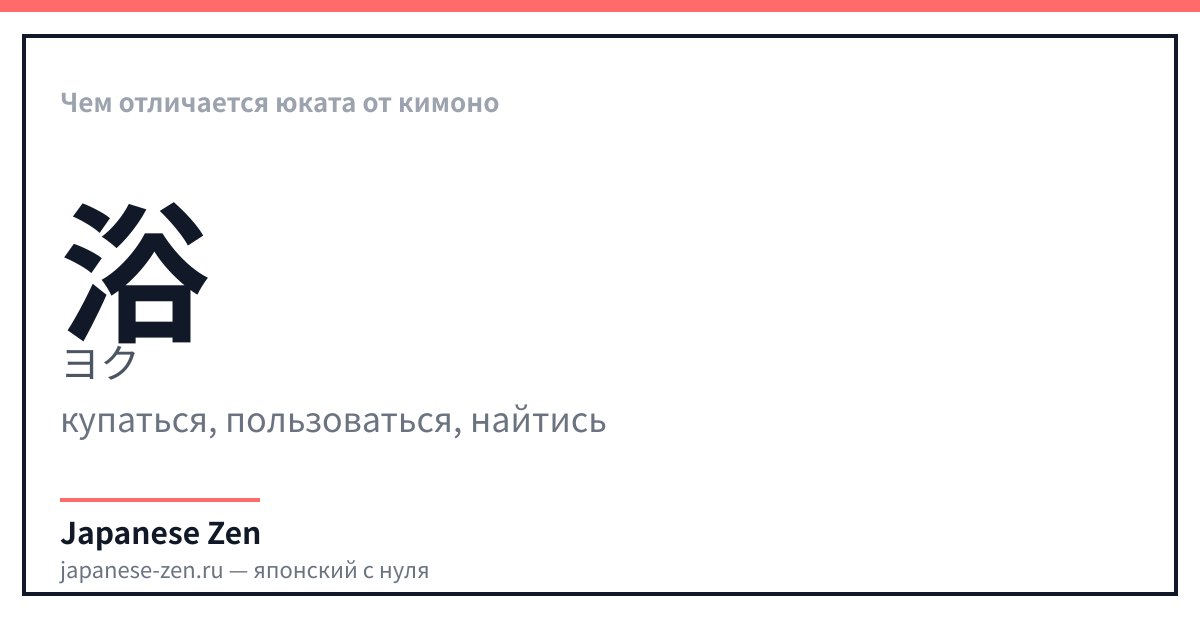
浴 — значение: to bathe, to use, to be found — онъёми: ヨク — кунъёми: あ.びる、あ.びせる — 10 штрих(ов). 浴 — 'to bathe, to pour water over oneself': paired with 衣 'clothing' it gives 浴衣 — 'clothing after bathing'. In the past, yukata was indeed worn after a bath; the same character appears in 浴室 'bathroom'.
| Japanese | Reading | Translation |
|---|---|---|
| 着物 | kimono · kimono | Kimono |
| 浴衣 | yukata · yukata | Yukata |
| 帯 | obi · obi | Belt |
| 正装 | seisou · seisou | Formal wear |
| 普段着 | fudangi · fudangi | Casual clothes |
Where the word 'yukata' comes from
浴衣 literally means 'clothing after bathing': nowadays it is worn for any summer outing, not just after a bath. 着物 from the previous section is broader in meaning and includes yukata itself as one of its types.
Practice the stroke order of the character 浴 in the trainer — the first character of the word 浴衣.
How to spot a yukata on screen
- In anime, a yukata is recognized by the festival background: stalls, fireworks, wooden geta on bare feet.
- A kimono on screen is more often tied to home or ceremony: receiving guests, tea ceremony, graduation with hakama.
- In 'Demon Slayer', the characters wear everyday clothes from the Taisho era: work haori over simple kosode, not formal kimono.
- A summer festival episode in almost every school anime is a reliable marker of a yukata.
Can you call a yukata a summer kimono?
A yukata is sometimes called a 'summer kimono', and that is not a mistake — just do not confuse it with formal attire. You do not wear a yukata to a wedding, just as you do not wear a kimono to a festival in the heat.
FAQ
- What is the difference between a yukata and a kimono?
- A yukata is a light cotton robe worn directly on the body, only for summer; a kimono is a formal silk outfit with an underlayer for any season. The kimono's obi is stiffer and tied more complexly.
- What is a yukata in Japan?
- A summer type of kimono made of cotton, worn directly on the body without a juban undergarment. It is worn to festivals, ryokan, and onsen — it is casual, not formal clothing.
- Kimono and yukata: what is the difference?
- The difference is read in a second from the fabric and footwear: dense silk and an obi-jime indicate a kimono; light cotton and wooden geta on bare feet indicate a yukata. Their formality also differs.
- Kimono and yukata: what differs first and foremost?
- In the layers: a kimono requires an under-juban and a stiff obi, while a yukata has nothing underneath except underwear and a softer, simpler belt. Hence the difference in season and occasion.
- What do they have in common?
- A straight T-silhouette without darts, a left-over-right wrap, and a common ancestor: historically, the yukata is a light summer subtype of the kimono, not a separate item.
- What do 着物 and 浴衣 mean?
- 着物 (kimono) is read 'kimono' and means 'thing to wear' — it is a general word for the whole outfit. 浴衣 (yukata) is read 'yukata' and means 'clothing after bathing' — specifically the summer cotton version for hot weather.
Sources
Updated: 2026-08-24