What does “bushido” mean in Japanese
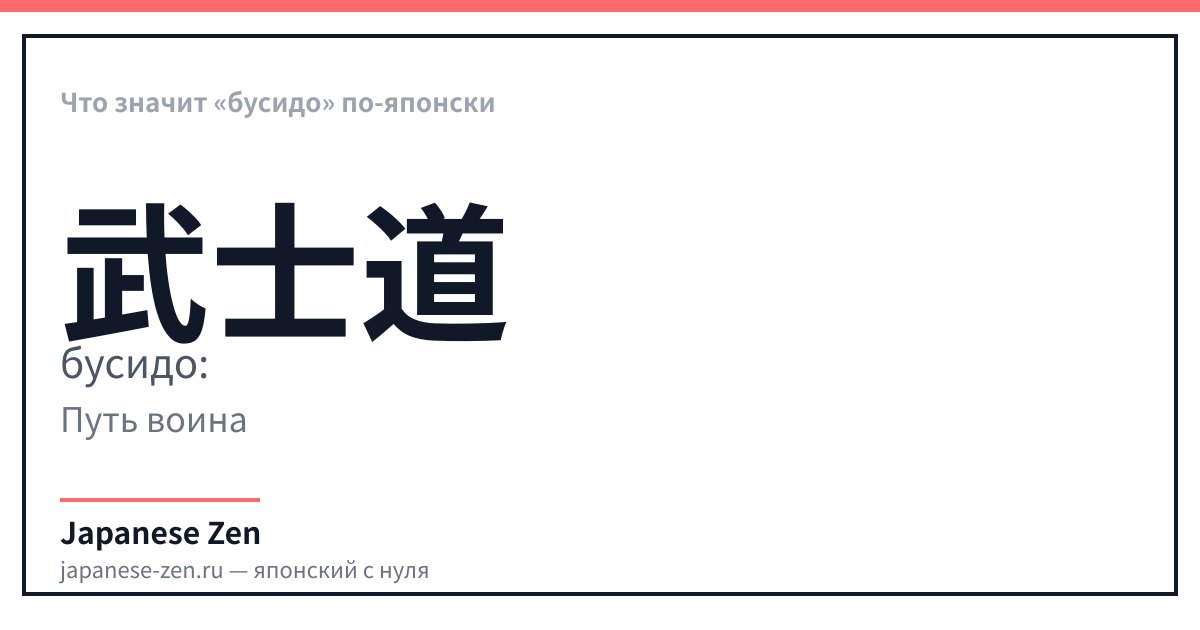
“Bushido” (武士道) means “the way of the warrior”: 武士 — samurai, 道 — way. It is not a set of rules like a knight's code: a single text of bushido never existed, and the term itself became widely known only in 1900 thanks to Nitobe Inazō's book, written in English for a Western audience.
Bushido is often spoken of as an ancient code with paragraphs, although it is more a set of ideas assembled retroactively. Let's examine what stood behind the word and what was invented later.
What the word means and what lies behind it
| Japanese | Reading | Translation |
|---|---|---|
| 武士道 | bushidou · bushidō: | The way of the warrior |
| 武士 | bushi · bushi | Warrior, samurai |
| 侍 | samurai · samurai | Samurai (literally “one who serves”) |
| 義 | gi · gi | Duty, justice |
| 忠 | chuu · chū: | Loyalty to one's lord |
| 名誉 | meiyo · meiyo | Honor, good name |
Why there was no single code
The rules of warrior conduct were formed from the household precepts of individual clans, Buddhist and Confucian ideas, and the practice of service. No single text was obligatory for all, and the content changed from era to era: a fighting samurai of the 15th century and an official of samurai rank in the 18th lived by different standards.
Where the modern image came from
侍 — значение: samurai, to serve — онъёми: ジ、シ — кунъёми: さむらい、はべ.る — 8 штрих(ов). 侍 — “person” 亻 next to “service” 寺. The word literally means “one who serves.”
- “Bushido: The Soul of Japan” by Nitobe Inazō (1900) was written in English and explained Japan to the West — that's where the image of a knightly code came from.
- “Hagakure” (18th century) is a collection of one samurai's reflections, not a set of laws, although it is quoted as a code.
- The seven virtues (義, 勇, 仁, 礼, 誠, 名誉, 忠義) are a later systematization, convenient for retelling.
- In 20th-century militarist propaganda, bushido was reinterpreted as a readiness to die for the state.
- What not to do: do not consider “Hagakure” and samurai films as historical sources — they are literature of their time.
How the word lives today
In modern Japanese, 武士道 sounds bookish and slightly pompous. It is more often encountered in conversations about sports and work as a metaphor for dedication to a cause, rather than as a reference to samurai. In everyday speech, you will hardly hear it.
FAQ
- What does “bushido” mean?
- 武士道 — “the way of the warrior”: 武士 (samurai) plus 道 (way). A set of ideas about duty and honor, not a single code.
- Did the bushido code exist?
- There was no single text. The rules were formed from the precepts of individual clans and religious-ethical ideas.
- Who wrote the book about bushido?
- Nitobe Inazō in 1900, in English and for a Western audience. It was this book that shaped the modern image.
- Is “Hagakure” a samurai code?
- No, it is a collection of reflections by one man from the 18th century. It is read as a set of rules only by later generations.
Updated: 2026-07-25