New Year in Japan: How Shōgatsu Is Celebrated — from Cleaning to the First Shrine Visit
New Year in Japan is not a midnight toast with champagne, but a multi-day Shōgatsu ritual: the ōsōji deep clean, watching the first sunrise on January 1, a visit to a shrine for hatsumōde, and a meal of osechi-ryōri made up of symbolic dishes. The home is prepared to welcome the New Year deity toshigami — with pine kadomatsu at the entrance and kagami-mochi rice cakes on the altar — and the old year is seen off with 108 strikes of a temple bell.
The Japanese New Year lasts not one night but more than a week — from the deep clean in late December to visits to relatives in the first days of January. We'll go through the traditional Shōgatsu steps in order, the difference between "yoi o-toshi o" and "akemashite omedetō", what the dishes of osechi-ryōri symbolize, and why Japanese people don't decorate a tree the way Europeans do.
Shōgatsu Step by Step: from Cleaning to the First Dream of the Year
- In late December, people do the ōsōji deep clean — getting rid of the dust and bad luck that have accumulated over the year, so as to welcome the New Year deity into a clean home.
- At the entrance they place pine-and-bamboo kadomatsu decorations and shimenawa straw garlands, and inside — kagami-mochi rice cakes: these are thought to mark the home as the temporary dwelling of toshigami, the deity of the year.
- New Year's cards, nengajō, are sent in advance — Japan Post delivers them all at once on the morning of January 1.
- On the evening of December 31, people eat toshikoshi-soba — long buckwheat noodles that symbolize the transition from one year to the next.
- Toward midnight, Buddhist temples ring their bells 108 times — the jōya-no-kane ritual.
- Many people greet January 1 with hatsuhinode — the first sunrise of the new year, often traveling specially to a spot with a good view.
- The table is set with osechi-ryōri — a whole spread of many small festive dishes.
- In the first days of the year, people visit a temple or shrine — hatsumōde — and children receive pocket money in otoshidama envelopes.
- On New Year's night, attention is paid to the first dream, hatsuyume: according to the tradition, the best things to dream of are Mount Fuji, a hawk, and an eggplant.
When the New Year Begins in Japan
Officially the year begins on January 1 according to the Gregorian calendar — Japan switched to it in 1873, abandoning at a stroke the lunisolar reckoning it had used for centuries. Unlike China and Korea, the lunar New Year is not celebrated in Japan today: old lunar dates survive only in the names of a few seasonal festivals.
正月: Words Heard During the New Year Days
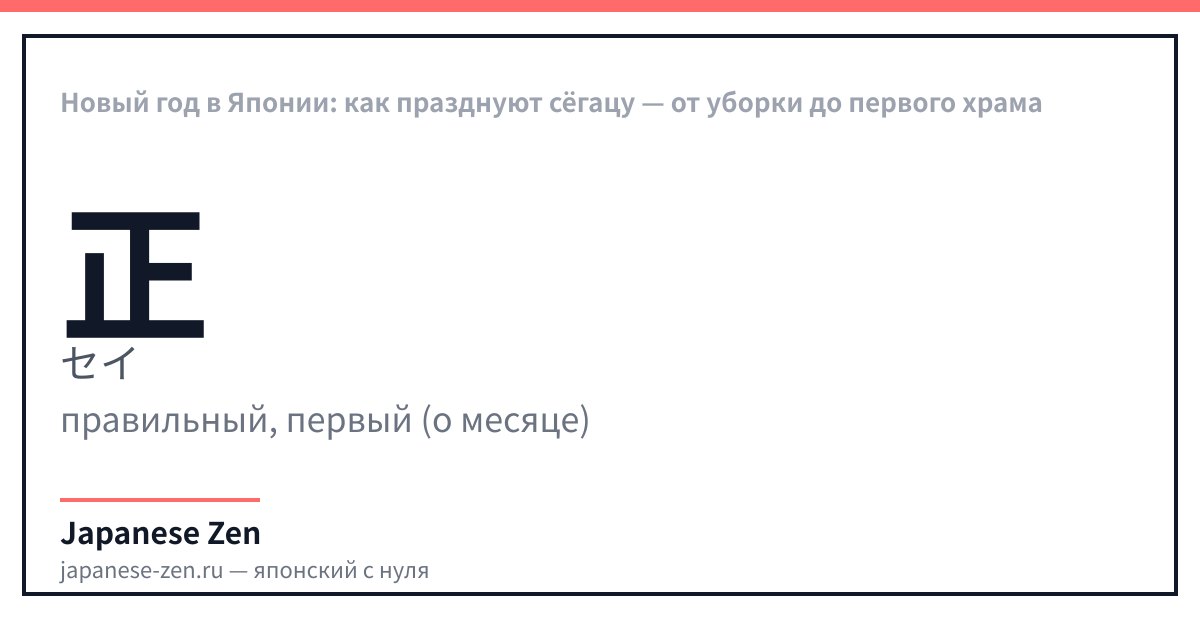
正 — значение: correct, first (of a month) — онъёми: セイ、ショウ — кунъёми: ただ.しい、ただ.す、まさ、まさ.に — 5 штрих(ов). 正 means "correct", and as part of 正月 also "first": literally "correct month" — that is what the first month of the year was called, the one from which the counting of the rest begins.
| Japanese | Reading | Translation |
|---|---|---|
| あけましておめでとうございます | akemashite omedetō gozaimasu · akemashite omedetō gozaimasu | Happy New Year! (said after midnight) |
| 良いお年を | yoi o-toshi o · yoi o-toshi o | Have a good year! (said before midnight) |
| 年賀状 | nengajō · nengajō | New Year's card |
| お年玉 | otoshidama · otoshidama | Pocket money given to children for the New Year |
| 初詣 | hatsumōde · hatsumōde | The first visit of the year to a temple or shrine |
| 門松 | kadomatsu · kadomatsu | New Year pine-and-bamboo decoration at the entrance |
When to Say "Yoi o-toshi o" and When "Akemashite Omedetō"
"Yoi o-toshi o" — "have a good year" — is said before midnight on December 31, when taking leave of the old year. "Akemashite omedetō (gozaimasu)" is heard only after the year has turned, and stays in use through the first days of January. Don't mix them up: "akemashite" literally means "the year has opened", and before midnight such a greeting sounds like a slip of the tongue.
Trace 正 along the guides — the character for "first" in the word 正月, "correct month".
Osechi-ryōri and Other New Year Food
Osechi-ryōri is prepared in advance and packed into tiered jūbako boxes, so that in the first days of the year the hostess can take a rest from the stove. Every dish has a meaning. Herring roe, kazunoko, is read as a wish for many descendants — "kazu" means "number", "ko" means "children". The sweet rolled omelet, datemaki, is associated with a wish for fine, festive days. The fish sausage kamaboko is sliced into red and white pieces — together they signify celebration and evoke the sunrise.
Osechi-ryōri is often served with o-zōni — a soup with a piece of mochi in dashi broth; the recipe varies noticeably by region: in some places the broth is made with miso, in others it is clear, with soy sauce.
Kagami-mochi: What These "Mirror" Rice Cakes Are
Kagami-mochi are two round rice cakes stacked on top of each other with a bitter daidai orange on top. The name translates as "mirror mochi": their shape recalls the old round bronze mirrors that served as vessels for the spirit in Shinto rites. Kagami-mochi on the altar is thought to be the temporary home of toshigami, the deity of the year, and they stay there until a special day early in the year, when the cakes are broken by hand and eaten — in soup or fried.
Lunar Calendar, Christmas Tree, and Closed Shops: Misconceptions About the Japanese New Year
- "The Japanese New Year is celebrated by the lunar calendar, like in China." No — since 1873 Japan has counted the New Year by the Gregorian calendar and celebrates it on January 1 along with the rest of the world; the lunar New Year remains only among its neighbors.
- "In Japan, gifts are given under the tree, like in Europe." Not quite: the main New Year gift is not under the tree but otoshidama, money in an envelope, which adults give to children after the year has begun.
- "Everything is closed in Japan on New Year." Some shops and restaurants really do not operate in the first days of the year, but large shopping centers and 24-hour convenience stores are almost always open — the schedule may simply differ slightly from usual.
FAQ
- When is the New Year celebrated in Japan?
- On January 1 according to the Gregorian calendar — Japan switched to it back in 1873. But the rituals stretch over several days: the deep clean takes place in late December, and visits to relatives and to a shrine continue through the first week of January.
- How do you wish someone a Happy New Year in Japanese?
- Before midnight on December 31, people say "yoi o-toshi o" — "have a good year". After the year has turned, they switch to "akemashite omedetō (gozaimasu)" — a greeting for the year that has already begun, which is heard through the first days of January.
- What do people eat for the New Year in Japan?
- Osechi-ryōri — a set of dishes in tiered jūbako boxes, where almost every ingredient symbolizes something: for example, herring roe expresses a wish for many descendants. The table is rounded out with o-zōni soup with mochi and long toshikoshi-soba noodles on New Year's night.
- Why are the bells rung 108 times in Japan?
- The ritual is called jōya-no-kane, and by the most widespread explanation the number is connected with the Buddhist teaching about the 108 worldly desires of a person. There are other interpretations of the same number, and the temples themselves give different versions — there is no single canonical explanation.
- What is hatsumōde?
- The first visit of the year to a temple or shrine — usually in the first days of January, though there is no strict date. There people ask for good luck in the coming year, buy a new amulet to replace last year's, and often draw a paper fortune.
- What do people give children for the Japanese New Year?
- Otoshidama — money in a small decorated envelope, which adult relatives give to children after the year has begun. The amount usually grows with the child's age, and for many families this is the main gift of the whole holiday.
Sources
Updated: 2026-09-14