Teacher in Japanese: 先生 (sensei) and 教師 (kyōshi) — when to use which
The Japanese word for teacher is 先生 (sensei) when addressing a specific person, and 教師 (kyōshi) when you need an official word for the profession, for example on a form. 先生 is not only for school teachers: it is also used for doctors, lawyers, and manga authors — anyone whose experience is respected. You never use it about yourself.
先生 sounds like a martial-arts title picked up from movies and anime, but in Japan it's used to address half the respected professions in town. Working out who earns it and who doesn't is a whole science of politeness.
What lies behind 先 in the word 先生
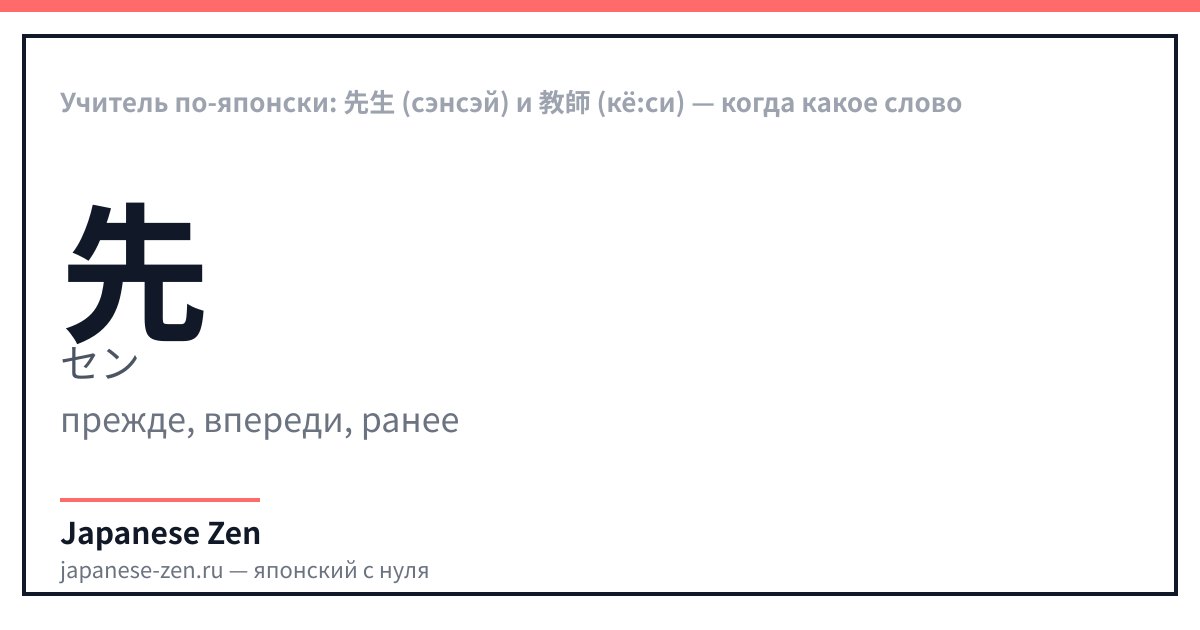
先 — значение: before, ahead, earlier — онъёми: セン — кунъёми: さき、ま.ず — 6 штрих(ов). 6 strokes. Press “Show stroke order” — the strokes will appear as if written by hand.
“Born earlier” — how it actually works
先 means “before, ahead”: 先週 — “last week”, 先に — “first, before others”. The second character in 先生 is 生, “to be born, life”. Put together, the characters literally read as “born earlier” — not in the sense of age, but in the sense of experience: someone who walked the path earlier and therefore deserves to be addressed as 先生, regardless of how old they actually are.
Who in Japan is called 先生 besides teachers
| Japanese | Reading | Translation |
|---|---|---|
| 先生 | sensei · sensei | Teacher; respectful address to a specialist (both an address and a title at once) |
| 教師 | kyōshi · kyōshi | Teacher (profession, word for a form) (this is how one speaks about oneself) |
| 教員 | kyōin · kyōin | Teacher (official term for documents) (official term for documents) |
| 生徒 | seito · seito | Pupil (at school) |
| 恩師 | onshi · onshi | A teacher one is grateful to years later (a teacher one is grateful to years later) |
| 師匠 | shishō · shishō | Master (in a traditional craft or art) (master in a traditional craft or art) |
Why you never say 先生 about yourself
先生 is both an address and a title at once, and it works only for others: it is used for a teacher, a doctor, a lawyer, a member of parliament, and sometimes a manga author whom the reader respects. About one’s own profession one says 教師です “I am a teacher” — no one says 先生 about themselves, it would be immodest, like calling yourself a master. Seniority in a group where 先生 has nothing to do with it — senpai and kōhai — is a separate conversation on the neighboring pages.
Write 先 yourself
Trace the character along the guides — the system will evaluate each stroke.
FAQ
- How do you say teacher in Japanese?
- 先生 (sensei) — if you mean addressing a person directly, and 教師 (kyōshi) — if you need an official word for the profession, for example on a form.
- Are “teacher” and “sensei” the same thing?
- Almost, but not quite. Sensei is 先生, but in English the word is a long-standing loanword mostly known from martial arts and anime, while in Japanese 先生 is also used for a doctor, a lawyer, and a manga artist — anyone whose experience is respected.
- Why is 先生 translated as “born earlier”?
- From the literal breakdown of the characters: 先 means “before”, 生 means “to be born”. But it is not about age, it is about the order of experience — someone who walked the path earlier, regardless of the years in their passport.
- Can you call yourself 先生?
- No, one does not say that about oneself: it would sound immodest. About one’s profession one says 教師です “I am a teacher”, while 先生 is an address given by others.
- Who besides school teachers is called 先生 in Japan?
- Doctors, lawyers, manga authors, and even members of parliament — it is an address of respect for experience, not only for education.
- How does 教員 differ from 教師?
- 教員 is a more official, bureaucratic term: it appears in laws and documents about teaching licenses. 教師 is the ordinary word for the teaching profession in everyday speech.
Sources
Updated: 2026-09-09