Japanese characters and hiragana: what's the difference
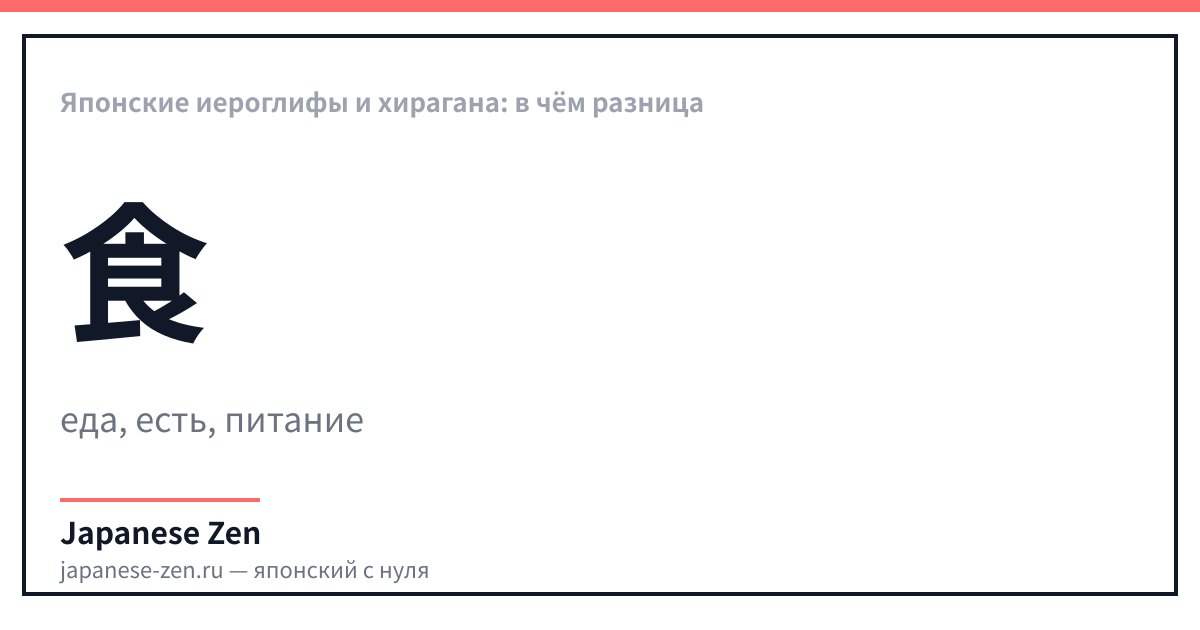
Japanese characters and hiragana are different systems that work together: kanji convey meaning (食 — 'food'), and hiragana conveys grammar and endings (食べる — 'to eat'). In a single sentence they alternate, and by this alternation a Japanese person instantly sees where the root of the word is and where its form is.
A line like 私は寿司を食べます mixes three writing systems at once, and this is not a whim but a division of labor. Let's break down who is responsible for what.
Who is responsible for what in Japanese text
| System | What it writes | Example |
|---|---|---|
| Kanji | word roots, meaning | 食 (food), 山 (mountain), 私 (I) |
| Hiragana | endings, particles, function words | べる in 食べる, は, を, です |
| Katakana | borrowings, names, sounds | コーヒー (coffee), テレビ (television) |
| Romaji | Latin script for signs and technology | JR, Wi-Fi |
Why one word is written with two systems
In 食べる, the root 食 carries the meaning 'to eat', and べる is the changeable part: 食べない (do not eat), 食べた (ate). This trailing hiragana is called okurigana, and by it the reader immediately sees the verb form without deciphering the character.
What this means for the learner
食 — значение: food, to eat, meal — онъёми: ショク、ジキ — кунъёми: く.う、く.らう、た.べる、は.む — 9 штрих(ов). 食 is a root character. In 食べる, the okurigana べる is added to it, and the verb is formed.
- First hiragana: without it, you cannot read a single sentence in full.
- Kanji are learned together with words and okurigana: 食 almost never appears alone.
- Text without kanji is harder to read, not easier: Japanese has no spaces, and characters act as word boundaries.
- Furigana — small hiragana above kanji — indicates the reading in children's books and textbooks.
- What not to do: do not try to write everything in hiragana 'until you have learned kanji' — this makes the text unreadable.
How hiragana helps with characters
Okurigana hints at the reading: 生きる is read 'ikiru', and 生まれる is 'umareru', and it is the tail that distinguishes them. Therefore, it makes sense to memorize kanji together with okurigana, not as a bare sign.
FAQ
- How do characters differ from hiragana?
- Kanji convey meaning and serve as word roots; hiragana conveys grammar: endings, particles, function words.
- What is okurigana?
- The trailing hiragana attached to a character: べる in 食べる. It shows the word form and hints at the reading.
- Can you write only in hiragana?
- Technically yes, but such text is hard to read: Japanese has no spaces, and kanji act as word boundaries.
- What is furigana?
- Small hiragana above a character, indicating the reading. It is used in children's books, textbooks, and for rare characters.
Updated: 2026-07-25