What does "ara ara" mean in Japanese
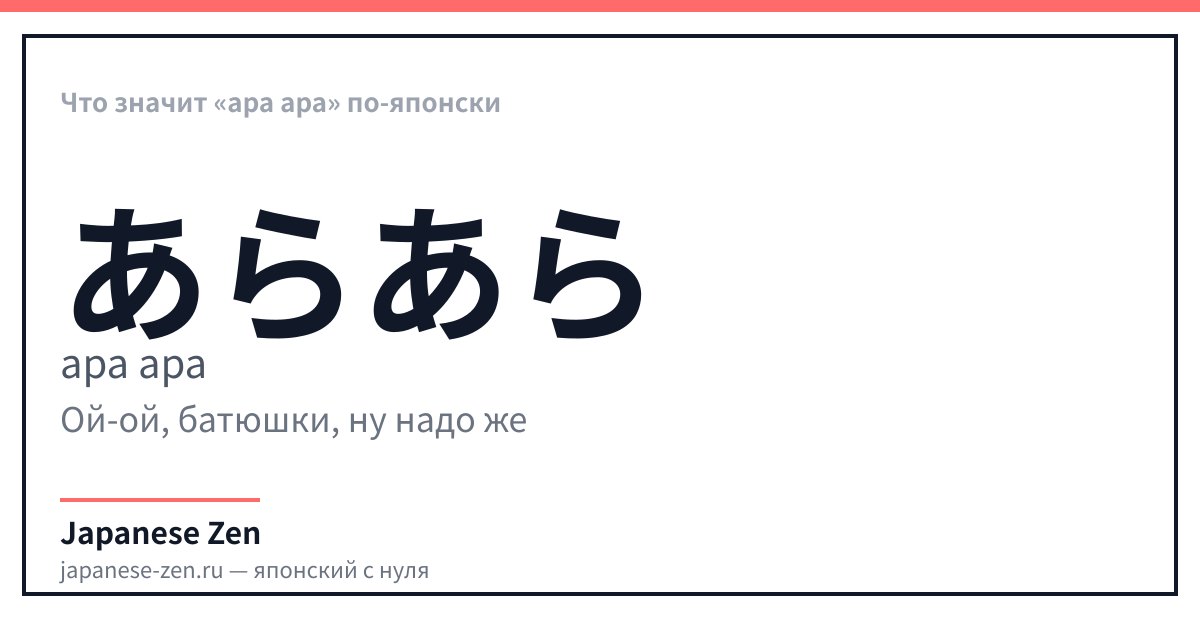
What does "ara ara" (あらあら) mean: it's a feminine interjection similar to the English "oh my" or "my, my" — a soft surprise with a hint of condescending care. It's used in response to someone else's mistake, a child's mischief, or unexpected news. In anime, the phrase became associated with calm adult heroines, and that's where the meme came from.
The Western fandom hears flirtation in these two syllables, while a Japanese person hears the tone of an aunt who caught her nephew with a broken vase. Let's break down what あらあら really means, who says it, and why it wouldn't suit a man.
What does "ara ara" mean and when is it used
あら is a short exclamation of surprise, and the repetition softens it and adds warmth: not "ah!" but "well, well." The meaning entirely depends on intonation, so translations in subtitles vary each time.
| Japanese | Reading | Translation |
|---|---|---|
| あらあら | ara ara · ara ara | Oh dear, goodness, well, well |
| あら | ara · ara | Oh! (short surprise) (single form, sharper) |
| あらあら、大変 | ara ara, taihen · ara ara, taihen | Oh dear, what a trouble (most common continuation) |
| まあまあ | maa maa · maa maa | Now, now, that's enough (neighboring interjection: calms arguers) |
| おやおや | oya oya · oya oya | Oh dear, what do we have here (same surprise, but without feminine nuance) |
Who says it in real life
あらあら belongs to feminine speech (女性語) and sounds more natural from middle-aged and older women. Young people use it less often and often jokingly. It wouldn't suit a man in ordinary conversation: it would sound like a quote from anime — roughly like a schoolboy saying "oh, goodness gracious."
Why "ara ara" became a meme
The interjection became associated with the onee-san archetype — a calm adult heroine who lightly teases a younger person. Western fans perceived this as flirtation and turned the phrase into a meme, although within the Japanese language あらあら remains a neutral expression of mild surprise.
- A child knocked over a glass — あらあら, "oh dear," and the adult goes to wipe it up.
- A friend shared unexpected news — あらあら, "well, well."
- Someone got into an awkward situation — あらあら with a slight smile sounds like "well, well."
- What's wrong: in business correspondence and with superiors, the interjection is inappropriate — it's too domestic.
How to pronounce it correctly
Both syllables are short, the "r" is a Japanese single-tap, closer to the soft "tt" in the American English "butter". The first あら is pronounced slightly higher, the second lower and softer: you get a falling intonation, which is where the condescending warmth comes from.
Say the phrase aloud — the app will evaluate your pronunciation against the standard.
FAQ
- What does "ara ara" mean in Japanese?
- あらあら is an interjection of mild surprise, close to the English "oh my" or "well, well". Often with a hint of care or light teasing.
- Can a man say "ara ara"?
- In ordinary speech — no, it's a feminine interjection. The masculine equivalent with the same meaning is おやおや (oya oya).
- Is "ara ara" flirting?
- In Japanese, no. The flirtatious nuance came from the Western fandom due to the archetype of the calm adult heroine who says it.
- How is "ara ara" written in Japanese?
- In hiragana: あらあら. This interjection has no kanji — like most exclamations.
Updated: 2026-09-14