What does 'baka' mean in Japanese
'Baka' (馬鹿) means 'fool, stupid'. It is the most famous Japanese swear word, but it is mild: in Tokyo, friends tease each other with it. In Osaka, 馬鹿 is perceived as much more offensive, and the common word there is アホ (aho). It is written as 馬鹿 — 'horse' and 'deer'.
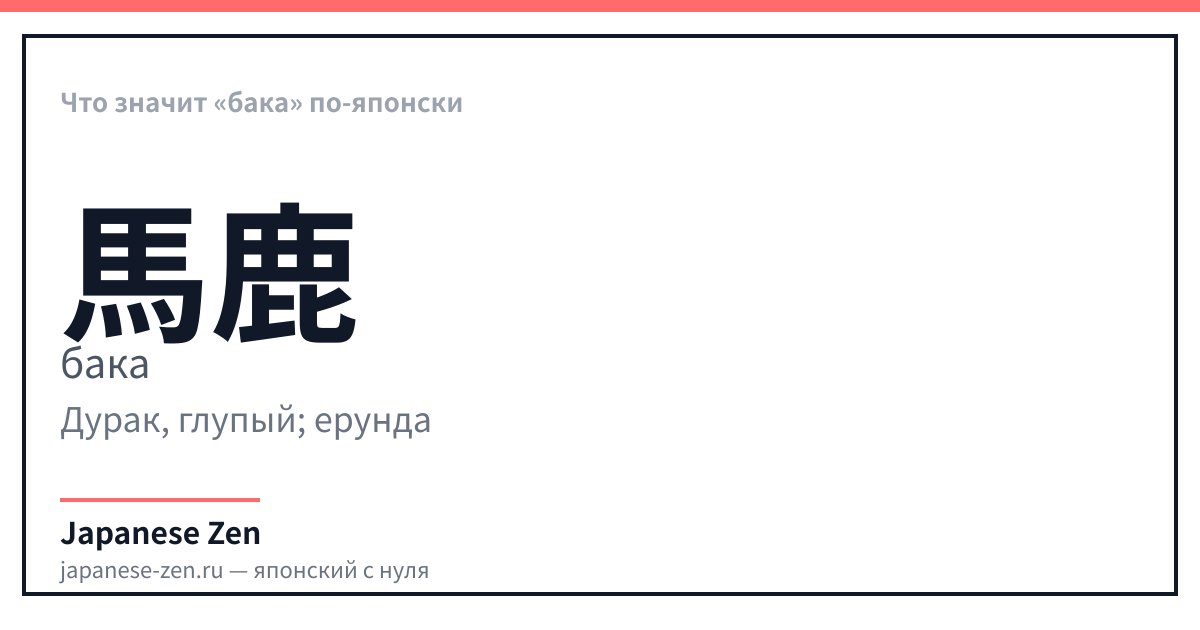
The characters 馬鹿 literally mean 'horse-deer', but they have nothing to do with the word's origin: this is a later ateji, chosen for its sound. Major dictionaries, starting with Kojien, trace 'baka' to the Sanskrit moha — 'clouding of the mind' — from monastic usage. The Chinese story about a courtier who called a deer a horse was suggested by the characters only later.
What 'baka' means and how rude it is
馬鹿 (baka) — 'fool, stupidity, nonsense'. The strength depends on intonation and region: among friends it is almost affectionate 'silly', in a conflict it is a real insult. The difference between Tokyo and Osaka is fundamental: what is a light tease for a Tokyoite is a heavy word for an Osakan.
Baka and aho — a regional war
In Kansai (Osaka, Kyoto), the common word is アホ (aho), and it sounds friendly. A visitor who says 馬鹿 to an Osakan risks seriously offending them. Conversely, 'aho' seems foreign and rough to a Tokyoite. This is one of the most famous linguistic boundaries in Japan.
'Baka' and related words
| Japanese | Reading | Translation |
|---|---|---|
| 馬鹿 | baka · baka | Fool, stupid; nonsense |
| 馬鹿だな | baka da na · baka da na | You're such a silly (with warm intonation — almost a compliment) |
| アホ | aho · aho | Fool (Kansai variant) |
| 馬鹿にする | baka ni suru · baka ni suru | To treat as a fool, to mock |
| 馬鹿げた | bakageta · bakageta | Absurd, ridiculous |
| バカヤロー | bakayarō · bakayarō | Idiot, moron (noticeably ruder than plain 'baka') |
Why this word is constantly heard in anime
- It's a universal reaction: surprise, embarrassment, care, anger — all conveyed with a single intonation.
- The tsundere archetype is built on 'baka': the heroine says 'fool' while meaning the opposite.
- Japanese has few swear words at all, so 馬鹿 carries all the emotional weight.
- Foreigners should avoid using it in real life: only natives can hear the fine line between joke and insult.
FAQ
- What does 'baka' mean in Japanese?
- 馬鹿 — 'fool, stupid'. In friendly conversation it sounds like 'silly', in conflict it is a real insult.
- How rude is this word?
- Moderately. In Tokyo it's a light tease, in Osaka it's noticeably more offensive: there アホ (aho) is more common. Everything depends on intonation and relationship.
- Why is 'baka' written as 'horse-deer'?
- It is an ateji: the characters were chosen for their sound, not their meaning. Dictionaries trace the word to the Sanskrit moha, 'clouding of the mind' — on this version, Buddhist monks brought it over. The Chinese parable about a courtier who called a deer a horse is one of the later guesses, not the source of the word.
- What is the difference between 'baka' and 'aho'?
- They are regional variants. In Tokyo, 馬鹿 is common, in Kansai — アホ, and for locals, the other variant sounds noticeably harsher.
Updated: 2026-07-25