What does "gomen" mean in Japanese
"Gomen" (ごめん) means "sorry" — a short apology between close people. The full polite form is ごめんなさい, and in conversation you often hear ごめんね. It is an apology for a wrongdoing, whereas すみません is closer to "excuse me" and also works as "thank you" and "may I?".
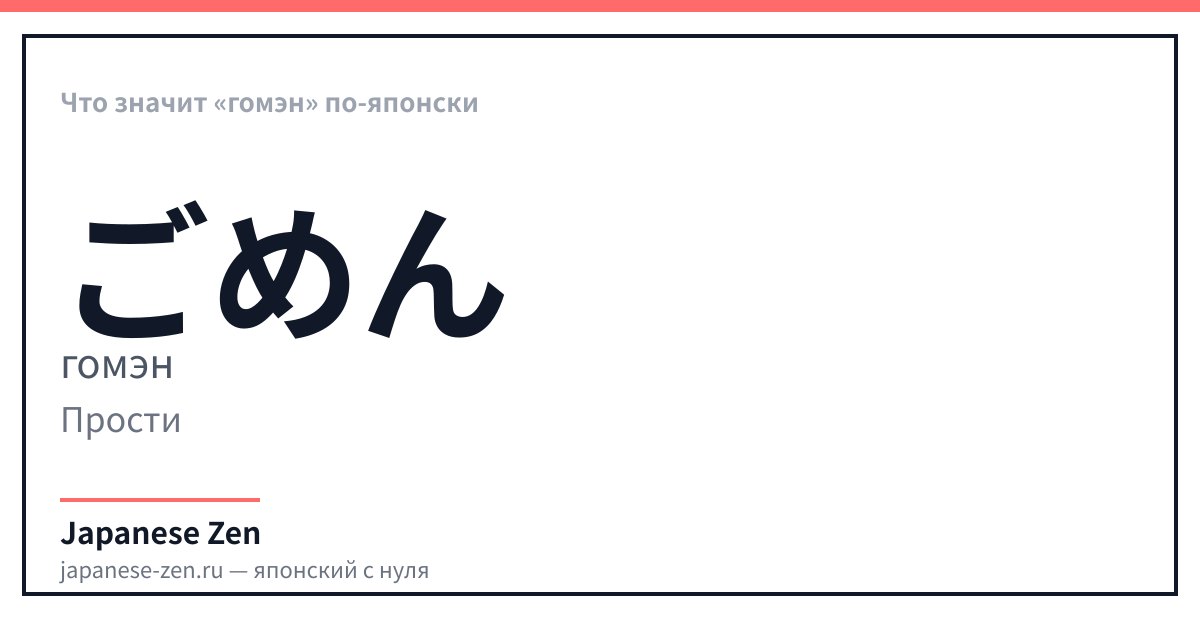
In Japanese there are three main apology words, and they are not interchangeable. Let's break down how gomen differs from sumimasen and moushiwake arimasen.
Three apologies and when to use which
| Japanese | Reading | Translation |
|---|---|---|
| ごめん | gomen · gomen | Sorry (between close people) |
| ごめんなさい | gomen nasai · gomen nasai | I'm sorry (polite full form) |
| すみません | sumimasen · sumimasen | Excuse me (universal: also "thank you" and "may I?") |
| 申し訳ありません | moushiwake arimasen · mo:shiwake arimasen | I sincerely apologize (business register) |
| 失礼しました | shitsurei shimashita · shitsurei shimashita | I apologize for my rudeness |
| ごめんね | gomen ne · gomen ne | Sorry, okay? (softly, with warmth) |
Gomen or sumimasen
ごめん is about guilt: you stepped on someone's foot, you were late to meet a friend. すみません is about causing inconvenience and also serves as a polite way to get attention: you use it to call a waiter and to thank for a service. So in a store you hear sumimasen, but in a conversation with a friend — gomen.
Why they apologize so often
- In Japanese, an apology is often not an admission of guilt but a way to smooth things over: you start a request with it and use it to thank for trouble taken.
- At work, for a serious mistake you say 申し訳ありませんでした — ごめん would sound frivolous.
- The response to an apology is 大丈夫です ("it's okay") or いえいえ ("not at all").
- A bow reinforces the words: the deeper the bow, the weightier the apology, and in business situations you can't do without it.
- What not to do: don't respond to すみません with どういたしまして — that's for "thank you", not for an apology.
Say it out loud — the app will compare with the reference recording.
Apology as politeness
The phrase 「すみませんが…」 at the beginning of a request does not mean the speaker is at fault: it acknowledges that the request will cause trouble. The Russian "excuse me, could you tell me..." works similarly — only in Japanese such a construction is much more common.
FAQ
- What does "gomen" mean?
- ごめん — "sorry", a short apology between close people. The polite form is ごめんなさい.
- How is "gomen" different from "sumimasen"?
- ごめん is about guilt towards someone close. すみません is about causing inconvenience and also serves as a polite way to address strangers.
- How to apologize at work?
- 申し訳ありませんでした. ごめん in a business situation sounds frivolous.
- What to reply to an apology?
- 大丈夫です ("it's okay") or いえいえ ("not at all").
Updated: 2026-07-25