How to say sorry in Japanese: すみません and ごめんなさい
Sorry in Japanese is すみません (sumimasen), universal: both an apology and a way to call someone, and 'thanks for the trouble'. ごめんなさい (gomen nasai) is a personal 'sorry', for close ones. For serious fault, apologize with 申し訳ありません (mōshiwake arimasen).
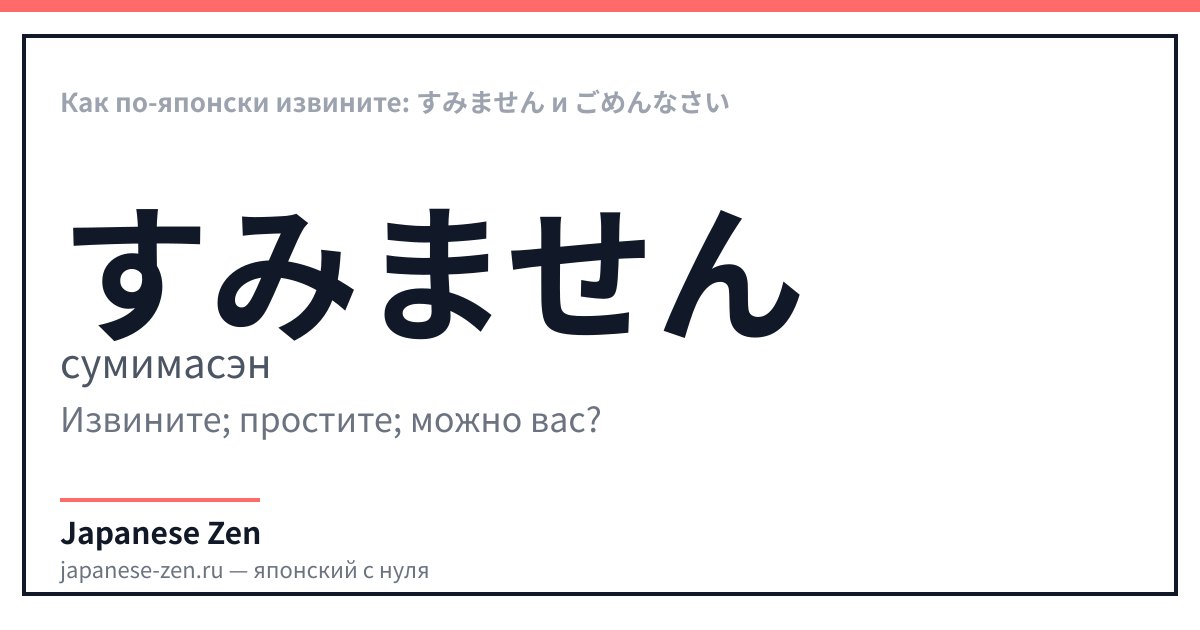
すみません is the most useful word in Japanese. It is used to stop a waiter, ask to pass, thank for a service, and admit fault. Literally it means 'I have no peace': while I have troubled you, I am uneasy.
How to apologize in Japanese
| Japanese | Reading | Translation |
|---|---|---|
| すみません | sumimasen · sumimasen | Sorry; excuse me; may I? |
| ごめんなさい | gomen nasai · gomen nasai | Sorry, I apologize (personal, warm; with close ones) |
| ごめん | gomen · gomen | Sorry (very informal, between friends) |
| 申し訳ありません | mōshiwake arimasen · mōshiwake arimasen | I offer my deepest apologies (business, for serious mistakes) |
| 失礼しました | shitsurei shimashita · shitsurei shimashita | Excuse my rudeness |
| お邪魔しました | o-jama shimashita · o-jama shimashita | Sorry for the intrusion (when leaving someone's home or office) |
How すみません differs from ごめんなさい
すみません is a social apology, it works with strangers and in public places. ごめんなさい is personal, between people who have a relationship: family, friends, couples. To a stranger on the subway you say すみません; to a friend you let down, you say ごめんなさい.
When 'sumimasen' is not an apology
- To call a waiter or passerby: すみません instead of 'excuse me, may I?'.
- To thank for a service: a Japanese person would say すみません where we would say 'thanks for your trouble'.
- To squeeze through a crowd: すみません with a slight bow.
- To start a question to a stranger: すみません、駅はどこですか — 'excuse me, where is the station?'.
Say 'sumimasen' out loud
The 'u' in the first syllable is almost swallowed: it sounds like 's'mimasen'.
FAQ
- How do you say 'sorry' in Japanese?
- すみません (sumimasen) is universal. For close ones, ごめんなさい (gomen nasai). For serious fault, 申し訳ありません (mōshiwake arimasen).
- What is the difference between 'sumimasen' and 'gomen nasai'?
- すみません is social and suitable for strangers, ごめんなさい is personal and warm — for those with whom you have a relationship. In business settings, ごめんなさい sounds childish.
- Is it true that 'sumimasen' also means 'hey, listen'?
- Yes. It is used to call a waiter, a passerby, a shopkeeper. It is the most polite way to address a stranger in Japan.
- How to apologize for a serious mistake?
- 申し訳ありません (mōshiwake arimasen) or even stronger 申し訳ございません. Always with a bow: in Japan, the depth of the bow is part of the apology.
Updated: 2026-07-25