Japanese Kanji for Life: 生 and 命 — What's the Difference
The Japanese kanji for life is 生 (5 strokes, 'to live, to be born') or 命 (7 strokes, 'life as a span, fate'). 生 is read 'sei/shō' and 'ikiru', 命 is read 'mei' and 'inochi'. 'Life' as a word is most often 人生 (jinsei) — a person's life, or 命 (inochi) — life as something that can be lost.
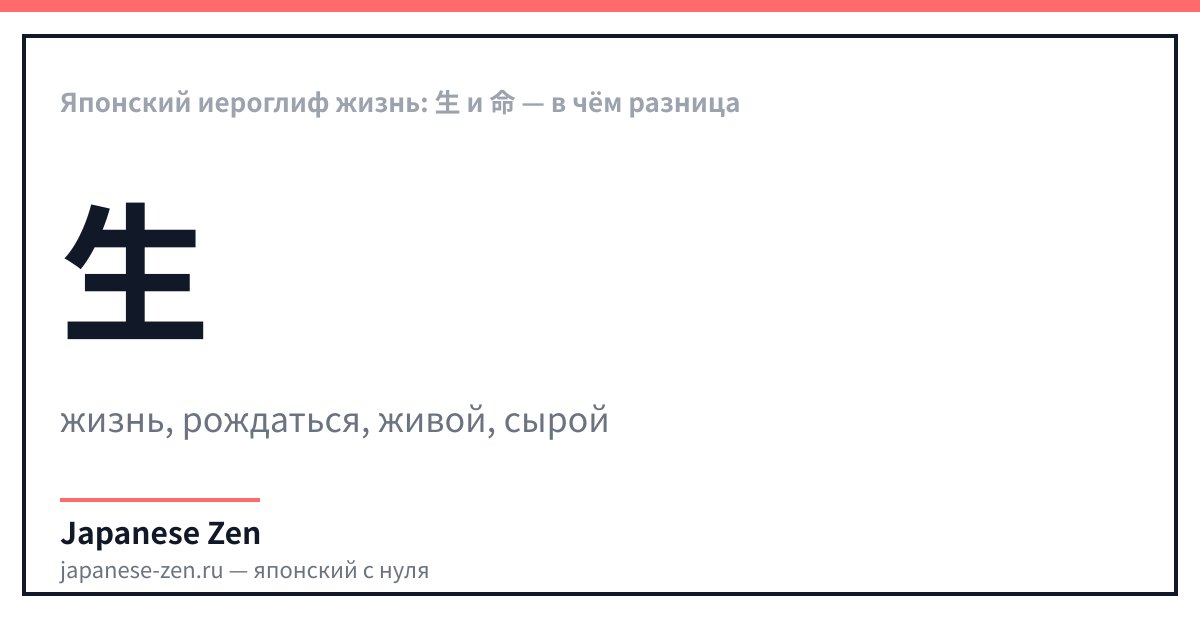
Japanese has two characters for life, and they are not interchangeable. 生 is the process: to grow, to be born, to be alive. 命 is the life you hold in your hands and give away. A doctor in a drama shouts about 命. A biology teacher writes 生.
How to Write the Japanese Kanji for Life
生 — значение: life, to be born, live, raw — онъёми: セイ、ショウ — кунъёми: い.きる、い.かす、い.ける、う.まれる、うま.れる、う.まれ、うまれ、う.む、お.う、は.える、は.やす、き、なま、なま-、な.る、な.す、む.す、-う — 5 штрих(ов). Level N5, 5 strokes. Click 'Show order' — the strokes will go as in handwriting.
Where the Form Comes From
生 is a sprout breaking through the ground: the horizontal line at the bottom is the earth. Hence the whole set of meanings — to be born, to grow, to be alive, and even 'raw, unprocessed': 生ビール (nama bīru) — 'live', unpasteurized beer.
The Second Character for Life — 命
命 (inochi) — 7 strokes, 'life' as an allotted span. It also carries the meaning 'order, command': 命令 (meirei) — an order. The ancient logic: life is given from above, like a command. It is 命 that is used when talking about the price of life: 命を救う (inochi o sukuu) — 'to save a life'.
Words with the Kanji for Life
| Japanese | Reading | Translation |
|---|---|---|
| 人生 | jinsei · jinsei | Human life, destiny |
| 命 | inochi · inochi | Life as something that can be lost |
| 生きる | ikiru · ikiru | To live |
| 生活 | seikatsu · seikatsu | Daily life, livelihood |
| 誕生 | tanjō · tanjō | Birth |
| 生 | nama · nama | Raw, fresh, live |
| 生命 | seimei · seimei | Life as a biological phenomenon |
Which Character to Choose
For your life in general — 人生 (jinsei). For life as a value — 命 (inochi). For life as a phenomenon, in science — 生命 (seimei). For daily life — 生活 (seikatsu). The single 生 in the meaning of 'life' is almost never used: it has too many other meanings.
Kanji for Life for Tattoos
- A lone 生 a Japanese person would read more as 'raw' or 'student' (in compounds) rather than 'life' — the meaning is vague.
- For 'life', 命 (inochi) is more accurate: one character, unambiguous meaning, beautiful form.
- The popular pair 一生 (isshō) means 'whole life', 一生懸命 (isshōkenmei) — 'with all one's might, as if for one's whole life'.
- 生 has only five strokes, and the last one is a long horizontal at the bottom: if you make it shorter than the others, the character will 'wobble'.
Write 生 Yourself
Trace the character along the guides — the system will evaluate each stroke.
FAQ
- What Japanese kanji means life?
- Two: 生 (5 strokes) — to live, to be born, to be alive, and 命 (7 strokes) — life as a span and value. The word 'human life' is 人生 (jinsei).
- How is 生 different from 命?
- 生 is the process of life and growth, and also 'raw, fresh'. 命 is life as something given and that can be lost; it also carries the meaning 'command'. You save 命, you live 生きる.
- How is the kanji 生 read?
- On'yomi — セイ (sei), ショウ (shō): 生活 seikatsu, 一生 isshō. Kun'yomi are many: い.きる (ikiru) 'to live', う.まれる (umareru) 'to be born', なま (nama) 'raw'.
- How do you say 'life' in Japanese?
- 人生 (jinsei) — about a person's life, 命 (inochi) — about life as a value, 生命 (seimei) — in the scientific sense, 生活 (seikatsu) — about daily life.
Updated: 2026-07-25