Ikiryō — Who Is It in Japanese Mythology
Ikiryō (生霊) is the spirit of a living person, and it is the most inconvenient ghost known to Japanese mythology. According to belief, strong jealousy, hatred, or resentment can detach the soul from the body and send it to harm the offender — while the person themselves continues living peacefully, unaware of what is happening. The most famous example is Lady Rokujō from 'The Tale of Genji', whose ikiryō haunted her rivals.
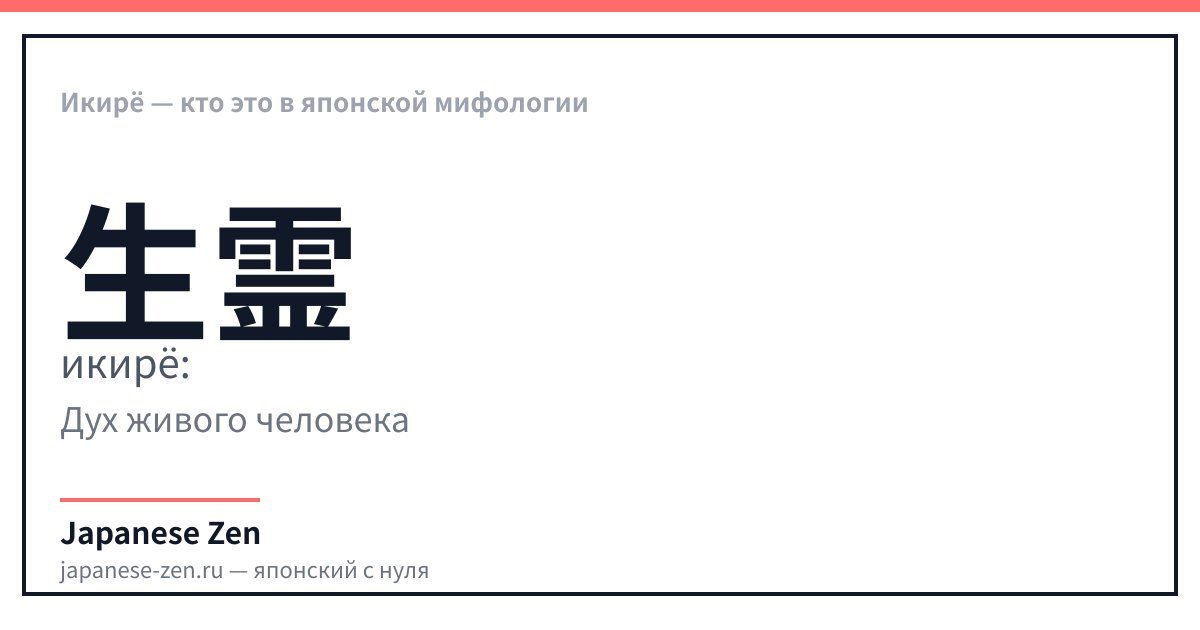
Ikiryō is scarier than an ordinary ghost precisely because the culprit is alive and nearby: revenge comes not after death, but right now, while the offender is not even aware of it.
Who Is Ikiryō and Why Is It Dangerous
Ikiryō is the spirit of a living person, detached from the body under the pressure of a strong emotion: jealousy, hatred, or unbridled resentment. Onryō is the spirit of the dead, while ikiryō belongs to someone who continues living an ordinary life, often unaware that their soul is wandering and harming someone from a distance.
- Cause of appearance: uncontrollable jealousy, hatred, or longing.
- Feature: the owner of the spirit is alive and usually unaware of what is happening.
- Famous example: Lady Rokujō from 'The Tale of Genji', whose ikiryō haunted her rivals.
- How to stop: reconciliation or the culprit's awareness of their own feelings — unlike onryō, whose revenge requires a different kind of atonement.
Why the Source Here Is Not a Chronicle but a Novel
The classic example of ikiryō came not from chronicles but from court literature. 'The Tale of Genji' (early 11th century) describes how the spirit of Lady Rokujō, consumed by jealousy, leaves her body and possesses her rivals, ultimately leading to the death of Genji's wife, Aoi. This very plot later became the basis for the Noh play 'Aoi no Ue' and the hannya mask.
生霊 — 'Spirit of the Living'
| Japanese | Reading | Translation |
|---|---|---|
| 生霊 | ikiryō · ikiryō | Spirit of a living person |
| 怨霊 | onryō · onryō | Spirit of the dead (for comparison) |
| 生きる | ikiru · ikiru | To live |
| 嫉妬 | shitto · shitto | Jealousy |
| 源氏物語 | Genji Monogatari · Genji Monogatari | 'The Tale of Genji' — source of the most famous plot |
How 生霊 Is Contrasted with 死霊
生霊 is read いきりょう (ikiryō): 生 'life, living' plus 霊 'spirit'. Literally — 'spirit of the living' in direct contrast to 怨霊 (onryō), 'spirit of the dead'. The difference in the first kanji completely changes the nature of the phenomenon.
生 — значение: life, sincere, birth — онъёми: セイ、ショウ — кунъёми: い.きる、い.かす、い.ける、う.まれる、うま.れる、う.まれ、うまれ、う.む、お.う、は.える、は.やす、き、なま、なま-、な.る、な.す、む.す、-う — 5 штрих(ов). 生 — 'life, birth, living': a pictogram of a sprout breaking through the ground. One of the most polysemous and frequent characters in the Japanese language.
Write 生 along the guides and learn the stroke order.
Ikiryō in Anime and Adaptations of Classics
- Adaptations and retellings of 'The Tale of Genji' regularly reproduce the plot of the jealous spirit of Lady Rokujō.
- 'Jujutsu Kaisen' and similar curse franchises use the very idea of a living person's materialized emotion as a source of supernatural threat.
- Horror games about 'revenge without the death of the culprit' often borrow the structure of ikiryō rather than the more familiar onryō ghost.
FAQ
- Is ikiryō a deity?
- No. It is the spirit of a living person, detached from the body due to strong jealousy or hatred. The owner of the spirit remains alive and is often unaware of what is happening.
- What is ikiryō dangerous for?
- It can pursue and harm the object of jealousy or hatred from a distance while the owner of the spirit continues their ordinary life. The classic example is the death of Lady Rokujō's rivals in 'The Tale of Genji'.
- How is the word 'ikiryō' written?
- 生霊 (いきりょう): 生 'life' plus 霊 'spirit' — 'spirit of the living'. It differs from 怨霊 (onryō, 'spirit of the dead') by exactly one first kanji.
- Where is ikiryō shown in anime?
- Directly in adaptations of 'The Tale of Genji', and the very idea of a living person's materialized emotion is recognizable in the curses of the 'Jujutsu Kaisen' franchise.
- Is there protection against ikiryō?
- There is no formal cult, but traditionally reconciliation with the offended person or purification rituals are advised — unlike onryō, for ikiryō it is enough to remove the source of the emotion itself, since the culprit is alive.
- Is ikiryō a spirit of the living or the dead?
- A spirit, but of a special kind — not the disembodied soul of the deceased, but a part of a living person temporarily separated from the body under the influence of a strong feeling.
Sources
Updated: 2026-08-29