Japanese Spirits — Who They Are in Japanese Mythology
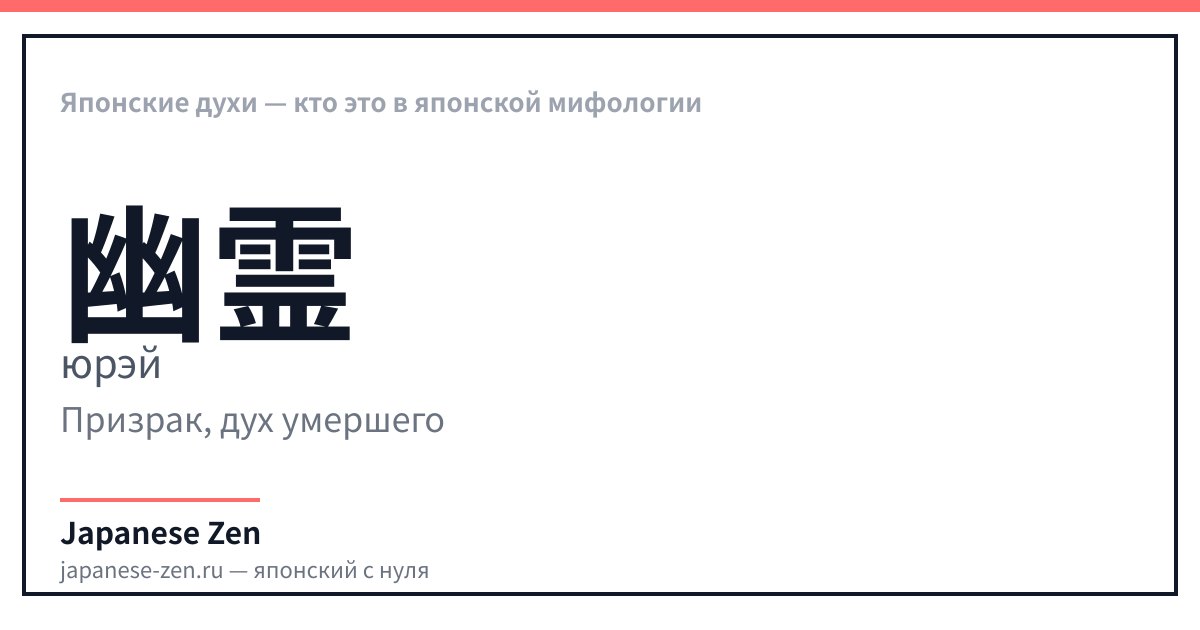
Japanese spirits are yūrei (幽霊), bodiless ghosts of specific deceased people, and Japanese mythology begins with them for most readers. Unlike yōkai monsters, yūrei always have a personality, a grudge, and unfinished business. The classic image is a white burial kimono, long black hair, and no legs: the fashion for legless ghosts was introduced by the artist Maruyama Ōkyo in the 18th century.
The difference between a 'spirit' and a 'monster' in Japan is not abstract: a spirit has a name, a story, and a score to settle. A monster just has habits.
Who Are Yūrei and How to Recognize Them
Yūrei is the soul of a deceased person who failed to find peace due to a strong grudge, violent death, or unfinished business. The canonical appearance was established in 18th-century kabuki theater and ukiyo-e: a white burial kimono (shiroshōzoku), disheveled black hair, pale bluish skin, and a complete absence of legs — the figure seems to dissolve into the mist.
- Onryō (怨霊) — a vengeful spirit that pursues the offender until full reckoning; the most dangerous and famous variety.
- Ubume (産女) — the ghost of a woman who died in childbirth, asking passersby to hold her baby.
- Funayūrei (船幽霊) — spirits of those who died at sea, asking sailors for a ladle, and upon receiving it, sinking the boat.
- They appear during the 'hour of the ox' (ushi mitsu doki) — between two and three in the morning, believed to be the thinnest time between worlds.
Are All of Them Dangerous
It depends on the type. Onryō are specifically dangerous — their goal is revenge, and a random witness might get caught in the crossfire. Ubume and most others are more sad than threatening: they don't want to kill, but to close unfinished business.
幽霊 — 'Dim Spirit'
| Japanese | Reading | Translation |
|---|---|---|
| 幽霊 | yūrei · yūrei | Ghost, spirit of the deceased |
| 怨霊 | onryō · onryō | Vengeful spirit |
| 白装束 | shiroshōzoku · shiroshōzoku | White burial attire |
| 丑三つ時 | ushi mitsu doki · ushi mitsu doki | 'Hour of the ox' — time when spirits appear |
| 成仏 | jōbutsu · jōbutsu | To attain peace after death |
What the Character 幽 Hides
幽霊 is read ゆうれい (yūrei): 幽 means 'dim, otherworldly, barely discernible', 霊 means 'soul, spirit'. Together — literally 'unclear soul', something that has not yet fully departed to the afterlife. The character 霊 itself appears in dozens of words about the spiritual: 精霊 (nature spirit), 霊感 (intuition, sixth sense).
霊 — значение: spirits, soul — онъёми: レイ、リョウ — кунъёми: たま — 15 штрих(ов). 霊 — 'spirit, soul': on top is rain 雨, below is a conventional ritual sign — an ancient image of spirits descending from the heavens along with rain.
Write 霊 along the guides and break down the stroke order.
Yūrei in 'Ring' and All of J-Horror
- 'Ring' (Ringu) and the entire J-horror genre are built on the image of onryō — starting with Sadako's long black hair.
- 'Howl's Moving Castle' and other Hayao Miyazaki films regularly introduce spirits as part of an inhabited, not always scary world.
- 'Natsume's Book of Friends' — here yūrei are more often sad and lonely than dangerous.
- 'Bleach' builds an entire cosmology of the afterlife around the idea of unrested souls — a direct development of the yūrei theme.
Who Invented the Legless Ghost
The legless silhouette in white was invented not by folklore, but by a specific artist — Maruyama Ōkyo, who in the 1750s depicted the ghost of a deceased lover without legs. The painting was so popular with the public that this technique became canon for two and a half centuries to come.
What People Confuse: Spirit and Monster
| Feature | Spirit (yūrei) | Monster (yōkai creature) |
|---|---|---|
| Origin | a specific deceased person | not necessarily human |
| Motive | personal grudge, unfinished business | just its nature |
| Appearance | bodiless figure, often without legs | physical body, fangs, claws |
| How to get rid of it | resolve its business, perform a ritual | expel by force or trick it |
It's not hard to tell them apart: if there's a past and a motive for revenge — it's a spirit. If it just looks scary and always has been — that's a monster, not a ghost.
FAQ
- Who are yūrei?
- Yūrei are souls of deceased people who failed to find peace due to a strong grudge or unfinished business. Unlike yōkai monsters, each spirit has a specific personal story.
- What do Japanese spirits look like?
- A white burial kimono, long disheveled black hair, pale skin, and no legs — the figure seems to melt into the mist. This canon was established in 18th-century painting and has not changed since.
- How do you write Japanese spirits in Japanese?
- 幽霊 (yūrei): 幽 'dim, otherworldly' plus 霊 'soul'. The vengeful variety is called by a separate word — 怨霊 (onryō).
- Are Japanese spirits evil or good?
- It varies: onryō are vengeful and specifically dangerous, while most other spirits are more sad than threatening — they care more about closing unfinished business than causing harm.
- Which anime feature Japanese ghosts?
- The entire J-horror genre, starting with 'Ring', is built on the image of a vengeful spirit. A softer interpretation is in 'Natsume's Book of Friends' and Hayao Miyazaki's films.
- How do Japanese spirits differ from monsters?
- A spirit is always a former person with a personal history and motive; a yōkai monster is not necessarily. A spirit can be put to rest by resolving its business; a monster usually just has to be expelled or tricked.
Sources
Updated: 2026-08-29