Kodama — who is it in Japanese mythology
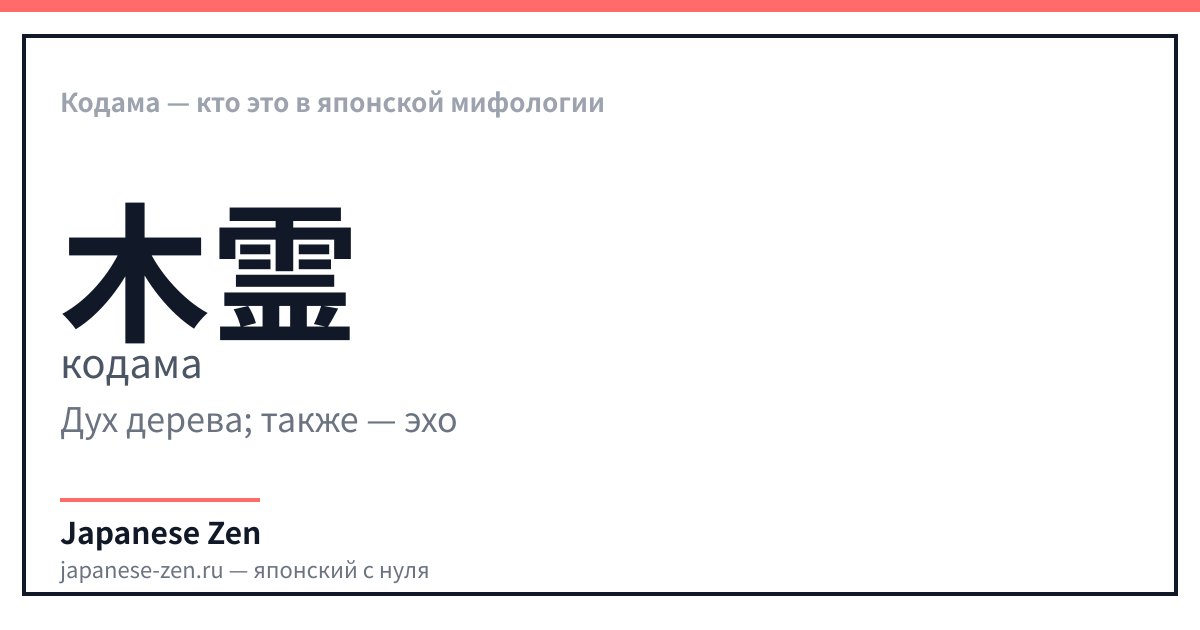
Kodama (木霊) is a tree spirit and perhaps the quietest of all that Japanese mythology remembers: it lives inside an old trunk and usually does not show itself. To cut down a tree with a kodama, according to belief, is to bring misfortune. The same word 木霊 in Japanese also means ordinary mountain echo — it was thought that this was the response of a disturbed forest spirit.
Kodama is a rare spirit whose main power is not in magic but in inviolability: cut down the wrong tree, and punishment will come not from a monster, but simply from bad luck that will henceforth cling to the house.
Who is kodama and how does it reveal itself
Kodama is a spirit that dwells inside a tree, most often a very old one. In most legends it is invisible or rarely shows itself, but its presence is easily recognized by the echo in the forest: it was believed that the reverberation of a voice in the mountains was the response of a disturbed tree spirit. To cut down a tree in which a kodama lives means to bring misfortune upon yourself and your home — therefore, such trees were traditionally avoided or marked as sacred.
- Habitat: old trees, especially deep in the forest.
- Manifestation: mountain echo was traditionally considered the voice of kodama.
- Danger to people: not the spirit itself, but misfortunes for cutting down the tree-dwelling.
- Tree protection: marking with a sacred rope shimenawa as goshinboku.
What happens if you cut down its tree
By itself — no, kodama is among the most peaceful spirits of the Japanese bestiary. The danger arises not from it, but from disrespect towards it: lumberjacks traditionally performed a small apology ritual before cutting down an old tree, in case someone lives in it.
木霊 — both 'tree spirit' and 'echo'
| Japanese | Reading | Translation |
|---|---|---|
| 木霊 | kodama · kodama | Tree spirit; also — echo |
| 木 | ki · ki | Tree |
| 御神木 | goshinboku · goshinboku | Sacred tree at a shrine |
| 森 | mori · mori | Forest |
| 谺 | kodama · kodama | Alternative spelling of the word 'echo' |
Why the same word is used for echo
木霊 is read こだま: 木 'tree' plus 霊 'spirit'. The same word and the same reading is the ordinary Japanese term for echo in mountains and forests. These are not two different words, but one concept: the sound reflected from the mountains was perceived as the response of a spirit living in a tree.
木 — значение: tree, wood — онъёми: ボク、モク — кунъёми: き、こ- — 4 штрих(ов). 木 — 'tree': a pictogram of a trunk with branches and roots. The tripled sign 森 already means 'forest'.
Write 木 along the guides — one of the first N5 kanji.
Kodama in 'Princess Mononoke'
- 'Princess Mononoke' — little white kodama, nodding their heads, serve as a visual indicator of a healthy, living forest throughout the film.
- 'My Neighbor Totoro' — the atmosphere of the forest and the sacred camphor tree where Totoro lives directly draws on the belief in spirits like kodama, although Totoro himself is a different, original character.
- 'Natsume's Book of Friends' — tree spirits periodically appear as quiet, harmless characters in episodes.
FAQ
- Is kodama a deity?
- No, it is not part of the pantheon: it is a tree spirit from folk beliefs — usually invisible, but associated with the idea of sacredness of old trees, which is shared by the Shinto practice of goshinboku.
- Is kodama dangerous to humans?
- By itself it is not dangerous — the threat comes from disrespect towards the tree in which it lives: cutting down such a tree without the proper ritual, according to belief, means bringing misfortune upon oneself.
- Why does 木霊 also mean 'echo'?
- 木霊 (こだま): 木 'tree' plus 霊 'spirit'. The same word and the same reading in Japanese mean ordinary forest echo.
- Where is kodama shown in anime?
- The most famous example is the little white spirits in 'Princess Mononoke', nodding their heads as an indicator of forest health. The atmosphere of 'My Neighbor Totoro' also draws on the belief in such spirits.
- How are trees with kodama treated in Japan?
- There is no formal cult specifically for kodama, but trees in which a spirit is believed to live are often marked with a sacred rope shimenawa as goshinboku at Shinto shrines.
- Is kodama a god of the tree or its spirit?
- It is a tree spirit — not a deity of the Shinto pantheon, but a local natural being, close in spirit to other kami of the land, but without its own cult or chronicled status.
Sources
Updated: 2026-08-29