Short Japanese phrases: 15 expressions in one or two words
Short Japanese phrases that are enough for basic communication: はい (hai) yes, いいえ (iie) no, どうぞ (dōzo) please, ありがとう (arigatō) thank you, すみません (sumimasen) excuse me, 大丈夫 (daijōbu) okay, 待って (matte) wait, 行こう (ikō) let's go.
Japanese is structured so that a short phrase doesn't sound clipped: the subject and object are omitted if they are clear from context. Therefore, 行こう is a full-fledged 'let's go', not an abbreviation of something longer.
One-word phrases
| Japanese | Reading | Translation |
|---|---|---|
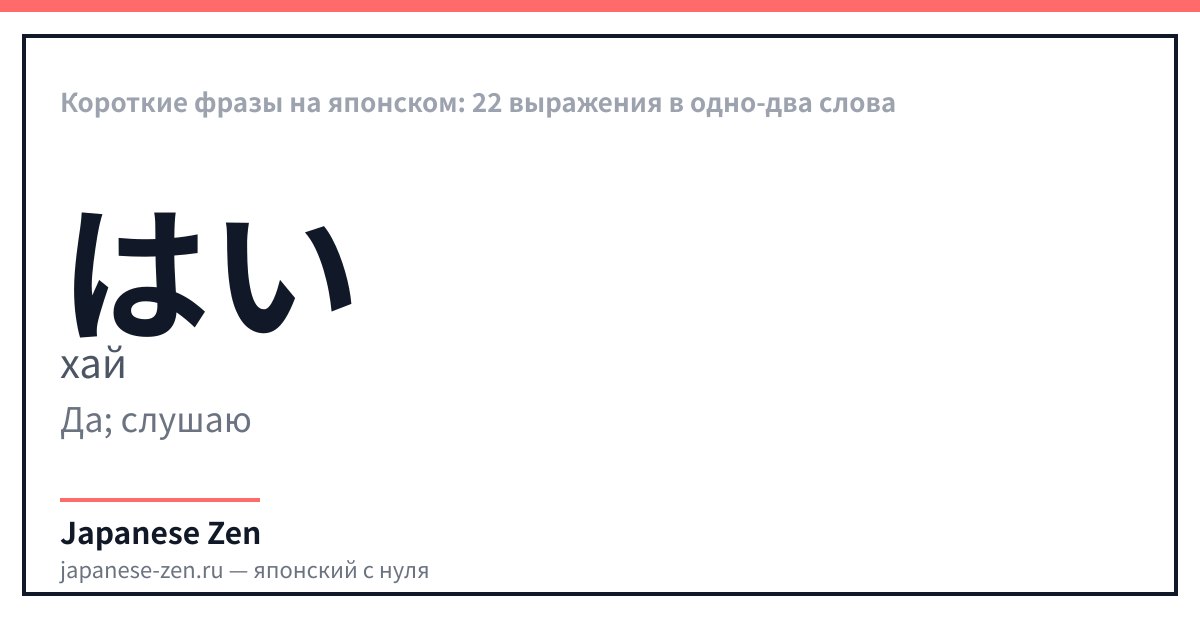
| はい | hai · hai | Yes; I'm listening |
| いいえ | iie · iie | No; you're welcome |
| どうぞ | dōzo · dōzo | Here you go, please |
| ありがとう | arigatō · arigatō | Thank you |
| すみません | sumimasen · sumimasen | Excuse me; may I? |
| 大丈夫 | daijōbu · daijōbu | Are you okay? |
| 待って | matte · matte | Wait |
| 行こう | ikō · ikō | Let's go |
Why they don't sound rude
Politeness in Japanese is determined by the verb form, not the length of the phrase. 待って is neutral among friends, 待ってください is polite. So a short phrase is not tactless in itself: what matters is whether it includes ください or です.
Short reactions in conversation
| Japanese | Reading | Translation |
|---|---|---|
| そうですね | sō desu ne · sō desu ne | Yes, I suppose |
| なるほど | naruhodo · naruhodo | I see, that makes sense |
| 本当に | hontō ni · hontō ni | Really? |
| もちろん | mochiron · mochiron | Of course |
| たぶん | tabun · tabun | Probably |
| 頑張って | ganbatte · ganbatte | Hang in there, good luck |
| また明日 | mata ashita · mata ashita | See you tomorrow |
How to keep a conversation going with one word
In Japanese, 'aizuchi' is important — backchanneling: the listener constantly inserts はい, ええ, そうですね, なるほど. Silence in response is perceived as inattention, so these short reactions are not empty words but an essential part of dialogue.
Say the phrases out loud
Say the phrase into the microphone — a short line should sound even, without stress.
FAQ
- Which short Japanese phrases should I learn first?
- はい (yes), いいえ (no), どうぞ (please), ありがとう (thank you), すみません (excuse me), 大丈夫 (okay), 待って (wait).
- Is it rude to speak so briefly?
- No: politeness is determined by form, not length. 待って is neutral, 待ってください is polite. Add ください or です and the phrase becomes respectful.
- What is 'aizuchi'?
- Backchanneling: the listener inserts はい, ええ, なるほど to show attention. Without it, a Japanese person will think you're not listening.
- Why are there no 'I' and 'you' in Japanese phrases?
- They are omitted when clear from context. 行こう means 'let's go', and the pronoun is redundant; inserting 私 would sound overly emphasized.
Updated: 2026-07-25