Easy Japanese Words: 15 Simple Ones to Start
The easiest Japanese words are short and without difficult sounds: 犬 (inu) dog, 猫 (neko) cat, 山 (yama) mountain, 川 (kawa) river, 手 (te) hand, 目 (me) eye, 水 (mizu) water. Even easier are loanwords: パン (pan) bread, テレビ (terebi) TV, カメラ (kamera) — you recognize them instantly.
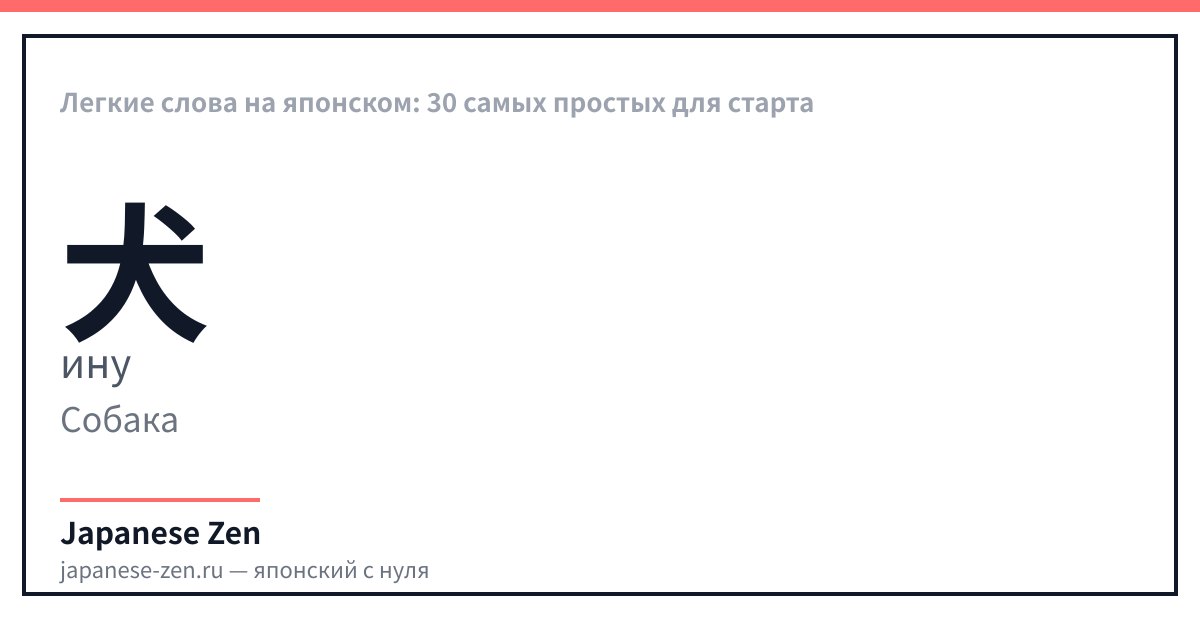
Words of two or three syllables without long vowels or double consonants are the easiest to remember: neko, inu, yama, kawa. In the first week, they build the feeling that the language is manageable — and that feeling matters more than the vocabulary itself.
Short Japanese Words
| Japanese | Reading | Translation |
|---|---|---|
| 犬 | inu · inu | Dog |
| 猫 | neko · neko | Cat |
| 山 | yama · yama | Mountain |
| 川 | kawa · kawa | River |
| 手 | te · te | Hand |
| 目 | me · me | Eye |
| 本 | hon · hon | Book |
| 水 | mizu · mizu | Water |
Why They Are Easier to Remember
In Japanese, there are almost no consonant clusters, and syllables are almost always open: “ne-ko”, “ya-ma”. For the Russian ear, this is surprisingly easy — nothing to confuse. Difficulties begin with long vowels (お兄さん) and double consonants (きっと), so it’s better to avoid them at the beginning.
Loanwords You Understand Immediately
| Japanese | Reading | Translation |
|---|---|---|
| パン | pan · pan | Bread (from Portuguese) |
| テレビ | terebi · terebi | TV |
| カメラ | kamera · kamera | Camera |
| コーヒー | kōhī · kōhī | Coffee |
| ホテル | hoteru · hoteru | Hotel |
| アイス | aisu · aisu | Ice cream |
| バス | basu · basu | Bus |
The Trap of Loanwords
Not all of them mean the same as in the original language. アルバイト (arubaito) comes from German Arbeit, but means not “work” but a part-time job. マンション (manshon) is not a mansion but an ordinary apartment in a concrete building. So recognizing a word does not guarantee understanding.
Pronounce the Simple Words
Say the word into the microphone — these words have no long vowels or doubled consonants, so check your rhythm.
FAQ
- What are the easiest Japanese words?
- Short ones without long vowels: 犬 (inu), 猫 (neko), 山 (yama), 川 (kawa), 手 (te), 目 (me), 本 (hon), 水 (mizu). And loanwords: パン, テレビ, カメラ.
- Why are Japanese words easy to pronounce?
- In Japanese, there are almost no consonant clusters, syllables are open: “ne-ko”, “ya-ma”. It’s more familiar to the Russian ear than it seems.
- Can you rely on loanwords?
- Partially. Many have changed meaning: アルバイト is a part-time job, not work; マンション is an apartment, not a mansion. Recognizing a word is easy, understanding is not always.
- How many words do you need to start?
- About 300 words give a daily minimum, 800 is level N5. It’s easier to start with nouns: they have no conjugations.
Updated: 2026-07-25