Japanese words with Russian transcription: 22 basic words
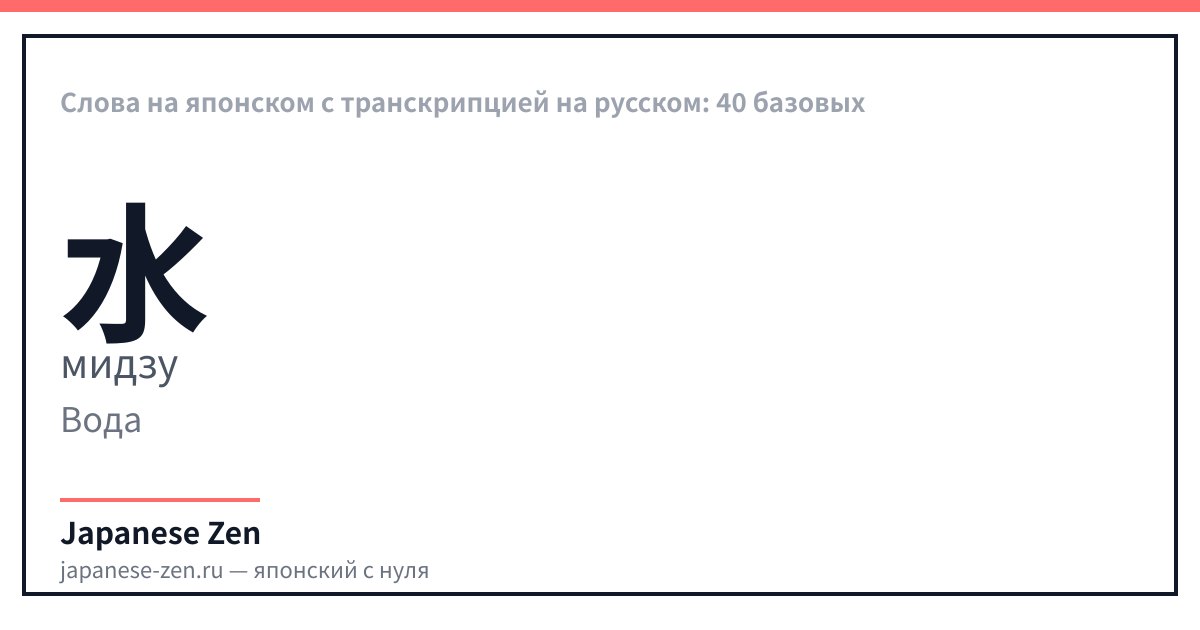
Japanese words with Russian transcription: 水 (mizu) water, 人 (hito) person, 本 (hon) book, 猫 (neko) cat, 家 (ie) house, 空 (sora) sky. A colon in the transcription indicates a long vowel: 大丈夫 is read as 'daijōbu'. And the 'u' at the end of words after voiceless consonants almost disappears: です sounds like 'des', 好き — 'ski'.
Russian transcription of Japanese is a crutch, but a useful one: it lets you start speaking on the very first day. The main thing is to remember two rules — length is marked with a colon, and 'u' and 'i' at the end of words are often swallowed. The rest will be sorted out by your ear.
Words you encounter every day
| Japanese | Reading | Translation |
|---|---|---|
| 水 | mizu · mizu | Water |
| 人 | hito · hito | Person |
| 本 | hon · hon | Book |
| 猫 | neko · neko | Cat |
| 犬 | inu · inu | Dog |
| 家 | ie · ie | House |
| 友達 | tomodachi · tomodachi | Friend |
| 先生 | sensei · sensei | Teacher |
Nature and time
| Japanese | Reading | Translation |
|---|---|---|
| 空 | sora · sora | Sky |
| 海 | umi · umi | Sea |
| 山 | yama · yama | Mountain |
| 花 | hana · hana | Flower |
| 今日 | kyō · kyō | Today |
| 明日 | ashita · ashita | Tomorrow |
| 時間 | jikan · jikan | Time |
Actions and states
| Japanese | Reading | Translation |
|---|---|---|
| 食べる | taberu · taberu | To eat |
| 飲む | nomu · nomu | To drink |
| 行く | iku · iku | To go |
| 見る | miru · miru | To look |
| 分かる | wakaru · wakaru | To understand |
| 好き | suki · suki | To like |
| 大丈夫 | daijōbu · daijōbu | It's okay |
Two rules without which transcription lies
First: a colon indicates a long vowel, and length is meaningful. 叔父さん (ojisan) is uncle, 御爺さん (ojīsan) is grandfather. Second: 'u' and 'i' between voiceless consonants and at the end of words almost disappear — 好き sounds like 'suki', です like 'des'. Writing them out in full means speaking with a noticeable accent.
Check your pronunciation
Say the word into the microphone — check whether you're keeping the colons from the transcription.
FAQ
- What Japanese words should I learn first?
- Everyday words: 水 (mizu) water, 人 (hito) person, 本 (hon) book, 家 (ie) house, plus the verbs 食べる, 飲む, 行く, 見る and 大丈夫 'it's okay'.
- What does the colon in the transcription mean?
- A long vowel: 'kyō' — the 'o' is stretched twice as long. Length distinguishes words, so it is marked separately.
- Why is 'desu' read as 'des'?
- 'U' between voiceless consonants and at the end of words is reduced to almost nothing in Japanese. Therefore です sounds like 'des', and 好き like 'suki'.
- Why is the transcription different in different sources?
- There is the Polivanov system (si, tja, dzi) and the transcription using English Latin letters (shi, cha, ji). Hence 'Mitsubishi' versus 'Mitsubisi' — both variants convey one sound approximately.
Updated: 2026-07-25