Fox — Who It Is in Japanese Mythology
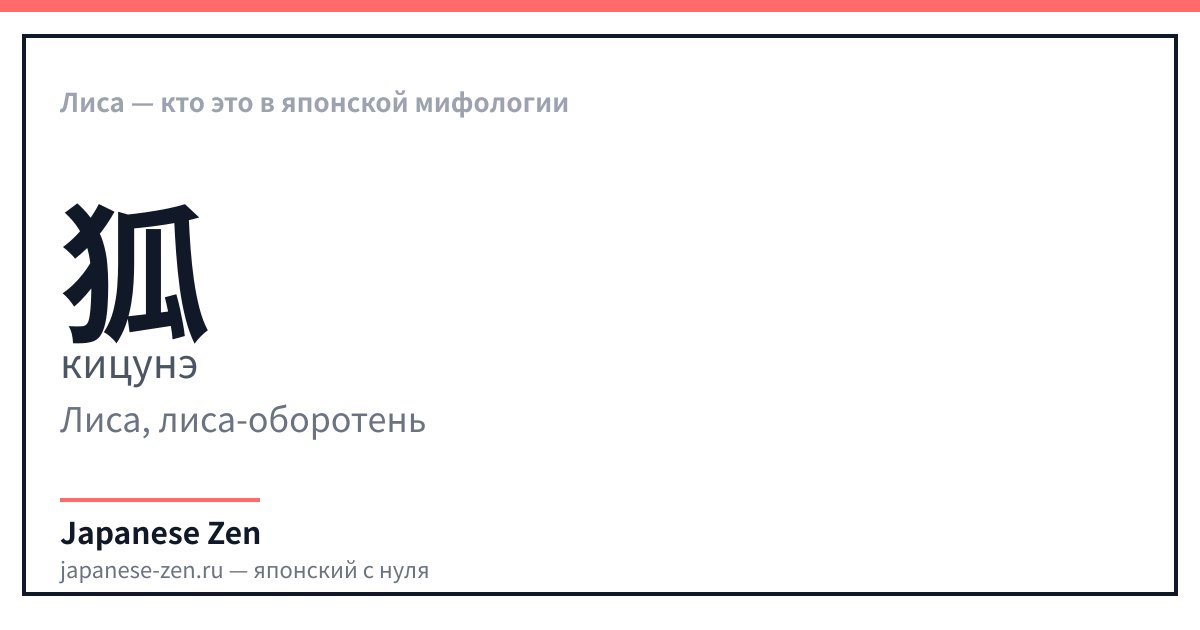
The fox in Japanese mythology is the kitsune (狐), a shapeshifter whose magical power grows with age: a hundred-year-old fox grows a second tail, a thousand-year-old one grows a ninth and becomes almost a deity. Some foxes serve the rice god Inari and bring good luck, others trick travelers by turning into beauties and cause possession.
No one in the Japanese bestiary mixes good and evil as unscrupulously as the fox: the same kitsune may bring you an offering from the god Inari in the morning, and in the evening lead you off the road, pretending to be a girl in distress. The moral here is not about the fox, but about the fact that you should have watched your step more carefully.
Who Is Kitsune and How Its Power Grows
Kitsune is a fox shapeshifter whose magical power directly depends on age and wisdom: a young fox is simply cunning, a hundred-year-old one learns to take human form, and after a thousand years it grows a ninth tail and approaches deity status. Externally, a fox shapeshifter is easily confused with an ordinary one, except that there may be more than one tail — or it suddenly speaks in a human voice.
- Signs: extra tails, ability to change shape, the kitsunebi ("fox fire") glow in the dark.
- Habits: trick travelers with illusions, turn into beauties or monks, hold fox wedding processions during sunshowers.
- Where it lives: forests, fields, and especially revered ones — at shrines of the rice god Inari.
- Two temperaments: zenko (善狐) — good foxes serving the gods, ako/nogitsune (野狐) — wild pranksters and deceivers.
Is It Good or Evil
Depends on which fox you encounter. Zenko of the god Inari are generally harmless and even useful — they bring good luck and protect the harvest. Wild ako can lead to real trouble: in folklore there is a disease called kitsunetsuki — "fox possession," whose symptoms were once mistaken for madness.
狐 — A Sign Without Any Magic
| Japanese | Reading | Translation |
|---|---|---|
| 狐 | kitsune · kitsune | Fox, fox shapeshifter |
| 九尾の狐 | kyūbi no kitsune · kyūbi no kitsune | Nine-tailed fox |
| 狐火 | kitsunebi · kitsunebi | Fox fire, will-o'-the-wisps |
| 稲荷 | Inari · Inari | Rice god, patron of foxes |
| 狐憑き | kitsunetsuki · kitsunetsuki | Fox possession |
Why the Magic Is Not Inherent in the Sign Itself
狐 is read きつね (kitsune) and simply means "fox" — without mythological weight in the character itself. The magical meaning comes only in combinations: 狐火 "fox fire," 狐憑き "fox possession." The character 狐 consists of "dog" 犭 on the left (historical radical for animals) and a phonetic element on the right.
狐 — значение: fox, fox — онъёми: コ — кунъёми: きつね — 9 штрих(ов). 狐 — "fox": on the left the key "beast" 犭, on the right the phonetic element 瓜. The same key is in 猫 (cat) and dog-related characters.
Write 狐 along the guides and learn the stroke order.
Fox in Anime: Kurama and Other Redheads
- "Naruto" — the nine-tailed fox Kurama, sealed inside the hero, directly reinterprets the myth of the fox whose power grows with the number of tails.
- "Inari, Konkon, Koi Iroha" — a schoolgirl exchanges abilities with a fox messenger of the god Inari and learns the flip side of the legend.
- Ōkami — fox spirits are often encountered as secondary allies along the path of the wolf heroine.
- Numerous role-playing games use "nine tails" as a ready-made power scale for fox bosses.
Where Did the Ears, Fan Tails, and Red Color Come From
The canonical image of the fox shapeshifter — red ears, fan tails, semi-human silhouette — was formed in ukiyo-e and Noh theater long before anime: the modern industry simply inherited a ready-made, centuries-polished visual formula.
What Is Confused: "Fox" and "Kitsune"
| Feature | "Fox" (generic concept) | "Kitsune" (as a term in Russian media) |
|---|---|---|
| What it is | the same shapeshifter 狐 | direct borrowing of the Japanese word |
| Where it is used | in general discussions about Japanese folklore | in anime fandom and games as an independent term |
| Semantic emphasis | on the animal and its habits | on the magical hierarchy — tails, status |
| Linguistic form | translation into Russian | transliteration of きつね without translation |
There is essentially no difference: "fox" and "kitsune" are the same creature 狐, just one name is translated and the other is borrowed entirely. It's easy to tell in a second: if the text contains the word "kitsune," it's most likely a reference to Japanese pop culture, not folklore directly.
FAQ
- Who is the fox in Japanese mythology?
- Kitsune is a fox shapeshifter with magical power that grows with age: a hundred years gives a second tail, a thousand — a ninth. Some foxes serve the god Inari, others trick people for fun or profit.
- What does a fox shapeshifter look like?
- Like an ordinary fox, but sometimes with several tails, and in human form — like an attractive woman or a wandering monk. The kitsunebi glow or a reflection with fox ears can give it away.
- How do you write "fox" in Japanese?
- 狐, read きつね (kitsune). The same character means both an ordinary forest fox and a mythological fox shapeshifter — context decides which one is meant.
- Is the fox an evil or good spirit?
- Depends on the breed: zenko in the service of the god Inari are considered good patrons, wild ako are pranksters and deceivers capable of causing real trouble through imaginary possession.
- In which anime are there fox shapeshifters?
- The nine-tailed fox Kurama in "Naruto" is the most famous example. Fox spirits also appear in "Inari, Konkon, Koi Iroha" and in many games that use the number of tails as an indicator of power.
- How is a fox different from a kitsune mythical creature?
- Essentially nothing — it's the same creature 狐. "Fox" is a translation into Russian, "kitsune" is a direct borrowing of the Japanese word, established as a separate term in anime fandom and games.
Sources
Updated: 2026-08-29