How to say 'beloved' in Japanese: 愛しい, 大切な人 and why there is no 'dear'
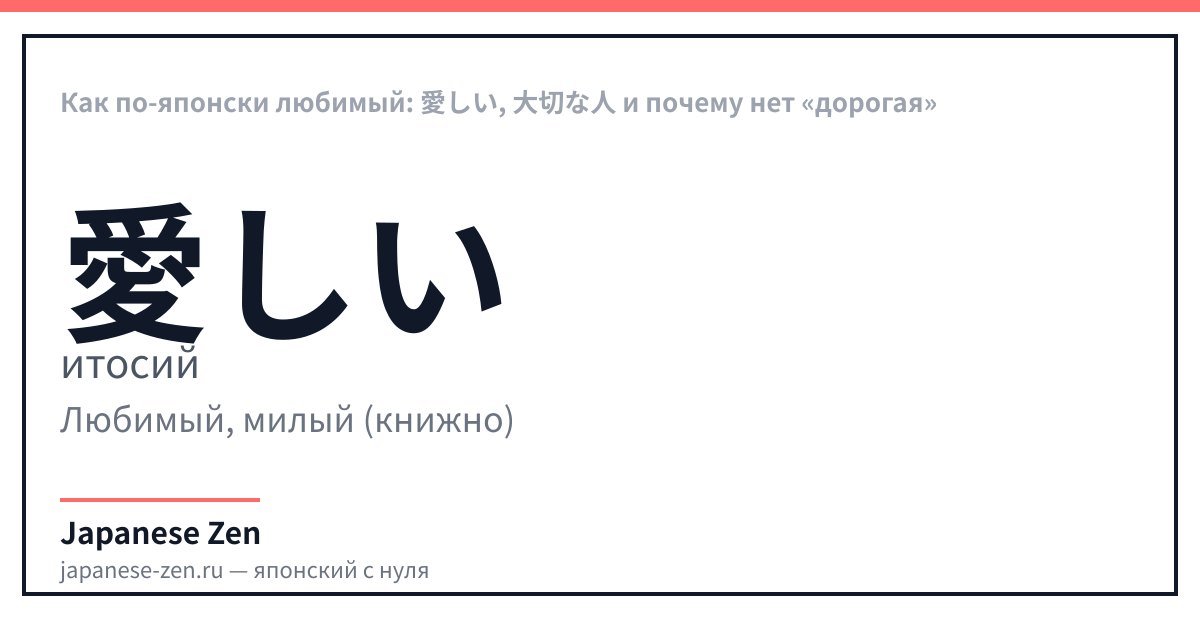
'Beloved' in Japanese is 愛しい (itoshii) in a bookish sense and 大切な人 (taisetsu na hito) 'important person' in everyday speech. As an address, Japanese people use the name, not the word 'beloved': あなた (anata) from a wife sounds like 'dear', but in other cases it is better to avoid it.
A Japanese couple addresses each other by name, not 'beloved' or 'dear': words for this exist, but they are hardly used in speech. The only real family address is あなた, and it is used only by wives, mostly of the older generation.
How to say 'beloved' and 'beloved (feminine)'
| Japanese | Reading | Translation |
|---|---|---|
| 愛しい | itoshii · itoshii | Beloved, dear (bookish) |
| 大切な人 | taisetsu na hito · taisetsu na hito | Dear, important person to me |
| 恋人 | koibito · koibito | Beloved person, partner |
| 彼氏 | kareshi · kareshi | Boyfriend, young man |
| 彼女 | kanojo · kanojo | Girlfriend, girl |
| あなた | anata · anata | You; dear (from wife to husband) |
| 旦那 | danna · danna | Husband (one's own, colloquial) |
Why 'anata' is a risky word
あなた formally means 'you', but in live speech it sounds either coldly distant (like in a questionnaire) or intimate — that's how a wife addresses her husband. Therefore, it's better not to say 'anata' to a stranger: use the surname with a suffix. Japanese generally tries to do without pronouns.
How couples address each other
- By name without a suffix — a sign of closeness: not 'Yuki-san', but just 'Yuki'.
- By name with -chan or a diminutive form: Takako → Tako-chan.
- With invented nicknames, often based on the sound of the name — just like we do.
- Wives of the older generation — あなた; young couples almost never say that.
- About one's partner to outsiders: 彼 (kare) 'he', 彼女 (kanojo) 'she', 主人 or 旦那 about the husband, 妻 or 家内 about the wife.
How to say 'you are dear to me'
大切だよ (taisetsu da yo) — 'you are important, dear to me'. This is one of the strongest phrases in Japanese: it sounds more serious than 好き, but without the weight of 愛してる. It is exactly what you say when you want to indicate not infatuation, but attachment.
Say the phrase aloud
'Taisetsu na hito' — five even syllables, no stress.
FAQ
- How do you say 'beloved' in Japanese?
- 愛しい (itoshii) — bookish 'beloved, dear'. In speech, more often 大切な人 (taisetsu na hito) — 'important person to me' or 恋人 (koibito) — 'partner'.
- How to address a loved one?
- By name without a suffix — that is the sign of closeness. The word 'beloved' as an address is not used in Japanese; あなた is said mainly by wives to husbands.
- Can I say 'anata'?
- With strangers — no: it sounds cold or inappropriately intimate. Address them by surname with a suffix. Japanese tries to do without pronouns altogether.
- What does 'taisetsu da yo' mean?
- 大切だよ — 'you are dear, important to me'. Stronger than 好き, but without the weight of 愛してる: about attachment, not infatuation.
Updated: 2026-07-25