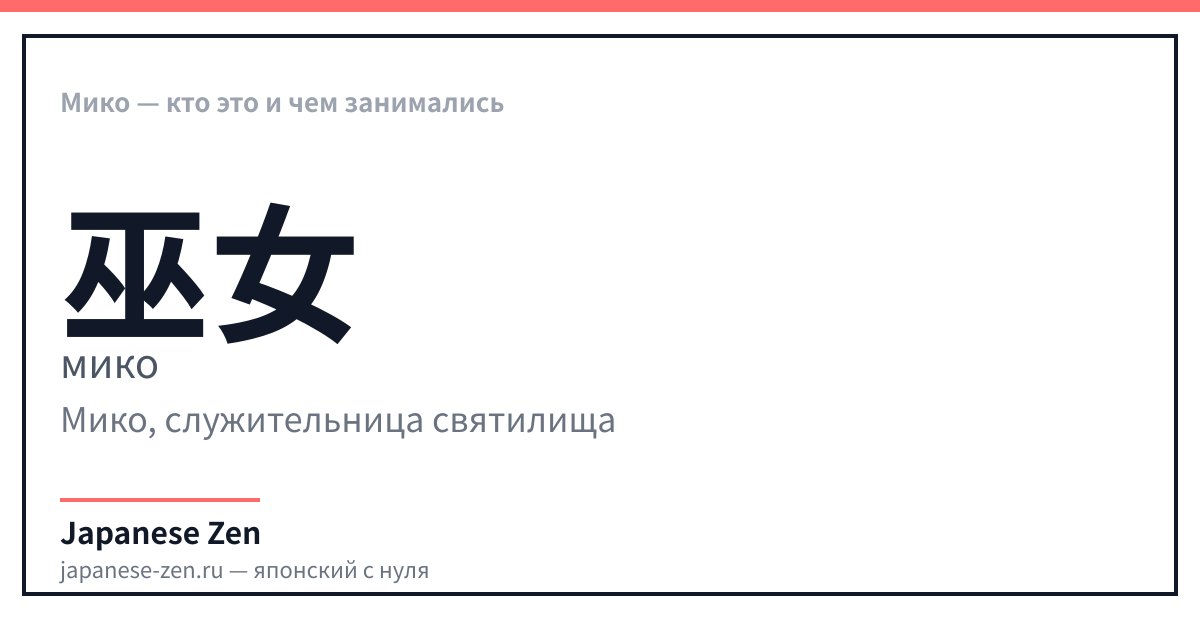
Miko — who they are and what they did
Miko (巫女) is a shrine maiden at a Shinto shrine: she assists the priest during rituals, performs kagura ritual dances, sells omamori and omikuji, and guides visitors. She is not a priestess in the sense of a preacher, nor a nun: no permanent celibacy or spiritual ordination is required, and many work part-time. Recognizable by her white top and red hakama.
Anime has turned the miko into a girl with psychic powers. In a real shrine, she is more of an administrative position in historical attire — with rare exceptions for ritual dance.
Who are miko and what did they do
A miko is a woman who assists at a Shinto shrine: she helps the kannushi priest during ceremonies, performs kagura dances, sells amulets and fortunes, and manages the shrine grounds. In the past, this role included shamanic practices and divination; today, at most shrines, it is an administrative and ceremonial position.
- Duties: assisting at ceremonies, kagura dance, selling omamori and omikuji, cleaning the grounds.
- Income: a permanent position at large shrines; at small ones, part-time work during festivals and New Year.
- Status: not a spiritual rank but a service role; marriage and leaving the profession are not prohibited.
Students working part-time at shrines
No formal religious education is required: large shrines hire female students part-time and train them in ritual movements on the job. The historical shamanic miko — the itako, a medium who enters a trance and speaks on behalf of spirits — is a separate and nearly vanished tradition, not to be confused with the modern shrine maiden.
The word and characters: 巫女
| Japanese | Reading | Translation |
|---|---|---|
| 巫女 | miko · miko | Miko, shrine maiden |
| 神社 | jinja · jinja | Shinto shrine |
| 袴 | hakama · hakama | Wide pleated trousers (traditionally red for miko) |
| 白衣 | byakue · byakue | White outer kimono |
| 鈴 | suzu · suzu | Ritual bell |
巫女 — a woman as intermediary
巫女 consists of two characters: 巫 'shamaness, intermediary with spirits' and 女 'woman'. The first character is rare and almost never used elsewhere — it is a highly specialized term of Shinto practice, not a common word.
袴 — значение: sheath (of a leaf) — онъёми: コ、ク — кунъёми: はかま、ずぼん — 11 штрих(ов). 袴 — 'hakama': wide trousers, part of historical attire. Traditionally bright red for miko, dark for men in kendo and aikido.
Listen to the words and repeat — the app will evaluate your pronunciation.
Miko in the modern shrine
Yes, and it is one of the most living traditions: miko work continuously at active shrines. During New Year and major festivals, their numbers surge with part-time students. The attire and duties have barely changed over the decades.
How a modern miko differs from the historical one
Shamanic functions — trance, divination, communicating with spirits — have almost entirely disappeared: these are now practiced by rare, separate traditions like the itako in northern Honshu. An ordinary miko at a city shrine is not a medium but an assistant for rituals and at the amulet shop.
Miko in anime and dramas
- White top and red hakama — the most recognizable costume code, which animators rarely change.
- The scene with a bow and arrows at the shrine is an artistic exaggeration: archery is not part of a miko's regular duties.
- Dancing with suzu bells before the altar — a rare but real detail of the kagura ritual.
- A miko with spiritual powers, seeing yokai or exorcising curses, is almost always a fictional device, not a reflection of practice.
What is most often exaggerated
Adaptations love to endow miko with supernatural abilities — seeing spirits, exorcising demons, reading fate. In reality, this is an administrative and ceremonial position without mysticism, and the shamanic layer of the tradition has nearly vanished.
FAQ
- Who are miko?
- They are shrine maidens at Shinto shrines: they assist the priest during ceremonies, perform kagura dances, and sell amulets and fortunes. It is not a spiritual rank but a service role — often combined with studies as part-time work.
- What did miko do?
- They assisted at rituals, performed ceremonial dances, sold omamori and omikuji, and managed the shrine grounds. The historical shamanic miko also divined and entered trances — today that is a separate, nearly extinct tradition.
- How is the word 'miko' written in Japanese?
- 巫女, in kana みこ. The first character 巫 means 'shamaness, intermediary with spirits', the second 女 means 'woman'. The character 巫 is rare and almost never appears outside this term.
- Are there miko today?
- Yes, and actively: they work continuously at active shrines, and during New Year and major festivals their numbers surge with part-time students for the short season.
- How are miko different from hanami participants?
- They are different things: miko is a service role at a shrine year-round, while hanami is a seasonal cherry-blossom viewing festival in which anyone can participate without a uniform or duties.
- Why is the miko so recognizable in anime?
- The miko is a frequent character in stories about shrines and the supernatural: the white top and red hakama are instantly recognizable. The supernatural abilities attributed to her in the plot are almost always fiction, not a reflection of real duties.
Sources
Updated: 2026-08-24