Oiran — who they were and what they did
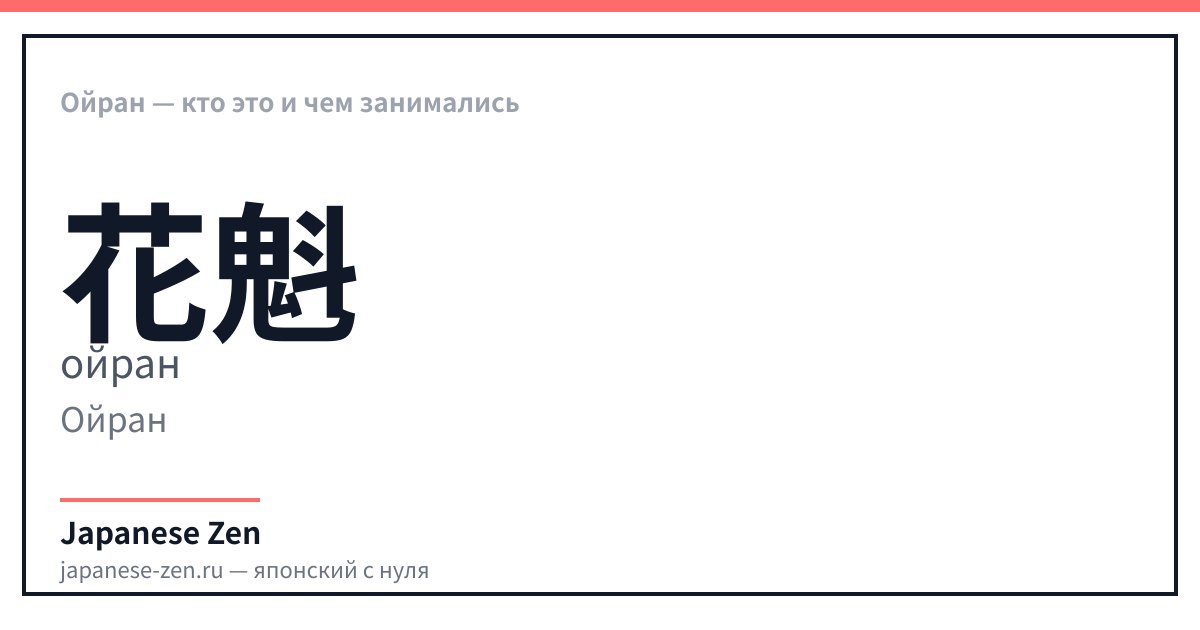
Oiran (花魁) were high-ranking courtesans in the pleasure quarters of Edo, not the same as geisha: geisha sold artistic skill, oiran sold company for money, though both could sing, dance, and converse. The word literally means 'flower leader': 花 'flower' plus 魁 'first, leader'. The profession disappeared with the legalization and prohibition of the system in the 20th century.
The lavish kimono with an obi tied in front and the procession down the street make the oiran the most recognizable image of the old pleasure quarter — and the most misunderstood.
Who were oiran and what did they do
Oiran were the highest rank in the hierarchy of courtesans in the pleasure quarters of the Edo period, especially Yoshiwara in Tokyo. Unlike ordinary workers of the quarter, oiran were public figures: they set fashion trends for hairstyles and kimono, held oiran-dochu processions down the main street, and received guests only by recommendation and prior arrangement.
- Duties: receiving guests, but also calligraphy, poetry, tea ceremony, music — status required education.
- Income: shared with the brothel house, which paid for training and luxurious costumes, a scheme similar to geisha okiya.
- Position: the top of the strict hierarchy of the quarter, but without personal freedom — contracts were signed in childhood.
Girls were sold into the quarter
Poor families sold girls to the quarter's houses, often during famine years. Training began at an early age through stages similar to the geisha system: years of service and observing seniors, then a gradual transition to independent reception of guests — only a few managed to reach the rank of oiran, the majority remained ordinary yujo.
The word and characters: 花魁
| Japanese | Reading | Translation |
|---|---|---|
| 花魁 | oiran · oiran | Oiran |
| 花 | hana · hana | Flower |
| 着物 | kimono · kimono | Kimono |
| 帯 | obi · obi | Kimono sash (for oiran, tied in front, not in back) |
| 遊女 | yūjo · yuujo | Courtesan (general term; oiran is the highest rank among yujo) |
花魁 — first among flowers
花魁 is an unusual combination: 花 'flower' and 魁 'first, leader'. Literally — 'flower leader' or 'first among flowers', meaning the first beauty of the quarter. The character 魁 is rare and appears almost nowhere else.
魁 — значение: first, pioneer, to begin, beginning — онъёми: カイ — кунъёми: さきがけ、かしら — 14 штрих(ов). 魁 — 'first, leader': a rare character that in modern language appears almost only in this word and in names.
Listen to the oiran words and repeat — the app will evaluate your pronunciation.
When did oiran disappear
No: the pleasure quarter system closed with the post-war Anti-Prostitution Law of 1956, and Yoshiwara itself as a quarter ceased to exist in that form even earlier. The word and image remain in history and popular culture, but the profession no longer exists.
Where the modern image of oiran came from
The oiran costume survives as a theatrical and festival image: oiran-dochu processions are recreated at local festivals as a historical attraction, not a revival of the profession — participants simply wear the costume for a day.
Oiran in anime and dramas
- An obi tied in front with a voluminous knot is the main visual marker that distinguishes an oiran costume from a geisha kimono.
- Several layers of kimono worn overlapping with a wide collar — a detail emphasized in scenes of public appearances.
- High lacquered geta on three supports and a distinctive shuffling walk — often featured in scenes of ceremonial processions.
- An oiran character as a symbol of luxury and simultaneously lack of freedom — a frequent dramatic contrast in historical settings.
Oiran and geisha are not the same
Oiran and geisha are almost always confused: the difference is in the type of occupation, not the lavishness of the costume. Geisha are not about physical intimacy; oiran historically were, though both professions required years of training in the arts.
FAQ
- Who were oiran?
- High-ranking courtesans in the pleasure quarters of Edo, especially Yoshiwara. They set fashion trends for kimono and hairstyles, held public processions, and received guests only by prior arrangement.
- What did oiran do?
- They received guests for payment, but their status also required other skills: calligraphy, poetry, tea ceremony, and music. Income was shared with the quarter's house, which paid for training and costumes.
- How do you write 'oiran' in Japanese?
- 花魁, in kana おいらん. The first character 花 means 'flower', the second 魁 means 'first, leader'. Literally — 'first among flowers', meaning the first beauty of the Edo pleasure quarters.
- Do oiran exist today?
- No, the profession disappeared with the Anti-Prostitution Law of 1956. The costume and image survive as a festival reenactment: oiran-dochu processions are recreated at local festivals as a historical attraction.
- How are oiran different from geisha?
- By the type of occupation: geisha sold artistic skill, oiran sold company for money. Visually, they are distinguished by the obi: oiran tie it in front, geisha in the back.
- Are oiran related to hanami?
- There is no direct connection: oiran is a profession, hanami is a seasonal festival of cherry blossom viewing. The word 'oiran' itself contains the character 花 'flower', and at festivals the oiran image is sometimes included in spring celebration programs.
Sources
Updated: 2026-08-24