Omamori — what it is and why you need it
Omamori (お守り) is a fabric amulet pouch from a Shinto shrine or Buddhist temple, inside which is a consecrated paper or wood slip: it is believed that opening it will dissipate the protection. Each one is tailored to a specific misfortune — health, exams, safe travel, a good marriage — and you should buy it where people pray specifically for that.
On the shelf it looks like a souvenir keychain. The difference is simple: a souvenir is bought as a keepsake, an omamori is bought with the expectation that it will actually ward something off.
What is an omamori and why do you need it
An omamori is a small fabric pouch with a drawstring, inside which is sealed a paper or wooden relic consecrated by a priest. They are sold at Shinto shrines and Buddhist temples: they help against a specific misfortune or for a specific purpose, not just 'for general luck', although there are also universal variants.
- Health 健康 — against illness in general or a specific organ.
- Study and exams 合格 — the most popular among schoolchildren and students before entrance exams.
- Travel 交通安全 — hung in a car or carried in a bag during trips.
- Love and marriage 縁結び — for a lucky encounter or a strong relationship.
Where it is worn
It is carried on one's person — in a bag, wallet, on a backpack — or hung where the request is directed: on the rearview mirror in a car, above a desk. Once a year, usually at New Year, it is customary to return the old omamori to the shrine for burning in a special ceremony and buy a new one — it is believed that the protection is used up over the year.
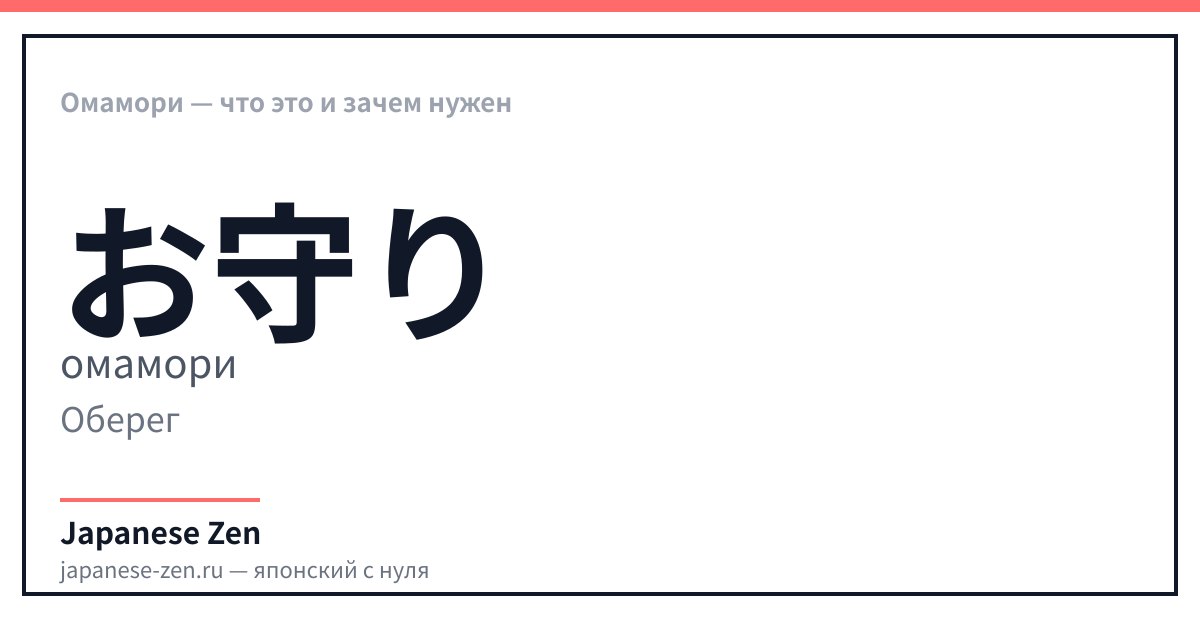
Name and kanji: お守り
| Japanese | Reading | Translation |
|---|---|---|
| お守り | omamori · omamori | Amulet |
| 守る | mamoru · mamoru | To protect |
| 健康 | kenkō · kenkō | Health |
| 合格 | gōkaku · gōkaku | Passing an exam |
| 縁結び | enmusubi · enmusubi | Bond of fate, luck in love |
What is embroidered on the pouch
On the outside of the pouch, the name of the shrine and the purpose of the amulet are usually embroidered or printed — for example, 合格祈願, 'prayer for passing an exam'. The prefix お is polite, so in conversation people usually say 'omamori' rather than the bare '守り'.
守 — значение: guardian, protection, to protect, to obey — онъёми: シュ、ス — кунъёми: まも.る、まも.り、もり、-もり、かみ — 6 штрих(ов). 守 — 'to protect, guard': the same character in 保守 'hoshu', conservative, literally 'to maintain and protect', and in 留守 'rusu', absence from home.
Write 守 along the guides — the app will check the stroke order.
Omamori in anime and games
- A character hangs an omamori on a backpack or phone before an important event — an exam, a trip, a battle.
- An amulet given by a loved one before parting is a common plot device that sets up an emotional storyline.
- A close-up of the pouch with its drawstring in a frame is a way to hint to the viewer at imminent danger or protection from it.
- An omamori with unusual power that actually works in the plot — a fantastic premise layered on an everyday object.
How viewers read this detail
Even without translation, Japanese viewers immediately understand the gesture: giving an omamori means explicitly wishing luck or safety to a specific person, so a gift scene is almost always read as a sign of care.
Shrine shop
They are sold in the shop at almost any active shrine or temple — usually near the entrance or by the main hall, alongside omikuji and ema plaques. The price is symbolic, and the proceeds go to the upkeep of the shrine.
Who gets an amulet as a gift, and who doesn't
- Given to: a student before an exam, a friend before a trip, a couple — for a successful relationship.
- Not given: a health amulet to a seriously ill person without permission — it could sound like a hint about a diagnosis.
- Not mixed: an amulet from a Shinto shrine and one from a Buddhist temple are traditionally not kept together in the same pouch.
FAQ
- What is an omamori?
- A fabric amulet pouch from a Shinto shrine or Buddhist temple with a consecrated paper inside. It is tailored to a specific purpose — health, exams, safe travel — not just 'for general luck'.
- Why do you need an omamori?
- To carry protection against a specific misfortune or for a specific purpose: passing an exam, health, safe travel, luck in love. The type of amulet is chosen according to what you are praying for.
- How do you write 'omamori' in Japanese?
- お守り, in kana おまもり. The root 守る means 'to protect', the prefix お is a polite form. The name of the specific shrine and the purpose of the amulet are usually embroidered directly on the fabric pouch.
- What does omamori mean?
- Protection or luck in a specific area of life: there are separate amulets for health, study, travel, love, and a good marriage. You must not open the pouch — it is believed that the protection will dissipate.
- Where do you find omamori in Japan?
- They are sold in the shop at almost any active shrine or temple, near the entrance or by the main hall. Once a year, the old one is traditionally returned for burning and a new one is bought.
- What does a gifted omamori mean in a scene?
- Often as a detail before an important event: a character hangs the amulet on a backpack or receives it as a gift before parting. Viewers immediately read the gesture of giving as a wish for luck and care.
Sources
Updated: 2026-08-24