Yamamba — Who Is She in Japanese Mythology
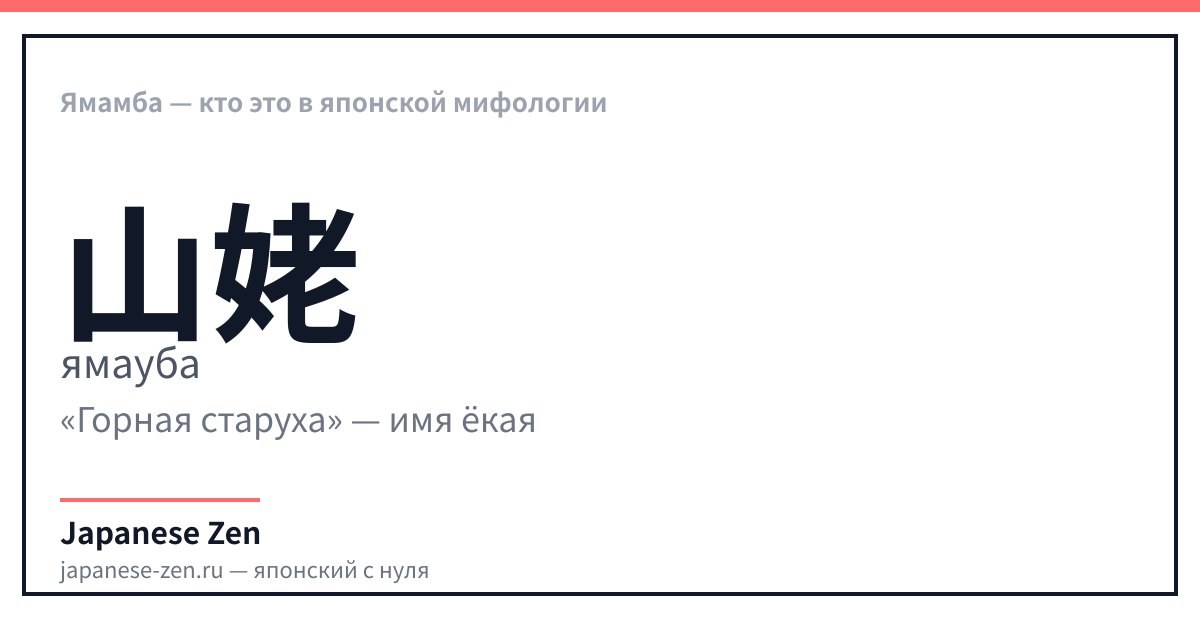
Yamamba (山姥) is a yokai as remembered by Japanese mythology: an old woman cannibal who lives alone deep in the mountains. She lures lost travelers with lodging, and when they fall asleep, she eats them; in some tales she also has a second mouth hidden under the hair on the back of her head. Her name was used in the 1990s for a Japanese youth subculture with extreme makeup and tanning.
Yamamba is a rare folklore character that survived into youth fashion: teenagers of the nineties clearly weren't afraid of being eaten, since they took the name of the mountain cannibal as a brand.
Who Is Yamamba and Why Is She Feared
Yamamba is an old woman cannibal who lives alone in impassable mountains. In fairy tales, she usually offers a lost traveler lodging and food, lulls their vigilance with hospitality, and at night eats the victim. In some legends, she has a second mouth on the back of her head, hidden by thick hair — she uses it to eat secretly from her interlocutor while he sits opposite.
- Habitat: deep mountains, far from villages.
- Tactic: hospitality as a trap — lulls vigilance before attacking.
- Special feature: in some tales — a second mouth hidden under the hair on the back of the head.
- Hero's salvation: three magical ofuda talismans that create obstacles during the chase — the plot of the fairy tale 'The Three Talismans'.
Is She Always a Cannibal
In most folk tales, she is certainly dangerous. But in Noh theater, the play 'Yamamba' portrays her image as more complex: not just a predator, but a spirit doomed to wander the mountains forever — a tragic figure, not only a frightening one.
山姥 — 'Mountain Old Woman'
| Japanese | Reading | Translation |
|---|---|---|
| 山姥 | yamauba · yamauba | 'Mountain old woman' — the name of the yokai |
| 山 | yama · yama | Mountain |
| お札 | ofuda · ofuda | Protective talisman |
| 食わず女房 | kuwazu nyōbō · kuwazu nyōbō | 'The Wife Who Does Not Eat' — a famous tale about yamamba |
| 迷う | mayou · mayō | To get lost |
Yamauba or Yamamba
山姥 is read two ways: やまうば (yamauba) and やまんば (yamamba) — the second variant with an inserted nasal sound is more common in colloquial speech, and it is this one that formed the basis of the name of the 1990s youth subculture with bright tan and white makeup around the eyes.
山 — значение: mountain — онъёми: サン、セン — кунъёми: やま — 3 штрих(ов). 山 — 'mountain': a pictogram of three peaks. One of the first kanji learned in Japanese.
Write 山 along the guides — a simple and frequent character of N5 level.
Yamamba in Anime and in the Fashion of the Nineties
- 'Natsume's Book of Friends' and similar yokai series periodically introduce mountain cannibal spirits as individual episode characters.
- 'Inuyasha' — mountain witches and cannibal spirits regularly appear as secondary opponents.
- According to one version of folklore, the mother of the legendary strongman Kintaro was exactly a yamamba — a rare case where a cannibal is also described as a caring mother.
- The youth subculture 'yanmamba' (gyaru fashion of the nineties) directly borrowed the yokai's name for a style with extreme tanning.
FAQ
- Is Yamamba a deity?
- No, she is a yokai: an old woman cannibal who lives alone in the mountains and lures travelers with false hospitality.
- What is Yamamba dangerous for?
- She lures lost travelers with lodging and food, only to eat them herself. In some tales, she has a second mouth hidden under the hair on the back of her head.
- Yamauba or yamamba — which is correct?
- 山姥 is read やまうば (yamauba) or やまんば (yamamba). 山 means 'mountain', the second character means 'old woman'. The colloquial variant with the nasal sound gave the name to the youth subculture of the 1990s.
- Where do mountain cannibals appear in anime?
- Mountain witch-cannibals periodically appear in 'Inuyasha' and 'Natsume's Book of Friends' as secondary figures, usually associated with deception and the dangers of the mountains.
- Does a cult of Yamamba exist in Japan?
- There is no separate cult of worship — she is a character from fairy tales and Noh theater, not an object of worship. However, her name survived in the youth fashion of the 1990s with bright tan and white makeup.
- Is Yamamba a witch or a yokai?
- A yokai — a supernatural creature of folklore, without the status of a deity. In the Noh play, she is sometimes interpreted as a spirit doomed to wander the mountains forever.
Sources
Updated: 2026-08-29