Japanese Proverbs: 20 Sayings with Readings and Meanings
Japanese proverbs (諺, "kotowaza") are short sayings in which generations of experience are packed into an image: a nail, a frog in a well, a cat and gold coins. Below are 20 proverbs with readings, literal translations, and meanings, an analysis of the most famous one — about the protruding nail — and an explanation of how a proverb differs from an idiom.
Japanese people love to cite proverbs in ordinary conversation, and many know dozens of such expressions by heart. For a language learner they are doubly convenient: they are ready-made phrases, they contain common kanji, and their meaning is remembered through an image. Let's look at how a proverb is structured and go through two collections.
What ことわざ Is and How It Differs from an Idiom
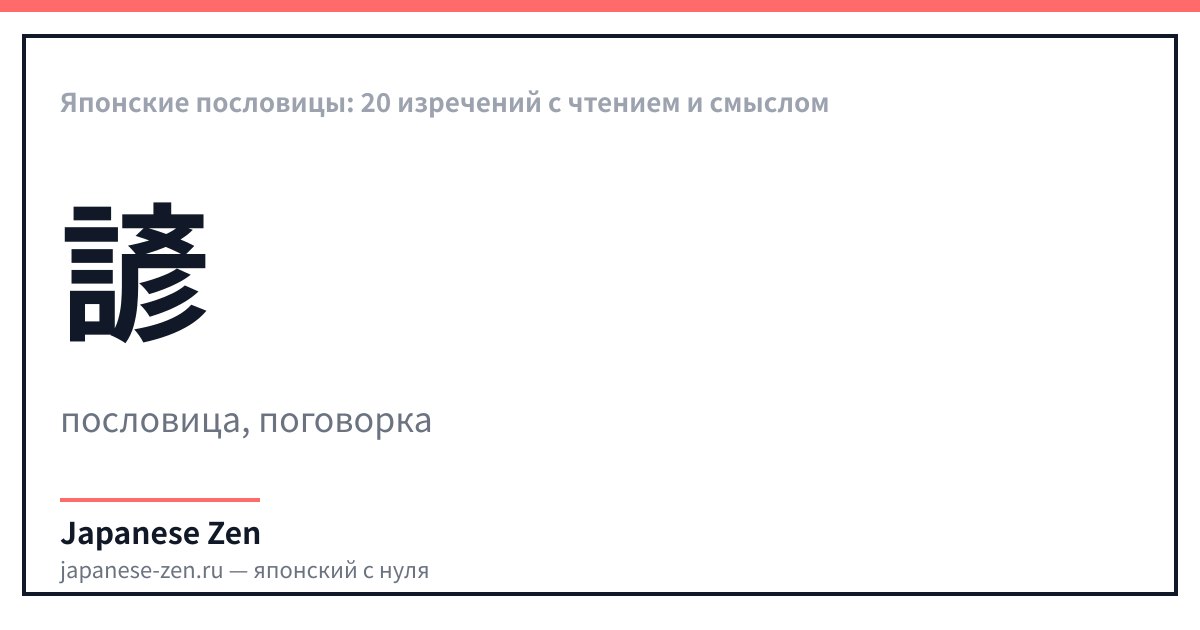
The Kotobank dictionary defines 諺 (kotowaza) as a short expression that has been passed down by word of mouth for centuries and carries a lesson or a mockery. It usually grew out of everyday experience and is built on an image, a comparison, or a sound resemblance.
Proverb, Idiom, and Aphorism: Three Different Things
A proverb is a complete piece of advice or observation: "The protruding nail gets hammered down." An idiom, 慣用句 (kan'yōku), is a set phrase inside a sentence, and it does not contain a complete thought. For example, 猫の手も借りたい (neko no te mo karitai) literally means "I want to borrow even a cat's paw" and means "so busy that any helper will do." An aphorism, 格言 (kakugen), according to the dictionary, more often belongs to a specific sage, sounds stricter and more didactic, whereas a proverb is closer to everyday speech.
- 諺 (kotowaza) — a folk saying with an image: 猫に小判.
- 慣用句 (kan'yōku) — a set phrase: 顔が広い "knows many people" (literally "wide face").
- 格言 (kakugen) — a didactic saying, often with a known author.
Japanese Proverbs About Study, Patience, and Caution
The first collection is about how things get done. Most of these proverbs are heard at school, at work, and in conversation with those who are learning Japanese.
| Proverb | Reading | Translation and Meaning |
|---|---|---|
| 千里の道も一歩から | せんりのみちもいっぽから | "Even a journey of a thousand ri begins with a single step" — any big undertaking starts small |
| 塵も積もれば山となる | ちりもつもればやまとなる | "Even dust, when piled up, becomes a mountain" — small things accumulate into something big |
| 急がば回れ | いそがばまわれ | "If you're in a hurry, take the detour" — the reliable path is faster than the risky shortcut |
| 二兎を追う者は一兎をも得ず | にとをおうものはいっとをもえず | "If you chase two rabbits, you won't catch either" — by spreading yourself thin, you achieve nothing |
| 案ずるより産むが易し | あんずるよりうむがやすし | "Giving birth is easier than worrying about it" — the task itself is usually simpler than the fear of it |
| 習うより慣れろ | ならうよりなれろ | "Rather than learning, get used to it" — practice teaches better than theory |
| 百聞は一見に如かず | ひゃくぶんはいっけんにしかず | "Hearing a hundred times is not as good as seeing once" — firsthand experience is worth more than others' accounts |
| 転ばぬ先の杖 | ころばぬさきのつえ | "A cane before you fall" — prepare in advance |
| 石橋を叩いて渡る | いしばしをたたいてわたる | "Tap the stone bridge before crossing" — you can never be too careful |
| 学問に王道なし | がくもんにおうどうなし | "There is no royal road to learning" — there is no shortcut to knowledge |
What This Collection Teaches
There are two lines here that often argue with each other: "start small" and "don't take risks." Japanese speech comfortably holds both, and the situation decides which to apply. The proverb 急がば回れ is therefore convenient to remember together with 案ずるより産むが易し: one advises not to rush, the other — not to be afraid to begin.
Japanese Proverbs About People and Life
The second collection is about people: about boasting, envy, hidden talents, and how to live alongside others.
| Proverb | Reading | Translation and Meaning |
|---|---|---|
| 出る杭は打たれる | でるくいはうたれる | "The protruding stake gets pounded down" — someone who stands out attracts criticism |
| 井の中の蛙大海を知らず | いのなかのかわずたいかいをしらず | "The frog in the well knows nothing of the ocean" — don't shut yourself in your own little world |
| 猫に小判 | ねこにこばん | "Gold coins to a cat" — value is useless to someone who doesn't understand it |
| 馬の耳に念仏 | うまのみみにねんぶつ | "A prayer in a horse's ear" — it's useless to persuade someone who isn't listening |
| 花より団子 | はなよりだんご | "Dango over flowers" — substance matters more than beautiful appearances |
| 能ある鷹は爪を隠す | のうあるたかはつめをかくす | "The skilled hawk hides its talons" — true mastery doesn't boast |
| 縁の下の力持ち | えんのしたのちからもち | "The strongman under the veranda" — someone whose unnoticed work holds everything else up |
| 灯台下暗し | とうだいもとくらし | "It's dark right under the lamp" — the answer is often right nearby |
| 笑う門には福来る | わらうかどにはふくきたる | "Fortune comes to the laughing gate" — joy attracts good luck |
| 雨降って地固まる | あめふってじかたまる | "After the rain, the ground hardens" — difficulties make people and relationships stronger |
The Japanese Proverb About the Nail: What It Really Means
出る杭は打たれる is the most quoted Japanese proverb, and it is often read as a verdict on Japanese society. Kotobank explains it differently: a person with talent and visible achievements is often disliked, and the image is taken from work, when protruding stakes are pounded down level with the rest. This is an observation about envy, not a call not to stick out. The proverb itself does not advise hiding; it honestly warns of what a conspicuous person risks.
The Name and the Kanji: 諺
諺 — значение: proverb, saying — онъёми: ゲン — кунъёми: ことわざ — 16 штрих(ов). 諺 — "proverb, saying." On the left side is the radical 言 "word, speech": the speech sign indicates that these are words that are spoken.
Readings of 諺: ことわざ and ゲン
The main word 諺 is read with the kun reading: ことわざ (kotowaza). According to the dictionary, it goes back to the combination 言の業 — "the deed of words." The on reading ゲン appears in compound words like 俗諺 (zokugen) "folk saying," but in everyday speech the character almost always stands alone and is read ことわざ.
| Japanese | Reading | Translation |
|---|---|---|
| 諺 | kotowaza · kotowaza | Proverb, saying |
| 慣用句 | kan'yōku · kan'yōku | Idiom, set phrase |
| 出る杭は打たれる | deru kui wa utareru · deru kui wa utareru | The protruding stake gets pounded down |
| 千里の道も一歩から | senri no michi mo ippo kara · senri no michi mo ippo kara | Even a journey of a thousand ri begins with a single step |
| 猫の手も借りたい | neko no te mo karitai · neko no te mo karitai | So busy that any help would do (idiom) |
| 案ずるより産むが易し | anzuru yori umu ga yasushi · anzuru yori umu ga yasushi | The task itself is easier than worrying about it |
Write 諺 along the guides: the character is complex, but the left part 言 is familiar from dozens of other kanji.
FAQ
- What are the most famous Japanese proverbs?
- The ones most often named are 出る杭は打たれる about the protruding nail, 猿も木から落ちる about the monkey that fell from a tree, 七転び八起き about seven falls and eight rises, and 千里の道も一歩から about a journey of a thousand ri.
- What does the Japanese proverb about the nail mean?
- 出る杭は打たれる literally means "the protruding stake gets pounded down." According to Kotobank, it is an observation: a person with talent and noticeable achievements is usually disliked. The image is taken from work, where protruding stakes are pounded down level with the rest.
- How does a Japanese proverb differ from an idiom?
- A proverb (諺) is a complete thought with a lesson-like meaning. An idiom (慣用句) is a set phrase that fits into a sentence: 顔が広い means "to have many acquaintances." An aphorism (格言) differs in that it is more often tied to the name of a sage and sounds stricter.
- How do you read Japanese proverbs correctly?
- Look at the reading line: proverbs often contain old forms like 如かず or 成らず that do not appear in modern speech. First read the kana aloud, then break down the kanji. Translating literally is useful, but keep the meaning separate.
- Can you insert proverbs into ordinary Japanese conversation?
- You can — Japanese people do it all the time — but wisely: it is best to quote a proverb at the right moment and at the end of a thought. Short proverbs like 急がば回れ or 猫に小判 sound natural both in writing and in conversation.
Sources
Updated: 2026-09-29