Snakes — who are they in Japanese mythology
Snakes in Japanese mythology are a dual symbol: on one hand, the giant serpent Yamata-no-Orochi, defeated by Susanoo; on the other, the messenger of the goddess of luck and eloquence Benzaiten and the embodiment of water spirits mizuchi. The same form can be a monster or a protector depending on the specific legend.
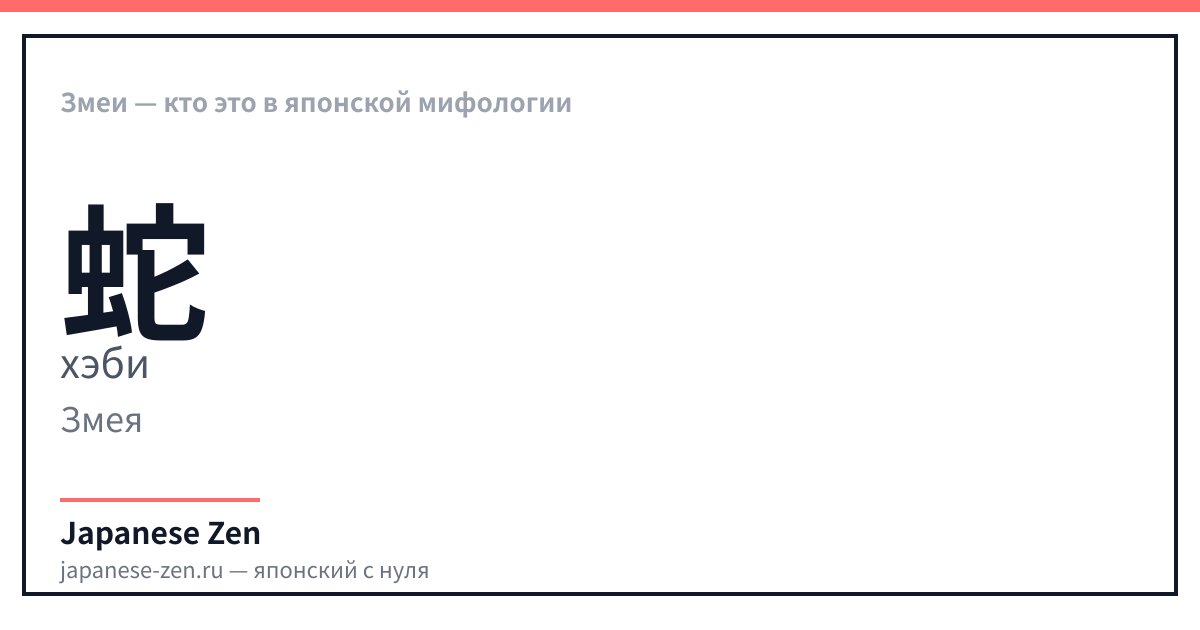
The snake is not condemned once and for all here: the same scaly form serves both as the pantheon's main monster and as the favorite of the goddess of luck — a rare case of a balanced reputation.
The snake in Japan: monster and protector at once
The snake (蛇, hebi) in Japanese mythology is a symbol with a double bottom. On one hand, the eight-headed giant Yamata-no-Orochi is the pantheon's main monster-antagonist, defeated by Susanoo. On the other, the water spirits mizuchi and the snake-messenger of the goddess Benzaiten, patroness of luck, music, and eloquence: in this role, the snake does not frighten but blesses.
- Dark side: Yamata-no-Orochi — the eight-headed man-eating serpent, killed by Susanoo.
- Light side: messenger of the goddess Benzaiten, symbol of luck and eloquence.
- Water element: mizuchi — spirits of rivers and bodies of water in the form of a snake.
- Common trait: shedding skin was traditionally associated with the idea of renewal and immortality.
What the chronicles say about snakes
The story of Yamata-no-Orochi is detailed in both chronicles as part of the myth of Susanoo. The more benevolent, protective image of the snake as Benzaiten's companion developed later, largely under the influence of Buddhist and continental iconography, rather than from original Shinto sources.
蛇 — hebi and orochi
| Japanese | Reading | Translation |
|---|---|---|
| 蛇 | hebi · hebi | Snake |
| 大蛇 | orochi · orochi | Giant serpent |
| 八岐大蛇 | Yamata-no-Orochi · Yamata-no-Orochi | Eight-headed serpent from the myth of Susanoo |
| 水霊 | mizuchi · mizuchi | Water spirit in the form of a snake |
| 脱皮 | dappi · dappi | Molting |
When a snake becomes an 'orochi'
蛇 is read へび (hebi) as the ordinary word for 'snake' and おろち (orochi) in the meaning of 'giant, mythical serpent' — the second reading is almost never applied to a real animal, only to legendary monsters like Yamata-no-Orochi.
蛇 — значение: snake; bitter drunkard, snake — онъёми: ジャ、ダ、イ、ヤ — кунъёми: へび — 11 штрих(ов). 蛇 — 'snake': on the left is the radical 'insect/reptile' 虫, on the right the phonetic. The same radical 虫 is in 蝶 (butterfly) and 蜘蛛 (spider).
Write 蛇 along the guides and break down the stroke order.
Snakes in anime: Orochimaru and his kin
- 'Naruto' — Orochimaru, one of the key villains, is literally built on the image of Yamata-no-Orochi down to the name.
- 'Demon Slayer' and other shonen use the snake as a symbol of cunning and poison for enemy designs.
- Fate/Grand Order and similar games introduce Yamata-no-Orochi as a separate boss in the Japanese story arc.
- Images of Benzaiten with a snake messenger regularly appear in historical anime about shrines and luck.
FAQ
- Who are snakes in Shinto?
- A dual symbol: on one hand, the monster Yamata-no-Orochi, defeated by Susanoo; on the other, the water spirits mizuchi and the messenger of the goddess of luck Benzaiten.
- What are snakes responsible for in Japan?
- Depending on the role: as a monster, they embody the destructive element; as Benzaiten's companion, luck, eloquence, and music. The image has no single, universal function.
- How do you write 'snake' in Japanese?
- 蛇, read へび (hebi) for an ordinary snake and おろち (orochi) for a mythical giant like Yamata-no-Orochi — different readings of the same character.
- Where are snake motifs visible in anime?
- Orochimaru in 'Naruto' is a direct reference to Yamata-no-Orochi down to the name. The eight-headed serpent itself also appears as a boss in Fate/Grand Order.
- Where in Japan are snakes revered?
- In shrines of Benzaiten, often located near water, where the snake serves as her messenger. There is no separate cult of the snake as an independent deity in Shinto.
- Is a snake in Japan a monster or a deity?
- It varies: Yamata-no-Orochi is more of a monster-antagonist than a god, while mizuchi and Benzaiten's companion are closer to water spirits in the service of a true deity.
Sources
Updated: 2026-08-29