Dragons — who are they in Japanese mythology
Dragons in Japanese mythology are water spirits: of rivers, lakes, the sea, and rain. The chief among them, Ryūjin, lives in the underwater palace Ryūgū-jō and controls the tides through two magical jewels. The Japanese dragon has three claws on its paw — the Chinese, for comparison, has four or five.
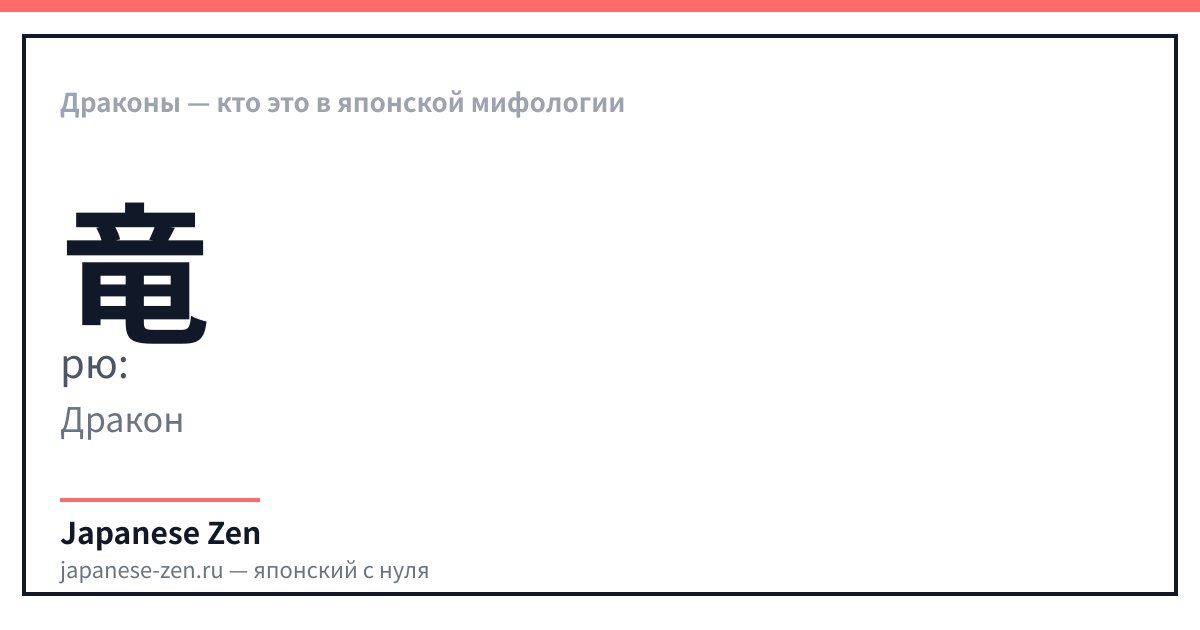
Here, dragons are not so much adversaries for heroic deeds as officials in charge of water resources: they manage rain, the sea, and the timely flooding of rivers — a boring but indispensable job.
What does the Japanese dragon do and where does it live
The Japanese dragon is a water deity: of rivers, lakes, the sea, and rain. The main figure is Ryūjin, the Dragon Lord of the Seas, who dwells in the underwater palace Ryūgū-jō and commands the tides through two magical jewels. The image came from China but acquired local traits: three claws instead of the four or five of the continental prototype, and a much closer connection specifically to the patronage of fresh water, important for rice cultivation.
- Sphere of influence: rivers, lakes, sea, rain.
- Main figure: Ryūjin, the dragon lord of the seas, lives in the palace Ryūgū-jō.
- Distinctive feature: three claws on the paw (the Chinese dragon has four or five).
- Related figure: Yamata-no-Orochi — an eight-headed serpent-dragon defeated by Susanoo.
What chronicles say about dragons, and what temples say
Chronicles mention dragon-like creatures mainly through the myth of the serpent Yamata-no-Orochi, while the full cult of Ryūjin as a separate sea lord developed later, largely under the influence of Buddhist and continental ideas about dragon kings.
竜 and 龍 — two signs for one dragon
| Japanese | Reading | Translation |
|---|---|---|
| 竜 | ryū · ryū | Dragon |
| 龍神 | Ryūjin · Ryūjin | Dragon Lord of the Seas |
| 竜宮城 | Ryūgū-jō · Ryūgū-jō | Underwater palace of the dragon |
| 八岐大蛇 | Yamata-no-Orochi · Yamata-no-Orochi | Eight-headed serpent-dragon |
| 雨乞い | amagoi · amagoi | Prayer for rain |
How 竜 differs from 龍
竜 is the simplified modern form, 龍 is the traditional full form. Both are read りゅう and mean the same thing; the choice of form usually depends on the era of the text or the author's personal preference, not on any semantic difference.
竜 — значение: dragon — онъёми: リュウ、リョウ、ロウ — кунъёми: たつ、いせ — 10 штрих(ов). 竜 — “dragon”: simplified form of the traditional character 龍. Both variants are equally valid in the modern language.
Write 竜 along the guides and break down the stroke order.
Where in Japan do people pray to dragons
- Enoshima Shrine near Kamakura — a complex of sanctuaries closely connected with legends about dragons and the goddess Benzaiten.
- Many Zen Buddhist temples paint dragons on the ceilings of their halls — a symbol of protection and enlightenment.
- The water basins temizuya for ritual hand washing at the entrance to sanctuaries are often shaped like a dragon.
- Festivals against drought traditionally included prayers to Ryūjin for rain.
FAQ
- Who are Dragons in Shintoism?
- Water deities — of rivers, lakes, the sea, and rain. The chief among them, Ryūjin, lives in an underwater palace and commands the tides through two magical jewels.
- What are Japanese dragons responsible for?
- For water in all its forms: rain, rivers, sea, tides. Through rain, dragons are also directly connected to the rice harvest — hence prayers for rain are directed specifically to them.
- How does 竜 differ from 龍?
- 竜 (simplified form) or 龍 (traditional), both read りゅう. There is no semantic difference between them, only a historical and stylistic choice.
- How did dragons get into anime and games?
- The palace Ryūgū-jō and the motif of the underwater dragon kingdom are often quoted in fantasy anime about gods and spirits of the sea, and the eight-headed Yamata-no-Orochi regularly appears as a boss in games.
- Where in Japan do people pray to dragons?
- In sanctuaries near water, for example in the Enoshima Shrine complex, and in Zen Buddhist temples, where dragons are traditionally painted on the ceilings of halls as a symbol of protection.
- Is the Japanese dragon a deity?
- A god (kami) in the case of Ryūjin — a full-fledged water deity with his own court and palace. Less famous dragons in local legends are closer to powerful spirits of a particular body of water.
Sources
Updated: 2026-08-29