What does "otaku" mean in Japanese
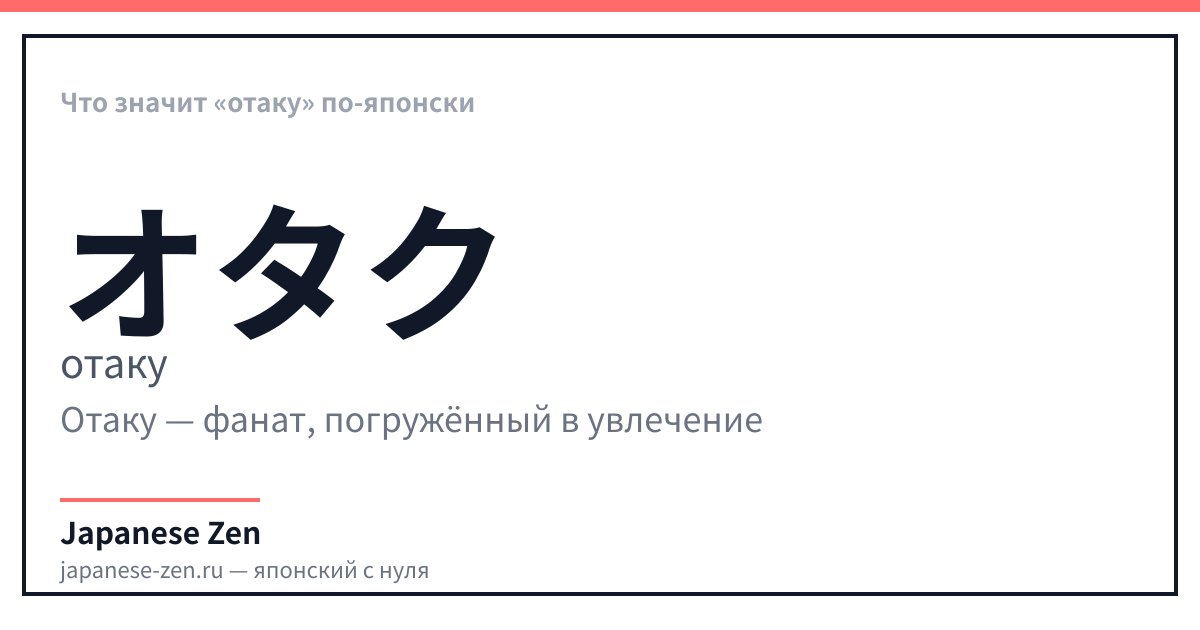
"Otaku" (オタク) means a person completely immersed in their hobby — anime, trains, games, idols. The word grew from the polite お宅 (o-taku), "your home," which fans in the 1980s ceremoniously used to address each other. In Japan it still carries an unpleasant connotation of "recluse," while in the West it has become a neutral self-designation.
At a festival in Akihabara, people proudly call themselves that, but in a conversation with a colleague, the word can sound like a reproach. The difference lies in history: the word went from a polite address to almost a diagnosis and back.
What does "otaku" mean and where did the word come from
お宅 is the polite "your home," and by extension "you." In fan circles of the 1980s, this word was used to address each other instead of names, and over time it stuck to the people themselves.
| Japanese | Reading | Translation |
|---|---|---|
| オタク | otaku · otaku | Otaku — a fan immersed in a hobby |
| お宅 | otaku · o-taku | Your home; you (polite) (original word from which the term derives) |
| アニメオタク | anime otaku · anime otaku | Anime otaku (the word easily combines with the topic of interest) |
| 鉄道オタク | tetsudō otaku · tetsudo: otaku | Train enthusiast (otaku are not only about anime) |
| 推し | oshi · oshi | Favorite character or idol (modern slang from the same community) |
| 同人誌 | dōjinshi · do:jinshi | Fan self-published works (what people buy at Comiket) |
Otaku, weeaboo, and hikikomori are not the same
オタク is about the depth of interest. 引きこもり (hikikomori) is about social isolation, a separate phenomenon. The Western word weeaboo has no Japanese origin at all: it refers to a foreigner who denies their own culture in favor of Japanese. In Japan itself, people use the lighter 好き (ski) — "like" — to soften the expression.
Can you call a Japanese person an otaku
- About yourself — yes, it's fine: アニメオタクです sounds like "I'm an anime nerd," self-deprecating.
- About a stranger — risky: in Japan the word still carries a nuance of "strange, withdrawn."
- In a business setting, it's better to say 〜が好きです ("I like such-and-such") instead of オタク.
- The word is almost always written in katakana — オタク; the variant ヲタク appears in internet slang.
- Proud usage is established in Akihabara and at Comiket: there it means a connoisseur, not an outcast.
Muffled "u" at the end
Three even syllables "o-ta-ku," without stress on "a," as often said in Russian. The final "u" is devoiced — in rapid speech it sounds almost like "otak."
Say the words aloud — the app will compare with the reference recording.
FAQ
- What does "otaku" mean in Japanese?
- オタク — a person deeply immersed in a hobby: anime, games, trains, idols. The word grew from the polite お宅 "your home."
- Is it offensive to call a Japanese person an otaku?
- It can be. In Japan the word retains a nuance of "recluse"; people say it freely about themselves, but it's better not to use it about strangers.
- How do you write "otaku" in Japanese?
- In katakana: オタク. The original polite word is written with kanji — お宅.
- How is otaku different from weeaboo?
- Otaku is a Japanese word about the intensity of interest. Weeaboo was coined in the West for a foreigner who places Japanese culture above their own.
Updated: 2026-07-25