What does “senpai” mean in Japanese
“Senpai” (先輩) means “senior comrade” — someone who joined your school, club, or company before you. The characters read as 先 “before” and 輩 “comrade.” The opposite role is 後輩 (kōhai), the junior. It’s not about age: a twenty-year-old colleague is your senpai if they’ve been working there longer than you.
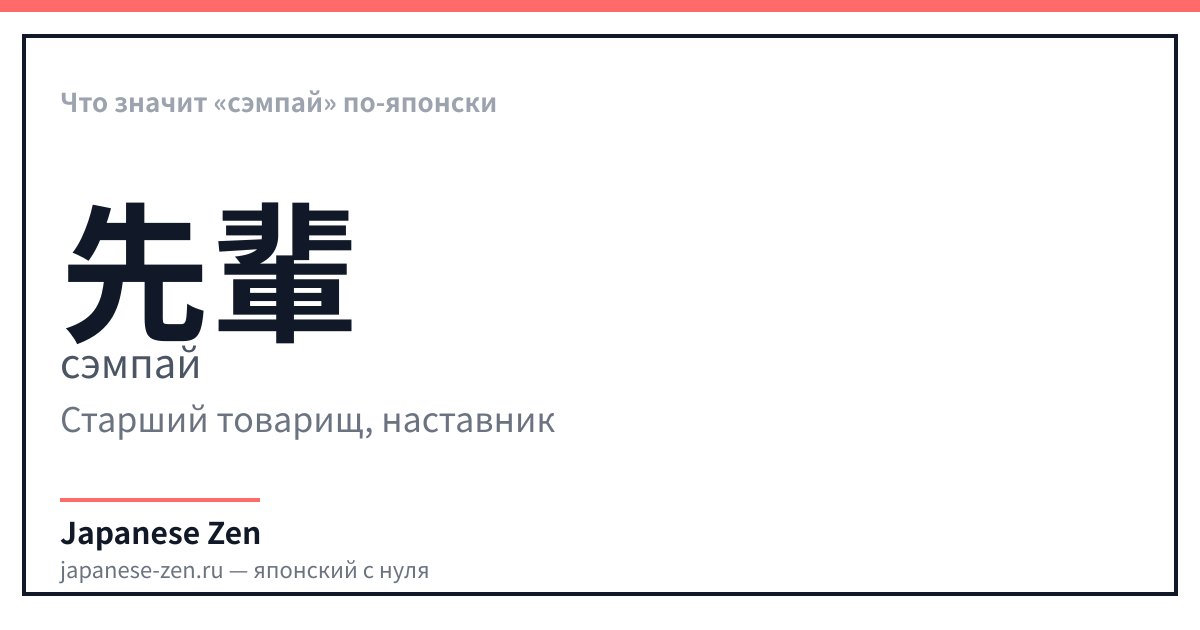
The word is known from anime, but in Japan the entire school and work hierarchy rests on it. It determines who greets first, who carries the bags after practice, and what form of address to use — and getting it wrong is more noticeable than a grammar mistake.
What “senpai” means and who becomes one
The count starts from the date of entry: at school it’s the grade, in a club it’s the year you joined, at work it’s the hire date. Age, rank, and prior experience don’t count.
| Japanese | Reading | Translation |
|---|---|---|
| 先輩 | senpai · senpai | Senior comrade, mentor |
| 後輩 | kouhai · kōhai | Junior comrade (opposite role) |
| 田中先輩 | Tanaka-senpai · Tanaka-senpai | Tanaka-senpai (the word works as a suffix to a surname) |
| 同輩 | douhai · dōhai | Equal in seniority (bookish word, rarely used in speech) |
| 先生 | sensei · sensei | Teacher, professional mentor (same character 先, but a different role) |
“Senpai” or “senpai” — which is correct
In Japanese it’s written せんぱい, but before “p” the “n” sound is pronounced as “m” — so in Russian “sempai” is more accurate. The spelling “senpai” comes from the Latin alphabet. Romaji also varies: the Hepburn system allows both senpai and sempai.
先 — значение: before, earlier, ahead — онъёми: セン — кунъёми: さき、ま.ず — 6 штрих(ов). 先 — the first character of the word, level N5. Click “Show stroke order” to see how to write it by hand.
How to address a senpai and what it changes
- Address a senpai as “surname + 先輩” or just 先輩 — like a name. No need to add ‑さん on top.
- A senpai calls a kōhai by surname with ‑くん or ‑さん: the word 後輩 is rarely said to someone’s face; it’s descriptive.
- Speech with a senpai is polite (です・ます), and in response you’ll hear the usual casual form. That’s normal, not rudeness.
- At work, the senpai’s role is informal mentoring: they explain things to the newcomer that aren’t in the manuals.
- What not to do: don’t call someone your senpai if they joined after you, even if they’re older — seniority is counted by tenure.
Where the anime cliché comes from
In school stories, the senpai is almost a mandatory object of first love, so outside Japan the word has taken on a romantic tint. In the language itself, there’s no such nuance: 先輩 is a neutral term for seniority by tenure, just like “mentor” or “senior colleague.”
Say the words aloud — the app will compare your pronunciation with the reference recording.
FAQ
- What does “senpai” mean in Japanese?
- 先輩 — a senior comrade at school, club, or work: someone who joined before you. It’s counted by tenure, not age.
- Who is a kōhai?
- 後輩 (kōhai) — a junior comrade, the opposite role to senpai. You usually don’t address someone that way to their face; it’s descriptive.
- Which is correct: “sempai” or “senpai”?
- In Russian, “sempai” is more accurate: before “p” the Japanese “n” sounds like “m.” “Senpai” is a calque from the Latin alphabet.
- Is “senpai” a romantic term of address?
- No, in Japanese the word is neutral. The romantic nuance appeared in Western fandom from school anime.
Updated: 2026-07-25