Japanese Name Suffixes: Meaning of Each
Japanese name suffixes and their meanings: -san (neutral politeness), -kun (for boys and juniors), -chan (for girls and close ones), -sama (high respect), -sensei (for teachers and doctors), -senpai (for seniors at school or work). Addressing without a suffix is acceptable only with the closest people.
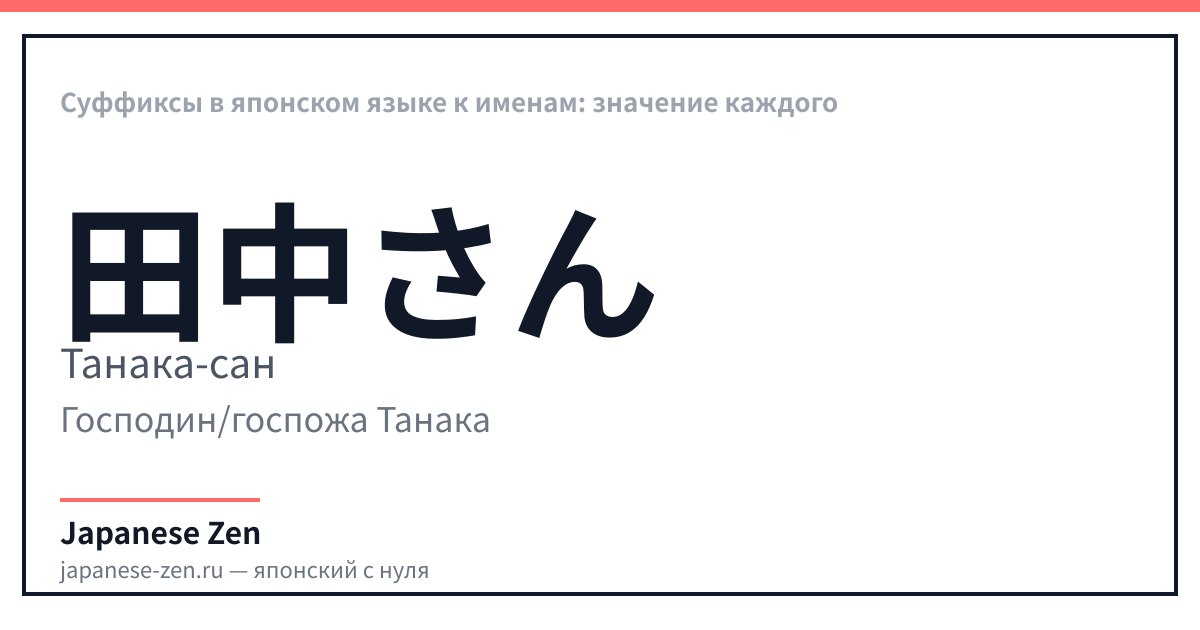
When a Japanese person introduces themselves, they state their surname — and then the listener must choose a suffix. An error in this choice is heard like a wrong note: too warm — familiarity, too cold — offense. Therefore, the suffix here is not a decoration but part of the meaning.
All Japanese Name Suffixes
| Suffix | Reading | Who it's used for | Meaning |
|---|---|---|---|
| さん | -san | almost any adult | neutral politeness, default option |
| 君 | -kun | boys, younger men | warmth and a position of 'equal or above' |
| ちゃん | -chan | girls, small children, close ones, pets | tenderness and diminutive |
| 様 | -sama | clients, letter recipients, deities | high respect |
| 先生 | -sensei | teacher, doctor, lawyer, writer | respect for mastery |
| 先輩 | -senpai | senior at school or work | acknowledgment of seniority |
| 後輩 | -kouhai | junior at school or work | usually not used in address |
| 殿 | -dono | in documents and historical films | archaic respect |
| no suffix | yobisute | family, couple, closest friends | maximum closeness or rudeness |
How to choose if you're unsure
Use -san. It suits men and women, seniors and peers, colleagues and strangers. The only place where it's inappropriate is when referring to yourself: 私さん is impossible, the suffix is always directed at another person.
Rules that are most often violated
- Don't add a suffix to your own name: when introducing yourself, you just say 田中です.
- No suffix is needed for a title: 部長 (department head) is already polite, 部長さん is redundant (though you hear it in real life).
- -sensei replaces -san, not adds to it: 田中先生, but not 田中先生さん.
- A teacher calls a student -kun or -chan, a student calls a teacher only -sensei; there's no symmetry here.
- Switching to address without a suffix is an event in a relationship, not a trifle: in anime, whole scenes are built on this.
How it sounds
| Japanese | Reading | Translation |
|---|---|---|
| 田中さん | Tanaka-san · Tanaka-san | Mr./Ms. Tanaka |
| 先生 | sensei · sensei | Teacher, doctor, master |
| 先輩 | senpai · senpai | Senior comrade |
| お客様 | o-kyaku-sama · o-kyaku-sama | Respected customer |
| よろしくお願いします | yoroshiku onegai shimasu · yoroshiku onegai shimasu | Please treat me favorably (phrase used to close an introduction) |
FAQ
- What suffixes are there in Japanese?
- The main ones: -san (neutral), -kun (for boys), -chan (affectionate), -sama (respectful), -sensei (for teachers), -senpai (for seniors). There's also the archaic -dono.
- Which suffix should I use if I'm not sure?
- -san. It's safe with anyone: man or woman, senior or peer, colleague or stranger.
- Can I add a suffix to my own name?
- No. A suffix is a sign of respect for another person, so you refer to yourself without it: 田中です. The exception is small children who call themselves '-chan'.
- What does addressing without a suffix mean?
- It's 'yobisute' — ultimate closeness: family, couple, old friends. With a stranger, it sounds rude, like shouting a surname.
Updated: 2026-07-25