Mononoke — Who Is It in Japanese Mythology
Mononoke (物の怪) in Japanese mythology is not a single creature, but an ancient term for an evil spirit or curse that causes illness, madness, or misfortune without visible cause. In Heian literature, including 'The Tale of Genji', mononoke is most often a foreign ikiryō or onryō that has possessed a victim. The modern meaning of the word was significantly shifted by Hayao Miyazaki's anime 'Princess Mononoke'.
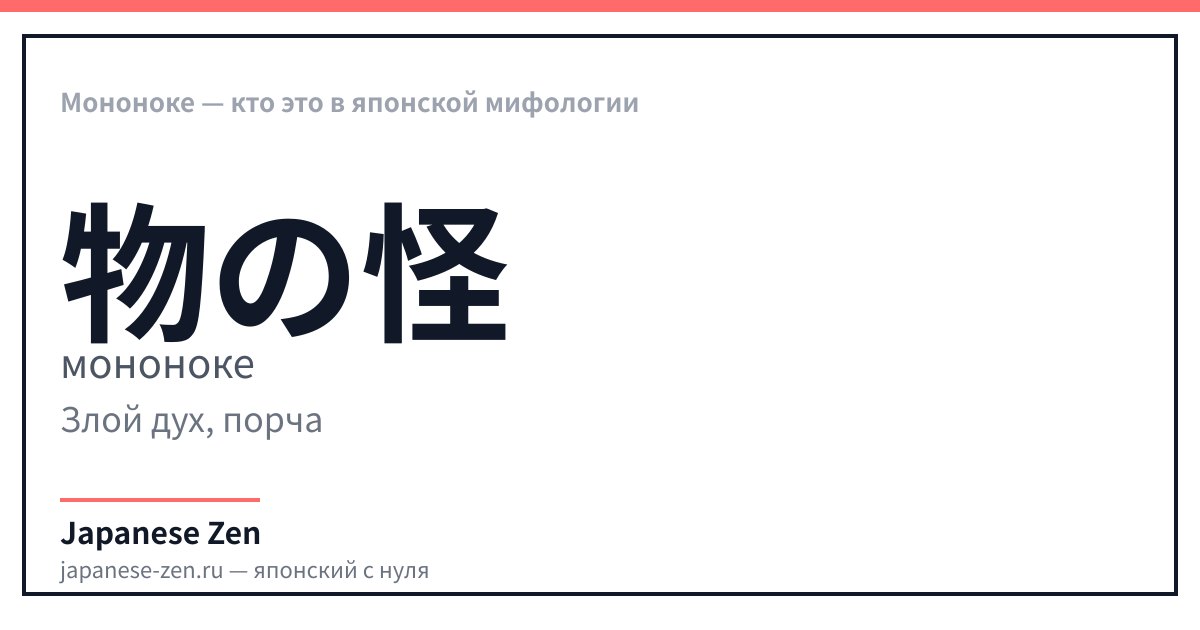
The word 'mononoke' has changed meaning twice in its history: first it denoted an invisible curse, and after Miyazaki's film it came to mean 'forest spirit' in the popular consciousness — and both meanings live in parallel today.
What the Word 'Mononoke' Originally Meant
Mononoke is not the name of a specific creature, but a Heian term for an unexplained illness, madness, or misfortune caused by a possessing evil spirit — most often an ikiryō (the spirit of a living person) or an onryō (the spirit of the dead). In court literature of the 10th–11th centuries, including 'The Tale of Genji', doctors and monks literally 'diagnosed' mononoke as the cause of an ailment and performed exorcism rituals to expel the possessing spirit.
- Classical meaning: an invisible curse or possession by an evil spirit.
- Manifestations: unexplained illness, madness, misfortunes without visible cause.
- Connection to the 'Genji' plot: Lady Rokujō's mononoke possesses her rivals.
- Modern shift in meaning: after Miyazaki's film, 'mononoke' is often used colloquially to mean 'forest spirit'.
Why It Is Not Sought in Chronicles of the Gods
Unlike the gods of the pantheon, mononoke is practically absent from the 'Kojiki' and 'Nihon Shoki' — this concept came later, from court prose and medical practice of the Heian period, not from state chronicles about the gods.
物の怪 — 'Strange Thing'
| Japanese | Reading | Translation |
|---|---|---|
| 物の怪 | mononoke · mononoke | Evil spirit, curse |
| 物 | mono · mono | Thing, creature |
| 怪 | ke · ke | Strangeness, apparition |
| 祈祷 | kitō · kito: | Exorcism prayer |
| もののけ姫 | Mononoke-hime · Mononoke-hime | 'Princess Mononoke' — film by Hayao Miyazaki |
How the Writing 物の怪 Is Analyzed
物の怪 is read もののけ: 物 'thing, creature' plus の 'possessive particle' plus 怪 'strangeness'. Literally — 'strangeness of a thing/creature', indicating that something behaves not as it should due to external interference.
物 — значение: thing, object, to matter — онъёми: ブツ、モツ — кунъёми: もの、もの- — 8 штрих(ов). 物 — 'thing, creature': on the left is the cow 牛, on the right the phonetic. The same character appears in 動物 (animal) and 食べ物 (food).
Write 物 along the guides and learn the stroke order.
How Miyazaki's Film Changed the Meaning of the Word
- 'Princess Mononoke' (1997) — Hayao Miyazaki's film used the word for forest and animal spirits, not for the classical curse, and it is this interpretation that became the most famous outside Japan.
- The anime 'Mononoke' (2007) — a medicine seller exorcises various mononoke, closer to the traditional meaning of the term.
- Adaptations of 'The Tale of Genji' regularly show scenes of the exorcism ritual for mononoke at the bedside of the sick.
- Horror games about possession often borrow the classical interpretation of the term rather than the image from Miyazaki's film.
FAQ
- Is mononoke a creature or a phenomenon?
- Not a single creature and not a Shinto deity, but a term from court literature for an evil spirit or curse that causes illness and misfortune without visible cause.
- What was mononoke attributed to in the Heian era?
- Classically — for unexplained illnesses and madness caused by a possessing spirit. After Miyazaki's film, the word in everyday usage also became associated with spirits of the forest and nature.
- How is the writing 物の怪 analyzed?
- 物の怪 (もののけ): 物 'thing' plus 怪 'strangeness' — literally 'strangeness of a creature'. The term describes not an appearance, but the fact of possession or curse.
- What does 'mononoke' mean in Miyazaki's film?
- Hayao Miyazaki's 'Princess Mononoke' is the most famous example, although the film interprets the word more broadly than the traditional meaning. There is also a separate anime 'Mononoke' about exorcising spirits in the classical sense.
- How did Japan fight against mononoke?
- Through exorcism rituals kitō — monks and spellcasters recited prayers at the bedside of the sick to expel the possessing spirit. Such scenes are described in detail in 'The Tale of Genji'.
- Is mononoke a spirit?
- A spirit in a broad sense — a term for evil possession, not an independent deity. Modern cinema has expanded the meaning of the word to nature spirits, which differs from the original meaning.
Sources
Updated: 2026-08-29