Moon Goddess — Who Is It in Japanese Mythology
Strictly speaking, there is no moon goddess in Japanese mythology: the lunar deity Tsukuyomi is called a god in both the Kojiki and the Nihon Shoki. Not a goddess, but a god — Japan distributed the celestial bodies exactly opposite to the familiar Western scheme, where the moon is female and the sun is male.
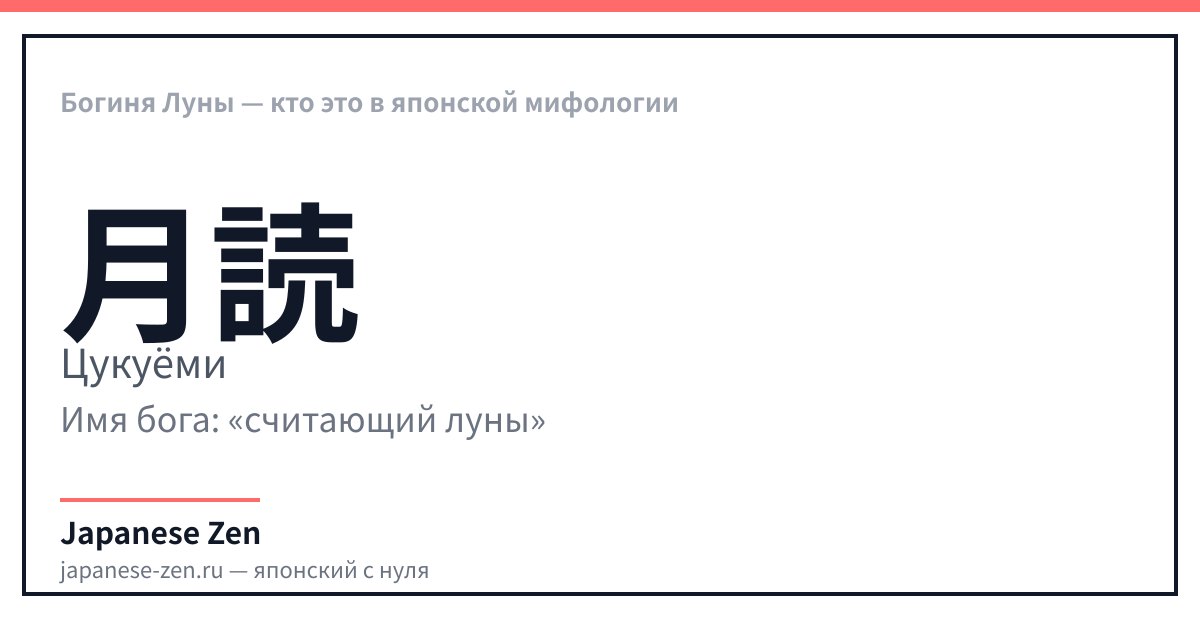
The query “moon goddess” is a perfect example of how expectations from one mythology are substituted into another: in Japan, the default female celestial body is the sun, not the moon.
Who Is Tsukuyomi and Why Is He Called a “Goddess”
In the Kojiki and Nihon Shoki, the lunar deity Tsukuyomi is described as a god, not a goddess — the grammatical and contextual gender in the sources is masculine. The confusion of “moon goddess” comes from outside: in Greek, Roman, and many other mythologies, the moon is traditionally female (Selene, Diana), and the sun is male, and the query by inertia transfers this scheme to Japan, where everything is arranged the opposite way: here the sun is Amaterasu, a woman.
- The actual lunar deity: Tsukuyomi, a god, not a goddess.
- The sun in Japan, for comparison: Amaterasu — a woman, which is also atypical for world mythologies.
- Kinship: Tsukuyomi is the middle of the three main children of Izanagi.
- Possible later exception: in some regional and later syncretic cults, female lunar figures are found, but this is not the main canon.
What the conclusion that he is a god is based on
Both 8th-century chronicles consistently use masculine forms for Tsukuyomi, and there are simply no female lunar deities in the early canon. The discrepancy with foreign readers’ expectations arises already in translation and retelling, not in the source itself.
The Only Story About Tsukuyomi — and It’s About a Quarrel
The only detailed story about Tsukuyomi is not about the moon as such, but about a quarrel with his sister. Sent to the food goddess Ukemochi, he killed her in a rage because she prepared a feast from her own body. Offended, Amaterasu refused to appear in the sky at the same time as him — thus, according to legend, day and night separated forever.
Where the “goddess” came from in retellings
Western adaptations often feminize the lunar deity by inertia or even invent a separate “moon goddess” from scratch, without consulting the primary source. In Japan itself, such confusion does not arise — Tsukuyomi is consistently a male character in all classical texts.
月読 — “Counting the Moon Phases”
| Japanese | Reading | Translation |
|---|---|---|
| 月読 | Tsukuyomi · Tsukuyomi | God’s name: “counting moons” |
| 月 | tsuki · tsuki | Moon, month |
| 太陽神 | taiyōshin · taiyōshin | Sun deity — in Japan, female |
| 月神 | tsukigami · tsukigami | Moon deity (general term) |
| 夜 | yoru · yoru | Night |
Tsukuyomi, Tsukiyomi, and Other Writing Variants
月読 is read つくよみ: 月 “moon” plus 読む “to count” — “counting the moon phases.” In the Nihon Shoki, there are variants 月夜見 and 月弓 with the same reading but a different semantic nuance — “contemplating the night” or “moon bow.”
月 — значение: month, moon — онъёми: ゲツ、ガツ — кунъёми: つき — 4 штрих(ов). 月 — “moon, month”: a pictograph of a crescent moon. The same character appears in 月曜日 (Monday) and dozens of time-related words.
Write 月 along the guidelines — one of the first N5 kanji.
Where the Moon Deity Is Worshipped
- Tsukiyomi Shrine in Ise — a branch of the Ise Jingu complex dedicated personally to Tsukuyomi.
- Matsunoo Taisha in Kyoto — among other deities, it also worships him.
- The tsukimi (月見) festival in September — moon viewing, formally not addressed personally to the god, but related to the same theme.
- Small rural “Tsukiyomi” shrines are scattered across the country without a single major cult center.
FAQ
- Is there a moon goddess in Shinto?
- Strictly speaking, there is no moon goddess in the Japanese canon: the lunar deity Tsukuyomi is described as a god in the Kojiki and Nihon Shoki. The feeling of a “goddess” comes from the habit of other mythologies where the moon is female.
- What does the moon deity govern?
- If we are talking about the actual deity Tsukuyomi — the moon, night, and timekeeping by lunar phases. A separate, independent female cult of the moon is not recorded in the main canon.
- How is the name of the moon deity written?
- The moon deity itself is written 月読 (つくよみ, Tsukuyomi) — a masculine name. 月 means “moon,” 読む — “to count”: literally “counting moons.”
- Does a moon goddess appear in anime?
- Original, author-created moon goddesses in anime are often invented from scratch, without relying on canon — Tsukuyomi himself more often appears as a technique name, for example Itachi’s hypnotic ability in “Naruto.”
- Where in Japan is the moon god worshipped?
- The actual lunar deity Tsukuyomi is worshipped at the Tsukiyomi Shrine near Ise Jingu and at Matsunoo Taisha in Kyoto — both are dedicated to a god, not a goddess.
- Is Tsukuyomi a god or a spirit?
- A kami, one of the three main children of Izanagi along with Amaterasu and Susanoo, and moreover masculine, which is atypical for a lunar deity by the standards of most other mythologies.
Sources
Updated: 2026-08-29