Matsuri — What This Tradition Is and How It Goes
Matsuri (祭り) is a local festival at a Shinto shrine: a portable shrine mikoshi is carried through the streets amid the shouts of bearers, food and game stalls yatai line the road, and the evening often ends with fireworks. Each shrine has its own matsuri with its own calendar — there is no single nationwide date.
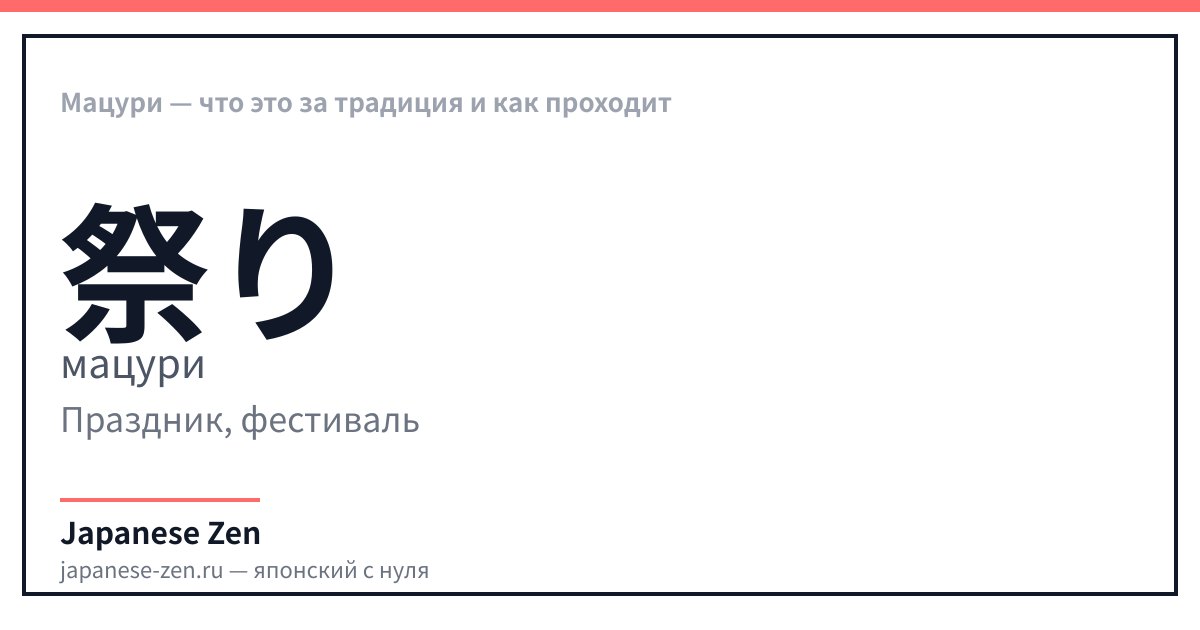
The word 'matsuri' is translated as 'festival,' which is misleading: at its core is not entertainment but an offering to a deity. Stalls and fireworks grew up around the ritual, not the other way around.
What Is Matsuri and When Is It Held
Matsuri is a festival at a Shinto shrine: a rite of gratitude or a request to the local deity, framed as a city celebration. The core is a procession with a portable shrine mikoshi, in which, according to belief, the kami itself resides during the festival. Everything else grows up around the ritual: food, music, a fair.
- When: each shrine has its own calendar, most often tied to the season or the date of its founding.
- Who: the shrine itself and the local community organize it; the mikoshi bearers are usually residents of the district.
- Where: the streets around the shrine, which are closed for a day or two for the procession.
- What to buy: food at yatai — yakisoba, takoyaki, cotton candy — and small prize games.
From the Rural Ritual Year
The word 祭り comes from the verb matsuru — 'to serve a deity, to offer.' Originally it was a purely ritual cycle of the rural year: prayers for a harvest in spring, gratitude in autumn. The urban, fairground part with stalls was added much later, when the festival also became a way to gather people and money for the community.
The Path of the Mikoshi: From Shrine to Street
- Priests perform a rite at the shrine: they transfer the spirit of the deity into the mikoshi.
- Bearers lift the mikoshi onto their shoulders and carry it with shouts along a route around the district.
- Along the way, the procession stops at route markers — sometimes with short ritual pauses.
- In parallel, rows of yatai operate along the streets: food, drinks, games for children and adults.
- In the evening, the program is often closed by a hanabi fireworks display or a taiko drum performance.
Mikoshi Is Not an Attraction
- Interfering with the mikoshi procession — crossing the road in front of the bearers while they are moving.
- Climbing onto the mikoshi structure for a photo — it is not an attraction but a vessel for the deity during the festival.
- Leaving trash near the yatai stalls — trash cans fill up quickly; taking it with you is considered the norm.
- Drinking more than is appropriate and disturbing neighbors — at large matsuri, volunteers and police keep order.
Words and Characters: 祭り
| Japanese | Reading | Translation |
|---|---|---|
| 祭り | matsuri · matsuri | Festival, celebration |
| 神輿 | mikoshi · mikoshi | Portable shrine |
| 屋台 | yatai · yatai | Street stall |
| 花火 | hanabi · hanabi | Fireworks |
| 浴衣 | yukata · yukata | Light summer kimono |
祭る — to Serve a Deity
祭り is one character, from the verb 祭る 'matsuru,' to serve a deity, to offer gifts. The word does not describe the form of the festival but directly names its essence: it is an act of veneration, and fireworks and stalls are a later addition to the ritual.
祭 — значение: ritual, offer prayers, celebrate, foundation, worship — онъёми: サイ — кунъёми: まつ.る、まつ.り、まつり — 11 штрих(ов). 祭 — 'festival, rite of offering': the same character in 祭壇 'saidan,' altar, and in 文化祭 'bunkasai,' school culture festival.
Listen to the matsuri words and repeat — the app will evaluate your pronunciation.
Matsuri in Anime
The matsuri scene is one of the most common summer episodes: almost a mandatory element of a school or romantic plot.
- Rows of brightly lit yatai along the street — a standard backdrop for the main characters' walk.
- Characters in yukata — the matsuri scene often becomes the occasion to first show a hero not in school uniform.
- Hanabi fireworks at the episode's climax — a stable visual code for a confession or an important conversation.
- The mikoshi procession with bearers chanting rhythmic shouts — appears on screen less often, but is instantly recognizable.
What Is Shown Less Often Than You'd Expect
The ritual part — the very moment when the deity is transferred into the mikoshi — is almost never shown in anime: the on-screen version of matsuri is usually limited to the fair and fireworks, leaving the religious core off-screen.
FAQ
- What is matsuri?
- A festival at a Shinto shrine: a rite of gratitude or a request to the local deity, framed as a city celebration with a procession of the portable shrine mikoshi through the streets of the district around the temple.
- When is matsuri held?
- Each shrine has its own calendar, often tied to the season or the date of its founding. There is no single nationwide date — large matsuri often take place in summer, but by no means only then.
- How does matsuri go?
- Bearers carry the mikoshi along a route around the district amid rhythmic shouts, and yatai food stalls operate along the streets. In the evening, the program is often closed by fireworks or a drum performance.
- How is 'matsuri' written in Japanese?
- 祭り, in kana まつり. From the verb 祭る, 'to serve a deity, to offer gifts.' The word directly names the essence of the festival, not the form of the fairground celebration that grew up around it later.
- Will a visitor be allowed to carry the mikoshi?
- Anyone can watch the procession and walk along the row of yatai. Carrying the mikoshi on your shoulders is usually only offered to residents of the district, but large matsuri sometimes open participation to guests in advance.
- Why is matsuri in almost every series?
- Almost any school or romantic plot has a summer episode with matsuri: rows of yatai, yukata, fireworks at the climax. The ritual part with the transfer of the deity is rarely shown.
Sources
Updated: 2026-08-24