Tengu — Who They Are in Japanese Mythology
The tengu is a warlike mountain spirit in Japanese mythology: roughly human-sized, with a red face and a long nose, though in older sources it also has the beak of a bird of prey. The tengu is considered arrogant and easily offended, but not unambiguously evil — according to legend, it also taught warriors swordsmanship. It lives high in the mountains, keeps in flocks led by a chief, and can fly on a fan made of feathers.
Mount Kurama north of Kyoto is still considered the land of the tengu today — a trail leads there where, according to legend, the boy Yoshitsune learned swordsmanship from the tengu mentor Sojobo.
Tengu: The Proud Mountain Spirit and Its Two Forms
The tengu is a supernatural creature of the Japanese mountains, warlike and easily offended: according to belief, a tengu is the soul of a person who in life was distinguished by pride or vanity, doomed to wander the mountain forests. There are two main forms: the elder, "daitengu," is almost human in height, with a red face and a long nose; the younger, "karasutengu" ("crow tengu"), has a beak and wings, closer to the original, more ancient image. Tengu settle high in the mountains, keep in flocks led by a chief, and, according to legend, are excellent swordsmen.
- Features of the elder form: almost human height, red face, unnaturally long nose.
- Features of the younger form (karasutengu): bird's beak, wings, habits of a bird of prey.
- Equipment: a fan made of bird feathers, tall geta on a single tooth — for balance.
- Clothing resembles the garb of mountain monk-yamabushi — tengu have long been confused with them.
Punishes the Proud, Not Random Passersby
The tengu poses almost no direct danger to a random traveler: in legends it far more often punishes the proud, self-important monks, and boastful samurai — leading them astray, casting illusions — than attacks without cause. At the same time, the tengu can be a mentor: the same exactingness it turns on others becomes generosity toward a worthy student.
What the Tengu Mask Means at Festivals
The red mask with a long nose is the most recognizable image of the tengu in modern Japan: it is worn at festivals and sold as a souvenir, and it is by the shape of the nose that the tengu is distinguished from other demon masks on the shelf. More about it and other masks of Japanese demons — in a separate breakdown.
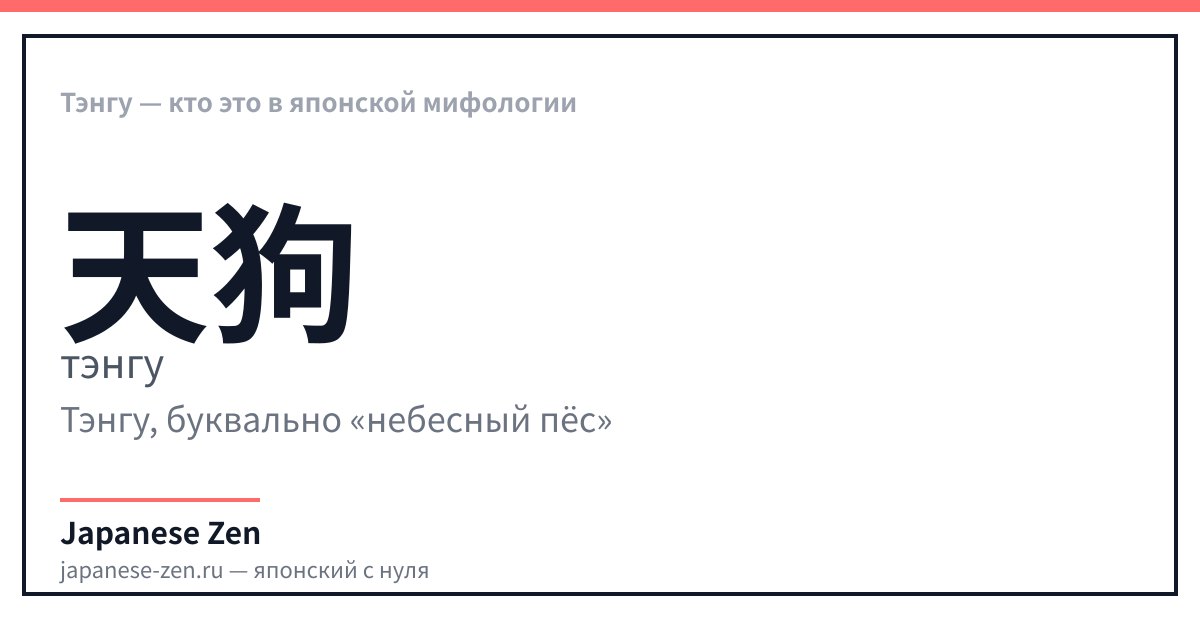
天狗 — "Heavenly Dog"
| Japanese | Reading | Translation |
|---|---|---|
| 天狗 | tengu · tengu | Tengu, literally "heavenly dog" |
| 烏天狗 | karasu tengu · karasu tengu | "Crow tengu" — the bird-like, more ancient form |
| 山伏 | yamabushi · yamabushi | A hermit monk living in the mountains |
| 羽団扇 | hauchiwa · hauchiwa | A feather fan — an attribute of the leader tengu |
| 鼻 | hana · hana | Nose — the main feature of the tengu in its modern form |
Heaven or Pride — What Comes First in the Name
天狗 is read てんぐ and literally means "heavenly dog": 天 "heaven" and 狗 "dog." The word itself and part of the image are borrowed from China, where tiāngǒu is an ominous meteor that falls howling from the sky and, according to belief, devours the sun during eclipses. In Japan of the 7th–8th centuries, this Chinese name was superimposed on local mountain beliefs, and the image began to change: at first the tengu was depicted as bird-like, with a beak instead of a nose, and only later did the current long-nosed human-like appearance become established.
天 — значение: heaven, heavenly, fate — онъёми: テン — кунъёми: あまつ、あめ、あま- — 4 штрих(ов). 天 — "heaven, heavenly": four strokes, an N5-level character. The first character of the name 天狗 and one of the most common kanji overall — from 天気 "weather" to 天才 "genius."
Write 天 along the guides and study the stroke order.
From Mountain Spirit to Pop Idol: The Tengu in Popular Culture
- "Kamisama Kiss" — the character Kurama, a crow tengu from Mount Kurama, hides under the guise of a pop idol.
- Sekiro: Shadows Die Twice — the NPC "Tengu of Ashina" teaches the hero combat techniques, directly referencing legends of tengu mentors.
- In ensemble series about yokai like "Natsume's Book of Friends," tengu periodically appear as proud, easily offended secondary spirits.
Why the Tengu Now Has a Nose, Not a Beak
The change from beak to nose is not an invention of modern times: the transformation happened gradually back in the Middle Ages, and by the Edo period the long-nosed form had already become established as the main one in theater and prints, while the bird version remained a "junior rank" — the karasutengu. Modern games and anime mostly inherit this later version.
Tengu and Yuki-onna — How Not to Confuse the Two Most Famous Yokai
| Feature | Tengu | Yuki-onna |
|---|---|---|
| Element | mountain, forest | snow, winter road |
| Appearance | male, red face, long nose | female, pale skin, white clothes |
| Temperament | proud, hot-tempered, but can become a mentor | cold, in some versions deadly, in others capable of love |
| Where to look first | Mount Kurama, legends of warriors | "Kwaidan" by Lafcadio Hearn |
It's easy to tell them apart by element: the tengu is mountain and height, the yuki-onna is snow and cold; in anime and games this is usually enough to know from the first frame who you're dealing with.
FAQ
- Who is the tengu?
- The tengu is a warlike spirit of the Japanese mountains, often depicted with a red face and a long nose. It is considered the soul of a person who was proud in life and at the same time a fearsome but sometimes just mentor spirit.
- What does the tengu actually look like — with a nose or a beak?
- It varies depending on era and rank: the younger tengu-"karasutengu" retain a bird's beak and wings, while the elder "daitengu" are almost human with a long nose. The second variant became established as the main one starting from the Edo period.
- How is the word "tengu" written and translated in Japanese?
- 天狗, read てんぐ, literally "heavenly dog." The word is borrowed from China, where tiāngǒu is a demonic meteor; in Japan it was superimposed on local mountain beliefs and gradually changed its appearance from bird-like to human-like.
- What does the tengu mask mean at festivals?
- The red face and long nose are the same appearance as in legends: the mask is worn at Shinto festivals and sold as a souvenir, and it is by the nose that it is distinguished from masks of other Japanese demons.
- Is the tengu an evil spirit or a guardian?
- Neither one nor the other definitively: the tengu punishes the proud and self-important, but according to legend it can become a stern yet generous mentor — like Sojobo, who taught swordsmanship to the young Yoshitsune.
- Where does the tengu appear in modern culture?
- In the anime "Kamisama Kiss," the idol character Kurama is secretly a tengu from Mount Kurama, and in the game Sekiro: Shadows Die Twice one of the mentors bears the name and appearance of the "Tengu of Ashina."
Sources
Updated: 2026-09-09