Japanese Mythology: Creatures — Who's Who in the Bestiary
There are more yokai here than gods: the creatures known to Japanese mythology are most often yokai, spirits and shapeshifters from oral folklore, rather than characters from official chronicles. The fox-kitsune, the cat-bakeneko, the mountain witch yamamba, the demon-oni — each has its own habits and its own degree of danger, from harmless pranks to cannibalism.
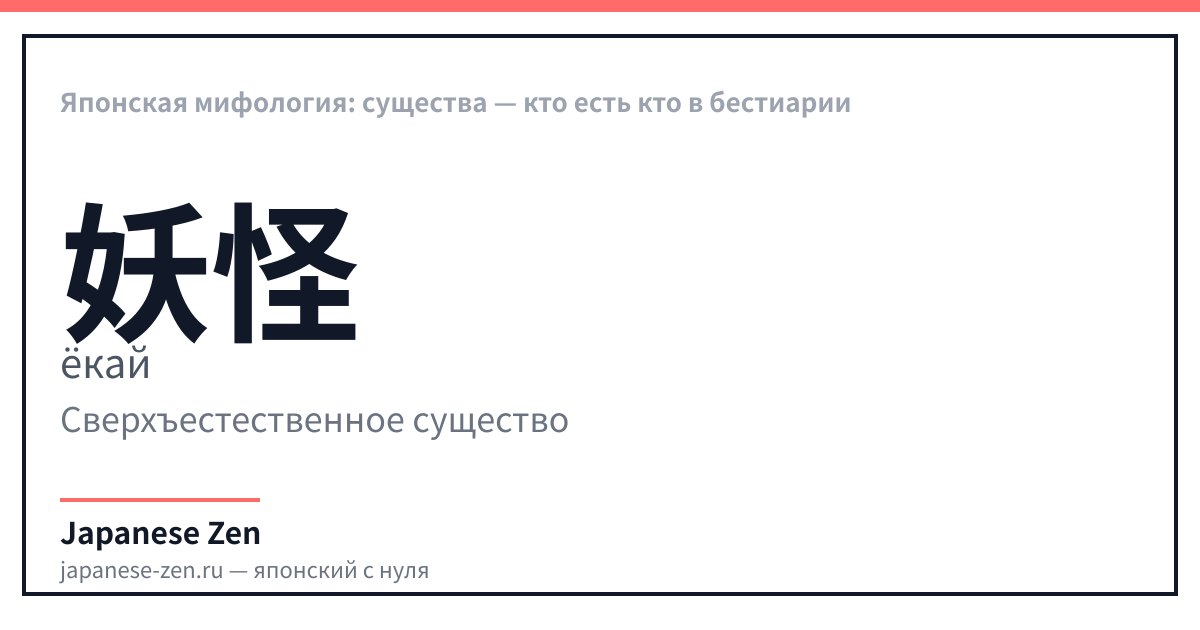
Forget the orderly pantheon for a moment: below is a zoo. The creatures of Japanese mythology don't follow any hierarchy; they just live in their own corner of the country and scare those who came at the wrong time to the wrong place.
Who's Who in the Bestiary
| Creature | Kanji | Known for |
|---|---|---|
| Fox (kitsune) | 狐 | shapeshifter; the older it gets, the more tails and the stronger its magic |
| Oni demon | 鬼 | fanged giant with a club, symbol of crude evil power |
| Shapeshifting cat (bakeneko) | 化け猫 | a cat that lived long and learned to walk on two legs |
| Yamamba | 山姥 | cannibalistic old hag living in remote mountains |
| Karakasa | 唐傘お化け | an umbrella that came to life after a hundred years of service |
| Umibōzu | 海坊主 | giant silhouette that sinks ships in calm weather |
| Kodama | 木霊 | tree spirit living for centuries inside a single trunk |
| Jorōgumo | 絡新婦 | spider-woman who transforms into a beautiful woman |
Henge, Yūrei, and Other Families
The main division is by origin. Henge (変化) are animals that lived long enough to gain supernatural abilities: foxes, cats, tanuki badgers. Tsukumogami (付喪神) are household objects that came to life after a hundred years of service: umbrellas, teapots, musical instruments. Yūrei (幽霊) are ghosts of people with unfinished business. Everything else is a scattering of local monsters without a single system, each with its own legend.
Where to Start If You're Opening the Bestiary for the First Time
- Kitsune — the most widely reproduced yokai in pop culture; with it, it's easiest to recognize references in anime.
- Oni — a simple and clear archetype of the 'evil demon,' a starting point for almost any conversation about Japanese monsters.
- Kodama — the most harmless option: just a tree spirit, no fangs or tricks.
- Umibōzu — if you want real horror without frills: calm water, and something huge rises from the bottom.
- Tsukumogami as a concept — if you're interested not in a specific creature but in the very logic of 'why objects come to life.'
The Character 怪 and All Its Company
| Japanese | Reading | Translation |
|---|---|---|
| 妖怪 | yōkai · yōkai | Supernatural being |
| 化ける | bakeru · bakeru | To transform, to take on a form |
| 怪しい | ayashii · ayashii | Suspicious, eerie |
| 霊 | rei · rei | Spirit, soul |
| 祟り | tatari · tatari | Curse, punishment by a spirit |
| 百鬼夜行 | hyakki yakō · hyakki yakō | 'Night Parade of One Hundred Demons' |
How 怪 Is Read and Where Else It Appears
怪 (kai, 'strange, suspicious') appears in both 妖怪 (yōkai) and 怪しい (ayashii, 'eerie') — it's a kind of root for the entire vocabulary of the supernatural in Japanese. If you spot 怪 in an unfamiliar word, you can safely expect that it's about something otherworldly.
怪 — значение: suspicious, mystery, vision — онъёми: カイ、ケ — кунъёми: あや.しい、あや.しむ — 8 штрих(ов). 怪 — 'strange, supernatural': the heart radical 忄 on the left and the character for 'wonderful' on the right — literally 'that which disturbs the heart.'
Write 怪 along the guides — the key character of the entire yokai vocabulary.
Where These Creatures Appear in Anime
- Natsume's Book of Friends — the most complete, almost reference-like catalog of minor yokai in anime format.
- GeGeGe no Kitarō — a classic of the genre, where the hero himself is half-yokai.
- Inuyasha — a journey through feudal Japan teeming with demons and spirits.
- Naruto — the nine-tailed beast is built directly on the image of the kitsune.
- Hayao Miyazaki's Howl's Moving Castle and Spirited Away — everyday life inhabited by yokai as part of the visual language.
FAQ
- How many creatures does Japanese mythology count?
- The count is in the hundreds: the encyclopedias of the 18th-century artist Toriyama Sekien alone contain over two hundred individual yokai, and the oral tradition added new ones for centuries.
- Who is the most famous?
- Kitsune, the fox shapeshifter: the most recognizable image outside Japan thanks to anime and games. In second place is oni, the fanged demon giant.
- How is this related to the Japanese language?
- The character 怪 ('strange, supernatural') is the root of almost all vocabulary about the otherworldly: from 妖怪 (yōkai) to 怪談 (ghost story). Once you learn it, it's easier to recognize the topic of a word at a glance.
- Where should I start?
- With kitsune and oni — these two images are the most common in translated culture, and from them it's easier to move on to less known creatures like karakasa or kodama.
- Which anime shows this whole bestiary?
- Especially densely in Natsume's Book of Friends, where almost every episode is dedicated to a separate minor spirit, and in Inuyasha, where yokai form the basis of the entire world of the series.
Sources
Updated: 2026-08-29