Bushi — who they are and how they differed from samurai
Bushi (武士) is the entire warrior class of Japan, not the same as samurai. The 士 at the end means 'serving man': bushi is a broad concept for all who lived by military service, while samurai (侍, originally 'one who serves') is historically a narrower term for retainers of the nobility. In practice, both words are used interchangeably today, but historically bushi is broader.
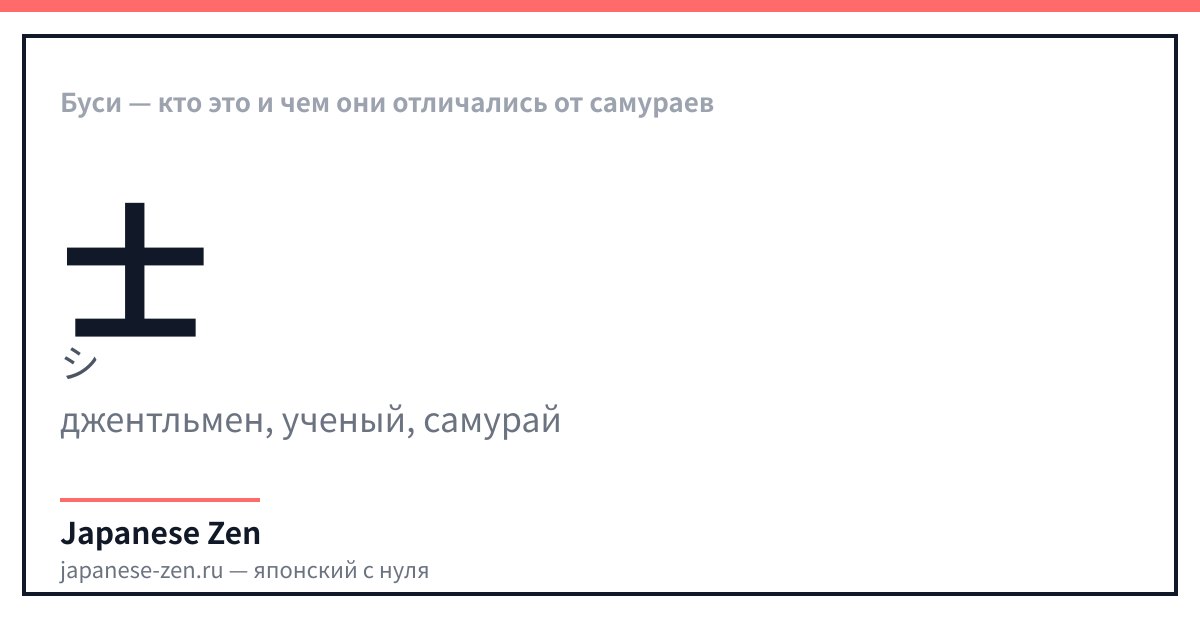
'Bushi' and 'samurai' are used interchangeably when talking about Japan. Historians distinguish them: one refers to the entire class, the other to its upper echelon.
Who were the bushi and what did they do
Bushi (武士) is the general name for the warrior-service class of Japan, formed by the 12th century. It included all who lived by military service: from minor vassals to major warlords. Service consisted of protecting the lord's lands, participating in wars, and in the peaceful Edo period also administrative work, tax collection, and maintaining order.
- Duties: military service to the lord, in peacetime — administration and clerical work.
- Income: rice stipend (kokudaka) or their own land allotment.
- Status: hereditary class with an internal hierarchy — from minor vassal to daimyo.
Status was inherited
Almost always by birth — a bushi's son inherited his father's status and place in the vassal hierarchy. Transition from other classes was rare: adoption, exceptional military merit, or service to a new lord after losing the previous one.
Bushi in different eras
The status of bushi was not unchanged over seven centuries. In the Kamakura period (1185–1333), they first gained state power as a military government — the shogunate. During the Sengoku period, the 'Warring States' era of the 15th–16th centuries, status depended not on lineage but on military merit: strengthened vassals often overthrew weak lords. With the establishment of peace under the Tokugawa shogunate from 1603, the class was legally codified and divided into service ranks, and war itself became rare for two and a half centuries.
How bushi differed from samurai
武士 (bushi) literally means 'warrior man': 武 — 'military, warrior', 士 — 'serving man'. This is a broad term for the entire warrior class. 侍 (samurai) historically derives from the verb 侍る (haberu) — 'to serve, to attend' — and originally denoted retainers attending a noble person, i.e., the upper echelon of the same class. Over time, in colloquial language, the boundaries blurred, and today 'samurai' is more often used as a synonym for 'bushi', although historically the latter is broader.
- 武士 (bushi) — the entire warrior-service class.
- 侍 (samurai) — originally retainers in personal service to the nobility.
- 武士道 — literally 'the way of bushi', although colloquially 'the way of the samurai' has become established.
The word and characters: 武士
士 — значение: gentleman, scholar, samurai — онъёми: シ — кунъёми: さむらい — 3 штрих(ов). 士 — 'serving man, warrior': 3 strokes. The second character in 武士 (bushi) and 力士 (rikishi, sumo wrestler) — always refers to status, not a specific occupation. The character 武 is not in the database, so we analyze 士 specifically.
| Japanese | Reading | Translation |
|---|---|---|
| 武士 | bushi · bushi | Warrior, serving class |
| 侍 | samurai · samurai | Samurai, originally 'one who serves' |
| 武士道 | bushidou · bushidou | The way of bushi, the way of the warrior |
| 主君 | shukun · shukun | Lord, suzerain |
武士 — warrior in service
武士 is read 'bushi': 武 (bu) — 'military, warrior', 士 (shi) — 'serving man'. The same second character appears in 力士 (rikishi) — sumo wrestler, and in 弁護士 (bengoshi) — lawyer: everywhere it indicates a person's status in a role, not a specific profession.
Listen to the word bushi and related terms — the app will evaluate your pronunciation.
Are there bushi today
As a class, bushi ceased to exist in the 1870s when the Meiji reforms abolished class privileges and replaced the samurai army with a conscript one. Some modern Japanese surnames trace back to bushi clans, but this no longer confers any active status.
How long did the class exist
From the formation of the class in the 12th century to its abolition in the 1870s, bushi existed for about seven centuries — longer than the entire history of many European monarchies.
Bushi in anime and dorama
In translations and subtitles, the word 'bushi' appears less often than 'samurai' — translators almost always choose the more recognizable term, even if the original says 武士.
- 'Samurai Champloo' — the Japanese title 混沌武士 uses the character 武士.
- Sword-fighting video games often use the word 'bushi' directly, unlike anime localizations.
- 'Gintama' plays with both 'bushi' and 'samurai' as interchangeable in a comedic way.
FAQ
- Who are bushi?
- 武士 — the entire warrior-service class of Japan, formed by the 12th century: from minor vassals to major warlords.
- What did bushi do?
- Military service to the lord, and in the peaceful Edo period also administrative work: tax collection, maintaining order, clerical service.
- How do bushi differ from samurai?
- 武士 (bushi) — the entire warrior class. 侍 (samurai) historically — its upper echelon, retainers in personal service to the nobility. Today the words are often used as synonyms.
- How is the word 'bushi' written in Japanese?
- 武士, in kana ぶし. 武 — 'military', 士 — 'serving man'.
- How long did bushi exist?
- About seven centuries: from the formation of the class in the 12th century to its abolition by the Meiji reforms in the 1870s.
- Are there bushi now?
- As an active status — no, the class was abolished in the 1870s. Some modern surnames in Japan trace back to bushi clans.
Sources
Updated: 2026-08-29