The Oni Demon — Who Is It in Japanese Mythology
Oni in Japanese mythology are fanged, horned demon giants with red or blue skin, wearing a tiger-skin loincloth and wielding an iron club (kanabō): the archetypal villain of Japanese folklore. Once a year, the Japanese perform a whole ritual against them — at the Setsubun festival, they scatter beans while shouting "Oni wa soto!" ("Demons out!").
Oni are not subtle, cunning spirits but brute force with no hidden agenda: if a story needs an opponent that can simply be beaten rather than outwitted, they are called in.
What an Oni Looks Like and How to Recognize One
Oni are horned demon giants with fangs, red or blue skin, and a wild mane of hair, dressed in a tiger-skin loincloth and armed with a spiked iron club (kanabō). The image is a blend of Buddhist concepts of hell guardians who punish sinners and local beliefs about evil spirits coming from the northeast — the direction considered the "demon gate" (鬼門) in Chinese geomancy.
- Features: horns, fangs, multicolored skin (usually red or blue), tiger-skin loincloth.
- Weapon: kanabō — a spiked iron club; hence the saying "oni ni kanabō" — giving the strong even more weapons.
- Behavior: brute force, man-eating in fairy tales, guarding the gates of hell in Buddhist tradition.
- Weakness: they fear soybeans — scattered at the Setsubun festival to drive demons out of the house.
How Dangerous Is an Oni in the Legends Themselves
Definitely yes, unlike many other yōkai with dual reputations. In folklore, oni almost always play the role of a direct threat — an opponent to be defeated by force or cunning, not appeased with offerings.
鬼 — The Character Behind All Evil Spirits at Once
| Japanese | Reading | Translation |
|---|---|---|
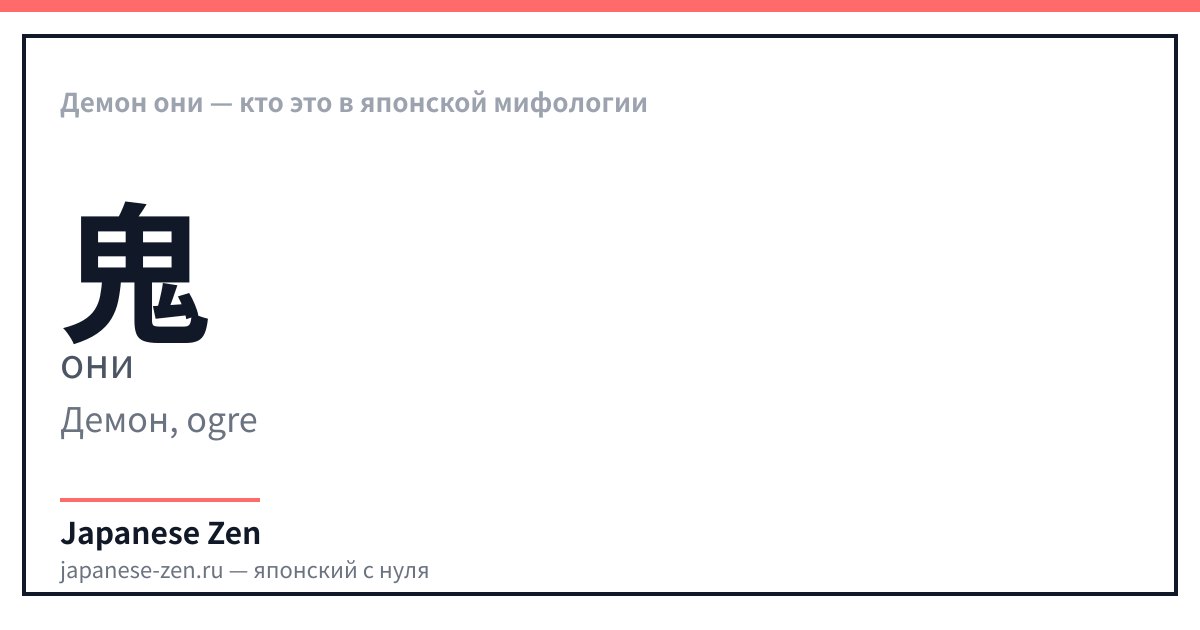
| 鬼 | oni · oni | Demon, ogre |
| 鬼門 | kimon · kimon | "Demon gate" — an unlucky direction |
| 金棒 | kanabō · kanabō | Oni's spiked club |
| 鬼は外、福は内 | oni wa soto, fuku wa uchi · oni wa soto, fuku wa uchi | "Demons out, fortune in": the Setsubun festival chant |
| 鬼滅の刃 | Kimetsu no Yaiba · Kimetsu no Yaiba | "Demon Slayer" |
Oni, Ki, and Words Where This Character Hides
鬼 is read おに (oni) when used independently and き (ki) in compound words like 鬼門 (kimon). The character depicts a head with protruding hair on a body — an archaic image of a being lacking human order.
鬼 — значение: ghost, devil — онъёми: キ — кунъёми: おに、おに- — 10 штрих(ов). 鬼 — "demon, oni": on top a shaggy head, below a body with a curled hook-like tail. The same character appears in 鬼滅の刃 "Demon Slayer".
Write 鬼 along the guides and learn the stroke order.
Oni in "Demon Slayer"
- "Demon Slayer" (Kimetsu no Yaiba) — here oni are reimagined as a vampire-like race with individual abilities, but the name and fangs come straight from folklore.
- "Inuyasha" — oni demons regularly appear as secondary antagonists throughout the series.
- "Momotaro" — the classic tale of the Peach Boy who defeated a band of oni on Onigashima (Demon Island), adapted dozens of times.
- Many role-playing games use the oni silhouette (horns, club, tiger skin) as a ready-made visual code for a "strong low-level boss".
Who Came Up with the Red Skin and Tiger Loincloth
The red-blue coloring and tiger loincloth became established in ukiyo-e and Noh theater before the Edo period; modern adaptations mostly add personal stories and motivations that the classic oni demon essentially never had.
What Gets Confused: Oni and Kami
| Feature | Oni | Kami |
|---|---|---|
| People's attitude | exorcised (Setsubun, beans) | worshipped, shrines built |
| Nature | usually clearly dangerous | can be both frightening and benevolent |
| Origin | Buddhist hell guardians + folk beliefs | Shinto concept of the divine |
| Role in stories | opponent to be defeated | patron to be appealed to |
Practice distinguishes them unmistakably: those driven away with beans and sticks are oni; those given a plaque and offered rice are kami. There is no formal boundary in the language itself, but practice is always different.
FAQ
- What is an oni demon?
- A horned demon giant with fangs and an iron club, the archetypal villain of Japanese folklore. The image is a blend of Buddhist hell guardians and local beliefs about evil spirits.
- What does an oni demon look like?
- Red or blue skin, horns, fangs, wild hair, a tiger-skin loincloth, and a spiked iron club (kanabō). One of the most recognizable silhouettes in all of Japanese folklore.
- How do you write "oni" in Japanese?
- 鬼, read as おに (oni). The same character appears in 鬼門 (demon gate, an unlucky direction) and in the manga title "Kimetsu no Yaiba" — "Demon Slayer".
- Is the oni demon evil or good?
- Almost always evil or at least dangerous — unlike many other yōkai, oni rarely have a peaceful, good version. That is why they are to be exorcised, not appeased.
- In which anime do oni appear?
- "Demon Slayer" is built entirely around reimagined oni. Demons also regularly appear in "Inuyasha" and in countless adaptations of the Momotaro tale.
- How is an oni demon different from a kami?
- Oni are driven away with beans and force; kami are worshipped at shrines. Oni are almost always dangerous by default, whereas kami can be both frightening and benevolent — but it is to kami that offerings are made, not exorcisms.
Sources
Updated: 2026-08-29