Kaguya-hime — who she is and what she is famous for
Kaguya-hime is the heroine of 'The Tale of the Bamboo Cutter', the oldest surviving Japanese prose work from the late 9th century. A tiny glowing girl is found inside a bamboo stalk; after growing up in three months, she refuses all suitors and even the emperor, and in the finale flies back to the Moon, where she was from.
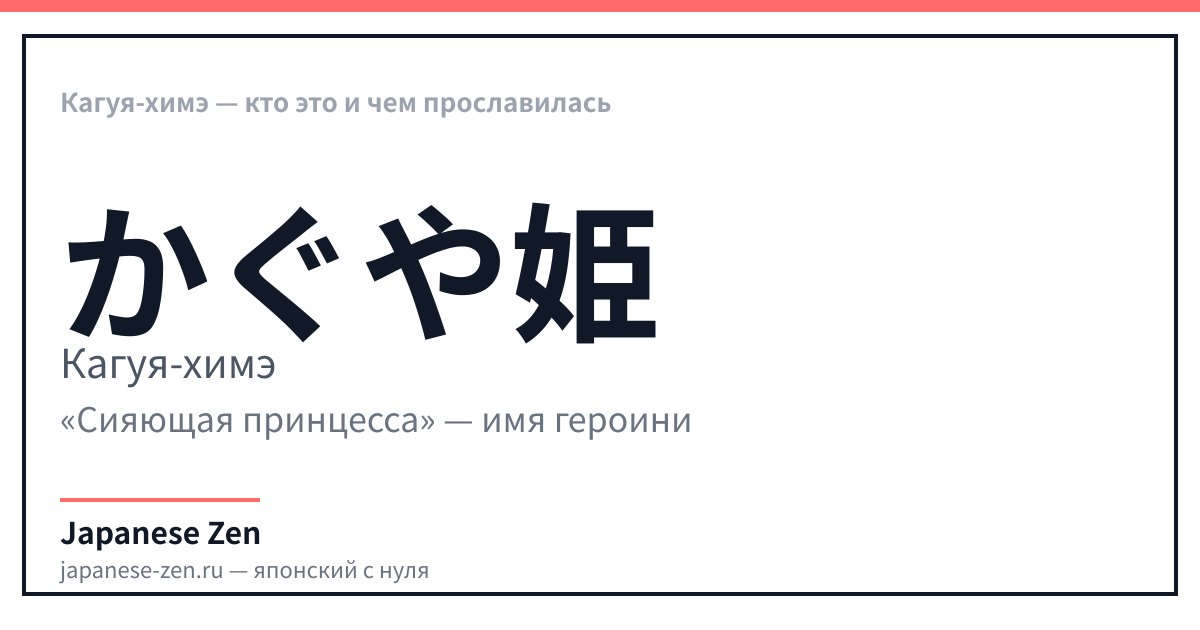
Kaguya-hime became famous not for a feat but for a refusal: a rare heroine whose main plot move is to say 'no' to everyone, including the emperor, and simply leave.
Who Kaguya-hime really is
Kaguya-hime is the heroine of 'The Tale of the Bamboo Cutter' (竹取物語), the oldest surviving Japanese prose work, written by an anonymous author in the late 9th to early 10th century. A poor bamboo cutter finds a tiny girl inside a glowing stalk, brings her home, and in three months she becomes a woman of dazzling beauty. Five noble suitors and the emperor himself seek her hand, but are refused one after another.
| Event | What happens |
|---|---|
| Discovery | the old man finds a glowing girl inside a bamboo stalk |
| Growing up | in three months she becomes an adult woman of unprecedented beauty |
| Courtship | five courtiers and the emperor himself are refused one after another |
| Finale | she admits she is from the Moon and flies away, leaving a feather cloak |
Five suitors and five impossible tasks
To each of the five suitors, Kaguya-hime assigns a deliberately impossible task — to fetch the begging bowl of the Buddha himself, a branch from Mount Horai with jewels instead of leaves, a robe made from the skin of the fire mouse, a jewel from the dragon's neck, and a swallow's shell. All attempts end in failure or outright deception, exposed by Kaguya-hime — the satirical line of the tale mocks courtly manners no less than it tells a fairy tale.
かぐや姫 — a name written in hiragana
| Japanese | Reading | Translation |
|---|---|---|
| かぐや姫 | Kaguya-hime · Kaguya-hime | 'The Shining Princess' — the heroine's name |
| 竹取物語 | Taketori Monogatari · Taketori Monogatari | 'The Tale of the Bamboo Cutter' — the source of the story |
| 姫 | hime · hime | Princess, noble girl |
| 竹 | take · take | Bamboo |
| 月 | tsuki · tsuki | Moon — the heroine's homeland |
Why part of the name is not written in kanji
かぐや姫 is read かぐやひめ (Kaguya-hime): the name かぐや is written in hiragana without kanji and, according to one version, is related to the word 'to shine', while 姫 'princess' is added as a title. The heroine's full court name in the text of the tale sounds longer — Nayotake no Kaguya-hime, 'Kaguya of the flexible bamboo'.
姫 — значение: girl — онъёми: キ — кунъёми: ひめ、ひめ- — 10 штрих(ов). 姫 — 'princess, noble girl': on the left is the radical 'woman' 女. The same character appears in the names of many legendary Japanese heroines.
Listen to the name Kaguya-hime and repeat — the app will evaluate your pronunciation.
What was made up about her
The tale itself is already a fairy tale from beginning to end — there is no historical prototype for Kaguya-hime, unlike Kintaro. But secondary legends have grown around her. Folk etymology, for example, connects the smoke that supposedly always rises above Mount Fuji with the elixir of immortality: the inconsolable emperor burned it on the summit after her departure. The similarity between 'fuji' and 'immortality' (不死) in this version is not accidental.
- True: 'The Tale of the Bamboo Cutter' is a real, datable text, the oldest example of the monogatari genre.
- Fiction: Kaguya-hime herself and her lunar origin are entirely a literary plot.
- Fiction: the legend of the smoke over Fuji is a later folk addition to the text of the tale.
- True: the anime studio Ghibli released a direct adaptation, 'The Tale of the Princess Kaguya', in 2013.
FAQ
- Who is Kaguya-hime?
- The heroine of the oldest Japanese tale 'Taketori Monogatari': a girl found inside a bamboo stalk, who grew up in three months and in the finale flew back to the Moon, where she was from.
- What is Kaguya-hime famous for?
- For refusing all suitors, including the emperor himself, and for the impossible tasks she gave to five noble admirers — all attempts ended in failure or exposed deception.
- Why is かぐや written in hiragana?
- かぐや姫 (かぐやひめ): the name かぐや is written without kanji, 姫 means 'princess'. The full court name in the text of the tale sounds longer — Nayotake no Kaguya-hime.
- Is Kaguya-hime a real person or a legend?
- Entirely a literary character: unlike Kintaro, she has no historical prototype. 'The Tale of the Bamboo Cutter' is a work of fiction from the very beginning.
- What anime have been made based on the story of Kaguya-hime?
- A direct adaptation is 'The Tale of the Princess Kaguya' by Studio Ghibli (2013). The name and general image of the lunar beauty are also often cited by other titles without directly retelling the plot.
- When did Kaguya-hime live?
- Formally, never — she is a literary character. The tale itself dates from the late 9th to early 10th century and is considered the oldest surviving Japanese prose work.
Sources
Updated: 2026-08-29