Rabbit in Japanese: 兎 (usagi) — Writing, Readings, and Words
Rabbit in Japanese is 兎 (うさぎ, usagi); the same word also means hare — there is no separate word for them in the language. Rabbits are counted with the counter 羽, the same one used for birds: an old trick of Buddhist monks who were forbidden to eat the meat of four-legged animals. And the moon rabbit 月の兎 in Japanese tradition pounds mochi, not bakes a pie.
On the Moon, if Japanese tradition is to be believed, lives not a man with a bucket but a rabbit with a wooden mallet. And that same rabbit is hidden in a counter that is formally meant for birds.
The Kanji 兎: Hare or Rabbit
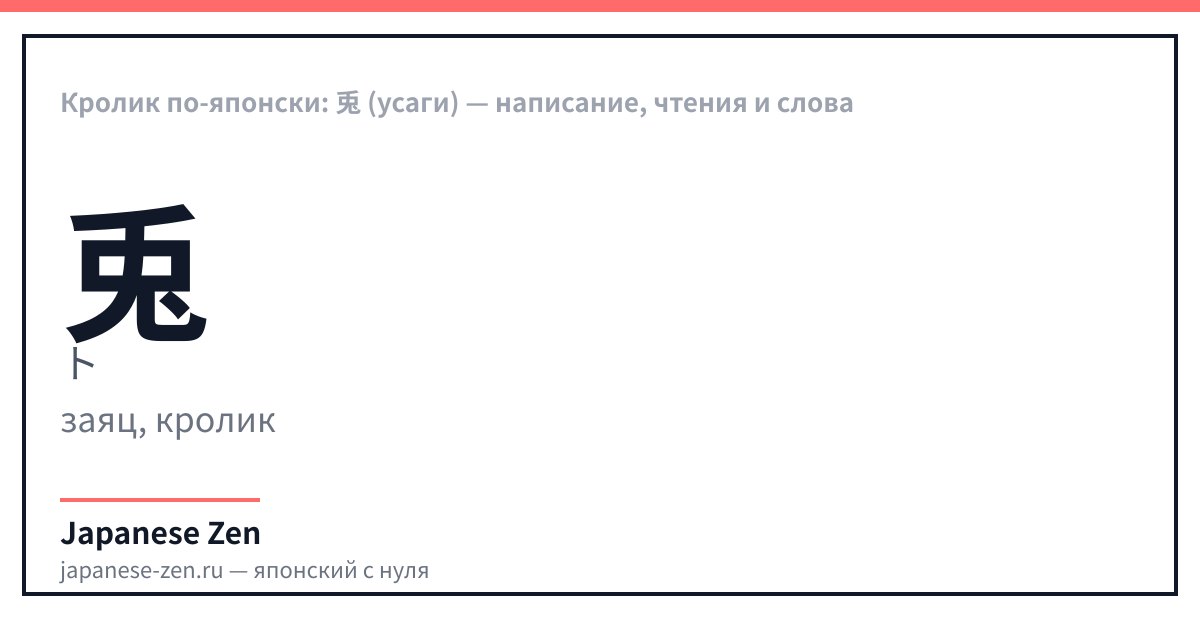
兎 — значение: hare, rabbit — онъёми: ト、ツ — кунъёми: うさぎ — 7 штрих(ов).
Why the character 兎 is tricky, and why the word is more often written in kana
兎 is a pictogram: in older forms of the character you can make out long ears and a short tail. The character is not on the 常用漢字 (jōyō kanji) list — the ones required for the school curriculum — so on signs, menus, and children's books the word is almost always written in kana: ウサギ or うさぎ. The kanji remains in names, place names, and set combinations like 兎耳 (usagimimi) — "rabbit ears," a popular accessory.
The Hare That Is Counted Like a Bird
| Japanese | Reading | Translation |
|---|---|---|
| 兎 | usagi · usagi | Hare, rabbit |
| 子兎 | kousagi · kousagi | Baby rabbit, leveret |
| 兎一羽 | usagi ichiwa · usagi ichiwa | One rabbit (counted with the counter 羽, like birds) |
| 月の兎 | tsuki no usagi · tsuki no usagi | Moon rabbit (pounds mochi in a mortar) |
| 兎耳 | usagimimi · usagimimi | Rabbit ears (an accessory, or keen hearing in a figurative sense) |
| 兎に角 | tonikaku · tonikaku | In any case, anyway (the characters 兎 and 角 are used here for their sound and have nothing to do with rabbits) |
What the Moon Rabbit 月の兎 Pounds
In Japan, hares and rabbits are counted with the counter 羽 (wa) — the same one used for birds: 兎一羽 means "one rabbit," literally "one wing." The explanation goes back to Buddhist prohibitions: monks were not allowed to eat the meat of four-legged animals, and the hare, with its long ears and leaping, passed as "almost a bird" — and so the trick became fixed in the grammar itself. By the same logic, it is not a person who lives on the moon but a rabbit: 月の兎 pounds mochi in a mortar rather than tending a fire, as in the Western tale.
Try Writing 兎
Trace 兎 along the guides and feel the difference from kana.
FAQ
- How do you say "rabbit" in Japanese?
- 兎 (うさぎ, usagi). The same word also means hare — there is no separate word for rabbit in the language, and the distinction is described separately if needed.
- Why are rabbits counted like birds in Japan?
- They are counted with the counter 羽, which in Japanese is also used for birds. This goes back to Buddhist prohibitions on the meat of four-legged animals: the hare formally became a "bird," and so it was allowed to eat it.
- What does the moon rabbit 月の兎 pound, if it doesn't bake a pie?
- Mochi — rice cakes. In the Japanese version of the "man in the moon" story, people see a rabbit with a wooden mallet on the bright spot, pounding rice for mochi in a mortar rather than baking pastries, as in the Western tale.
- Is there a difference between a hare and a rabbit in Japanese?
- Formally, no: 兎 means both. Zoologists specify with Latin or English terms when necessary, but in everyday life and in fairy tales the difference doesn't matter.
- What does a rabbit have to do with the word とにかく (兎に角)?
- Nothing: this is ateji — the characters 兎 and 角 were chosen only for their sound, and "rabbit" and "horn" mean nothing here. The word translates as "in any case" and has nothing to do with rabbits.
- Why is "rabbit" more often written in kana than with the kanji?
- The character 兎 is not on the jōyō kanji list — the ones required for the school curriculum — so signs, menus, and children's books usually use ウサギ or うさぎ.
Sources
Updated: 2026-09-09