River in Japanese: 川 (kawa) — How to Write It, Readings, and Words
River in Japanese is 川 (kawa), three strokes. The character is a pictograph: three lines draw the channel and banks, like flowing water. The kun reading "kawa" appears in river names and everyday speech; the on reading "sen" appears in terms like 河川 (kasen), "river system." In surnames the same character often voices to "gawa": 中川 Nakagawa, 石川 Ishikawa.
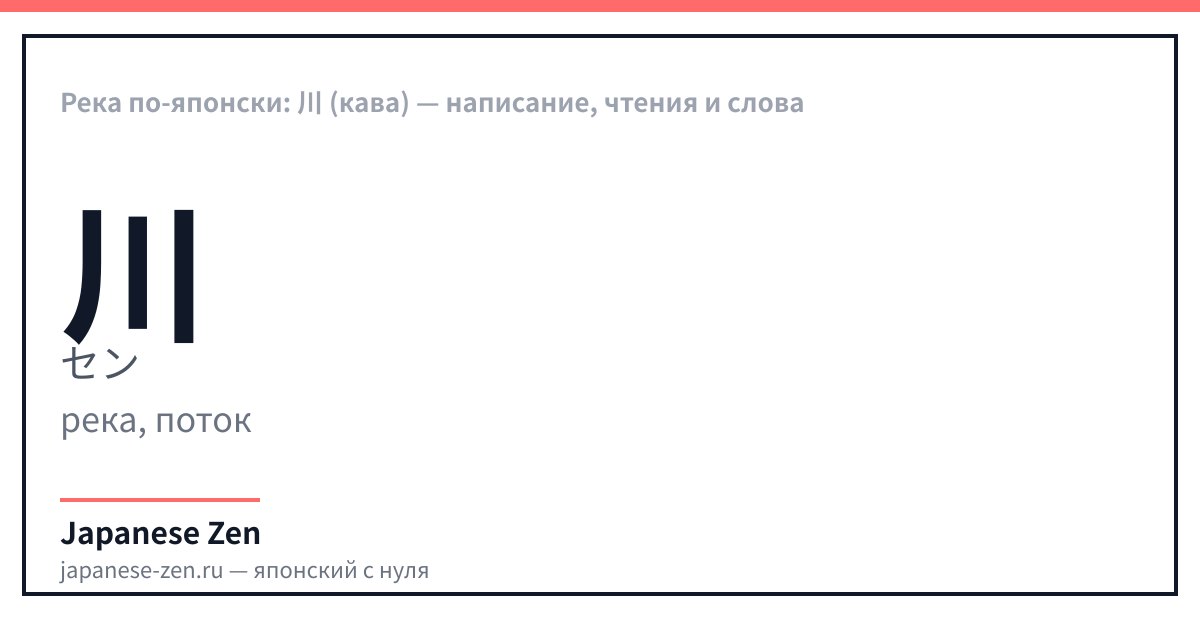
川 is one of the oldest characters in Japanese writing: it was not chosen for its sound but drawn directly from the flow of water. Through it you can recognize a whole layer of Japanese surnames — Yamakawa (山川), Tagawa (田川), Nakagawa (中川): the river keeps turning up right inside people's names.
How the Character 川 Is Built
川 — значение: river, stream — онъёми: セン — кунъёми: かわ — 3 штрих(ов).
Three Strokes Instead of a Radical and Phonetic
Most kanji have a semantic radical and a phonetic part. 川 has neither — the whole character is its own radical, one of the few pictographic kanji that have survived into modern writing almost unchanged. The middle stroke is slightly longer than the side ones: that is how the main channel between two banks is shown in handwriting and print. The kun reading is "kawa," the on reading is "sen": the first lives in names and everyday words, the second in terms built from two kanji.
Words with 川 and Voicing in Surnames
| Japanese | Reading | Translation |
|---|---|---|
| 川 | kawa · kawa | River (basic word, kun reading) |
| 小川 | ogawa · ogawa | Stream (literally "small river," voicing inside the word) |
| 河川 | kasen · kasen | River system (on reading, administrative term) |
| 川岸 | kawagishi · kawagishi | Riverbank |
| 中川 | Nakagawa · Nakagawa | Surname "middle river" (the same character 川 is read "gawa") |
| 石川 | Ishikawa · Ishikawa | Surname "stone river" (also a prefecture with the same name) |
Why "kawa" Turns into "gawa"
In the middle of a compound word, a voiceless consonant often becomes voiced — this process is called rendaku. With 川 it happens constantly: 中川 is read "Nakagawa," 品川 — "Shinagawa," although the character on its own sounds "kawa." It is not a rule: 石川 stays "Ishikawa," and 市川 — "Ichikawa," and you cannot predict the voicing from the word's composition; surnames just have to be memorized. What matters is this: "kawa" and "gawa" are not two different kanji, but one reading under the pressure of a neighboring sound.
Write 川 Yourself
Three strokes from top to bottom, the right one is the longest.
FAQ
- How do you say "river" in Japanese?
- 川 (kawa). The character consists of just three strokes and depicts a channel between banks — it is a pictograph, not a compound kanji with a semantic radical.
- Why is 川 read "gawa" and not "kawa" in surnames?
- This is rendaku voicing: in the middle of a compound word, a voiceless consonant is softened under the influence of the preceding sound. Yamagawa, Nakagawa, Hasegawa — the same character 川 as in the ordinary word "kawa," just in a different position.
- How does "kawa" differ from "sen" in the word 河川?
- "Kawa" is the kun reading, Japanese in origin; it names a specific river in conversation. "Sen" is the on reading, Chinese in origin; it appears in administrative and scientific terms like 河川 "river system" or 一級河川 "class 1 river."
- How does 川 differ from 河, if both are translated "river"?
- 河 is a second kanji meaning "river"; it is also read "kawa," but it is more common in the proper names of large rivers (for example, Asian ones) and in administrative compounds like 河川敷 "floodplain." 川 is the more general and frequent character, and it is learned first.
- Which river names are worth knowing when studying Japanese?
- 信濃川 (Shinano-gawa) is the longest river in Japan; 隅田川 (Sumida-gawa) is a river in central Tokyo, known for its fireworks and cherry blossoms along the banks. In both names 川 stands at the end and is read "gawa."
Sources
Updated: 2026-09-09