Sea in Japanese: 海 (umi) — writing, readings and words
The Japanese word for sea is 海 (umi), 9 strokes. On the left is the water radical 氵, on the right a phonetic component that once also carried the meaning "each", "all". The kun reading "umi" is heard in everyday speech and names, the on reading "kai" in compound words. The most telling of these is 海外 (kaigai), "abroad", literally "beyond the sea": for an island country, that is the very definition of foreign lands.
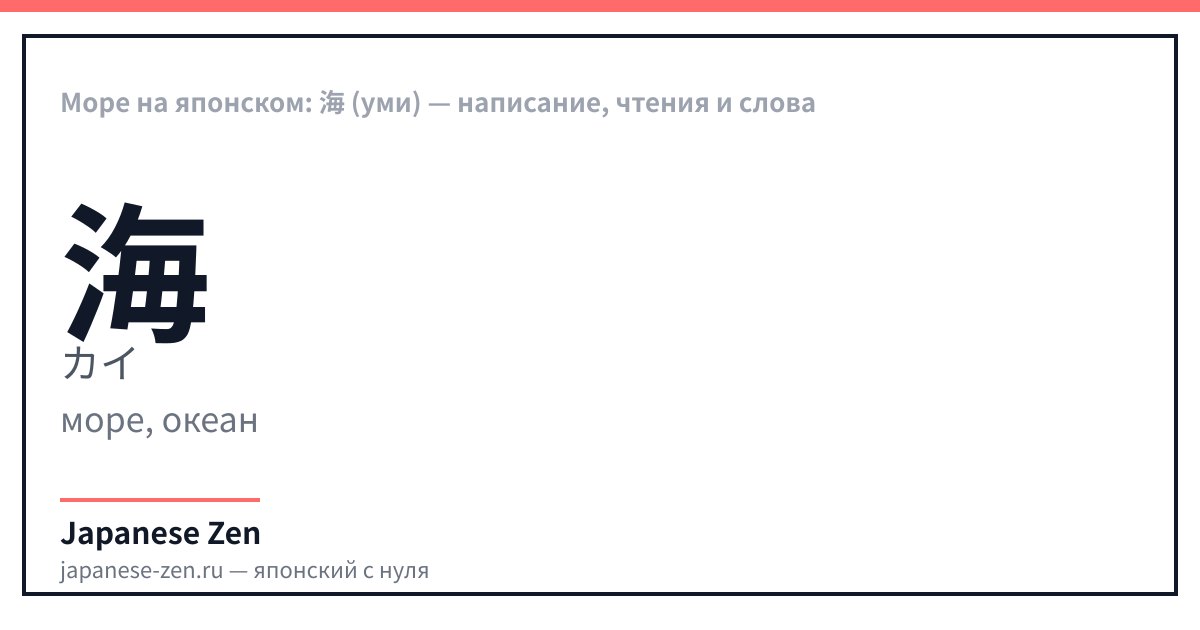
The Japanese have no land neighbors — only water. That is why the word for "abroad" here is built not around a political border but around the sea horizon, and this is visible right in the writing: 海外 reads as "on the other side of the sea".
How "sea" is written
海 — значение: sea, ocean — онъёми: カイ — кунъёми: うみ — 9 штрих(ов).
The water radical and two readings of the character
On the left of 海 is the three-stroke radical 氵 — a shortened form of the kanji for "water" 水, found in most characters related to liquid: 池 (pond), 河 (river), 泳 (swim). The right part in ancient times meant "each", "many" and at the same time hinted at the sound. The kun reading "umi" is used when naming a specific sea or speaking of it in everyday life, the on reading "kai" in compound terms borrowed along the Chinese model.
Words with 海 and "abroad" as "beyond the sea"
| Japanese | Reading | Translation |
|---|---|---|
| 海 | umi · umi | Sea (kun reading, everyday word) |
| 海外 | kaigai · kaigai | Abroad (literally "beyond the sea") |
| 日本海 | Nihonkai · Nihonkai | Sea of Japan |
| 海苔 | nori · nori | Dried seaweed (the second character is read separately from 海) |
| 海辺 | umibe · umibe | Seaside |
| 海の日 | umi no hi · umi no hi | Marine Day (a national holiday in July) |
Why "abroad" sounds exactly like this
海外 is composed of "sea" and "outside": that which lies on the other side of the water. For a country that truly has no land borders, this is not a metaphor but a description of geography. The word is equally appropriate in conversation and in official documents: 海外旅行 is an ordinary "trip abroad". For a Japanese person, abroad literally lies "beyond the sea", not in an abstract "other state".
Write 海 yourself
9 strokes: first the water radical on the left, then the right part from top to bottom.
FAQ
- How do you say "sea" in Japanese?
- 海 (umi), 9 strokes. On the left is the water radical 氵, so the character is immediately recognizable among other kanji related to liquid.
- How is the character 海 read — "umi" or "kai"?
- Both are correct, but for different cases. "Umi" is the kun reading, used to name a specific sea or speak of it in everyday life. "Kai" is the on reading, found inside compound words like 海外 or 日本海.
- Why does "abroad" literally mean "beyond the sea" in Japanese?
- The word 海外 is composed of the characters for "sea" and "outside". Japan has no land neighbors, so historically everything beyond the country was indeed across the sea — the word simply captured a geographical fact.
- How does 海 differ from 海外 if both contain the character for "sea"?
- 海 is simply "sea" as a body of water. 海外 is a compound meaning "abroad", where "sea" works as a pointer to the direction "over there, beyond the water", not as the object of conversation.
- What does 海苔 — the seaweed for sushi — have to do with it?
- The first character in 海苔 is the same "sea", the second means moss or seaweed. The word names not the sea as such but the dried product made from seaweed, familiar from rolls and onigiri.
Sources
Updated: 2026-09-09