Autumn in Japanese: 秋 (aki) — writing, readings, and words
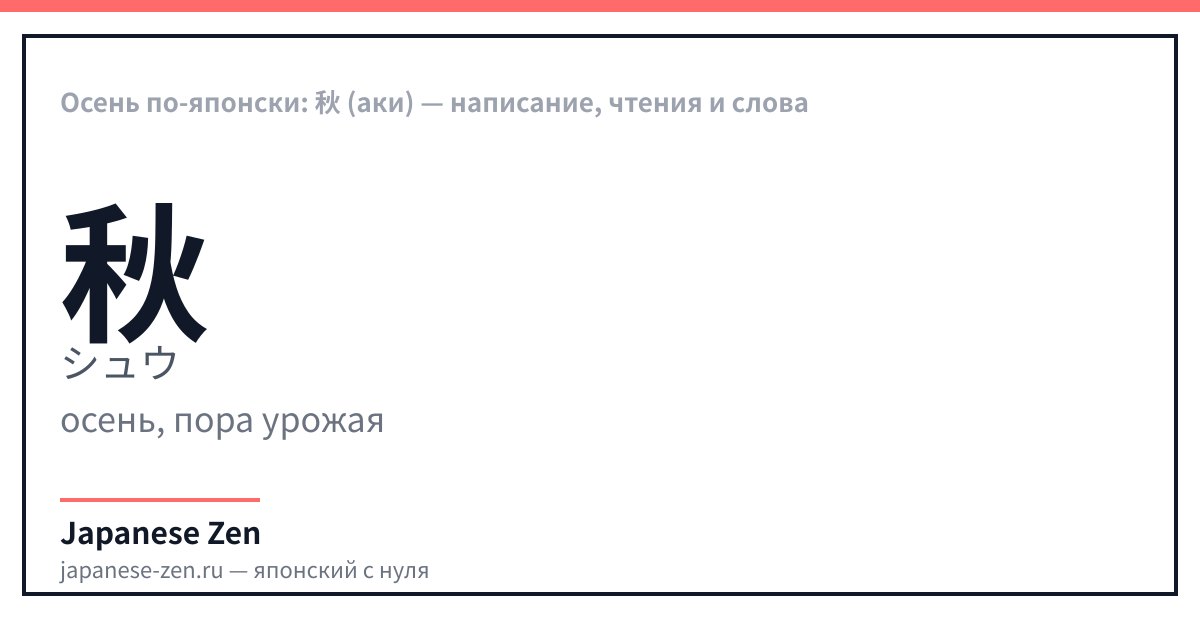
Autumn in Japanese is 秋 (aki), a character made of "grain" and "fire": the time when the harvest is brought in. From this word comes a whole formula "X no aki", "autumn of something": 食欲の秋 "autumn of appetite", 読書の秋 "autumn of reading". And the word 紅葉 "momiji", autumn maples, is read not by the parts of the characters, but as a whole, in a special way.
Japanese people joke about "their autumn" as easily as anyone says "Indian summer" — only the formula works for anything: sports, movies, sleep. Behind this lightness lies a quite practical linguistic device.
The character 秋: why it has "fire" next to "grain"
秋 — значение: autumn, harvest time — онъёми: シュウ — кунъёми: あき、とき — 9 штрих(ов).
Kun "aki" and on "shū" — where each is used
On the left of the character is 禾, a simplified drawing of an ear of grain, on the right is 火 "fire": according to one interpretation, the character describes drying or roasting grain after the harvest. The kun reading "aki" is a standalone word and part of everyday combinations: 秋風 "autumn wind", 秋晴れ "clear autumn weather". The on reading "shū" is heard in literary and calendar terms, for example 立秋 "risshū" — "beginning of autumn", one of the 24 seasons of the old calendar, which arrives while the summer heat is still in full swing.
"Autumn of something": the living formula 食欲の秋 and its relatives
| Japanese | Reading | Translation |
|---|---|---|
| 秋 | aki · aki | Autumn |
| 紅葉 | momiji · momiji | Autumn maples, their color (a special reading of the whole word, not by the parts of the characters) |
| 立秋 | risshū · risshū | Beginning of autumn by the calendar (a formal term, not "it got cool outside") |
| 秋風 | akikaze · akikaze | Autumn wind |
| 食欲の秋 | shokuyoku no aki · shokuyoku no aki | "Autumn of appetite" (a playful formula about the desire to eat a lot at this time of year) |
| 読書の秋 | dokusho no aki · dokusho no aki | "Autumn of reading" |
| 秋晴れ | akibare · akibare | Clear autumn weather |
紅葉 — not just "autumn leaves"
紅葉 as a noun is read "momiji" — it is both the maple itself and the crimson of its leaves; the reading is not assembled from the usual characters 紅 and 葉 separately, but is fixed to the word as a whole. The same kanji also have a second, literary reading "kōyō" — used for the process itself: 紅葉する, "the leaves change color". The formula "X no aki" is productive: 食欲の秋 "autumn of appetite" is joked about the desire to eat more, 読書の秋 "autumn of reading" — about the pull toward books on cool evenings, and there are dozens of such combinations, for sports, movies, art.
Write 秋 yourself
Trace the character 秋 along the guides — the system will evaluate each stroke.
FAQ
- How do you say "autumn" in Japanese?
- 秋 (aki). The character consists of "grain" and "fire" — an old idea of drying grain after the harvest.
- What does 紅葉 mean and why is this word not read by its parts?
- 紅葉 (momiji) — autumn maples and their crimson color. The reading is fixed to the word as a whole, and is not assembled from the usual readings of the characters 紅 and 葉 separately.
- What is "autumn of appetite" and other phrases following the X no aki formula?
- 食欲の秋 "autumn of appetite", 読書の秋 "autumn of reading", 芸術の秋 "autumn of art" — a productive playful formula: autumn as a time convenient for one activity or another.
- How is 立秋 different from when it has actually gotten cooler outside?
- 立秋 is the formal date of the beginning of autumn according to the old calendar, usually in early August, still in the midst of summer heat. The term has nothing to do with the weather outside.
- How is the character 秋 read — "aki" or "shū"?
- As a standalone word, autumn is called "aki". The reading "shū" is heard only in literary and calendar terms like 立秋.
- Can a person be named Aki if it also means "autumn"?
- Yes, 秋 is used as an element of a name, both male and female — together with other characters that give the desired sound and meaning.
Sources
Updated: 2026-09-09