Rain in Japanese: 雨 (ame) — writing, readings, and words
Rain in Japanese is 雨 (ame), a pictogram of drops under a line of sky. The character has a homophone 飴 "candy" — both words sound like "ame" but differ in pitch, not in letters. The rainy season in June is called by a separate word 梅雨 "tsuyu," and it is not the same as ordinary rain.
In Japanese, rain has dozens of names: drizzle, sun shower, summer downpour — each has its own word. This is not poetic whim but a precise system of distinctions.
The character 雨: a pictogram of rain and its readings
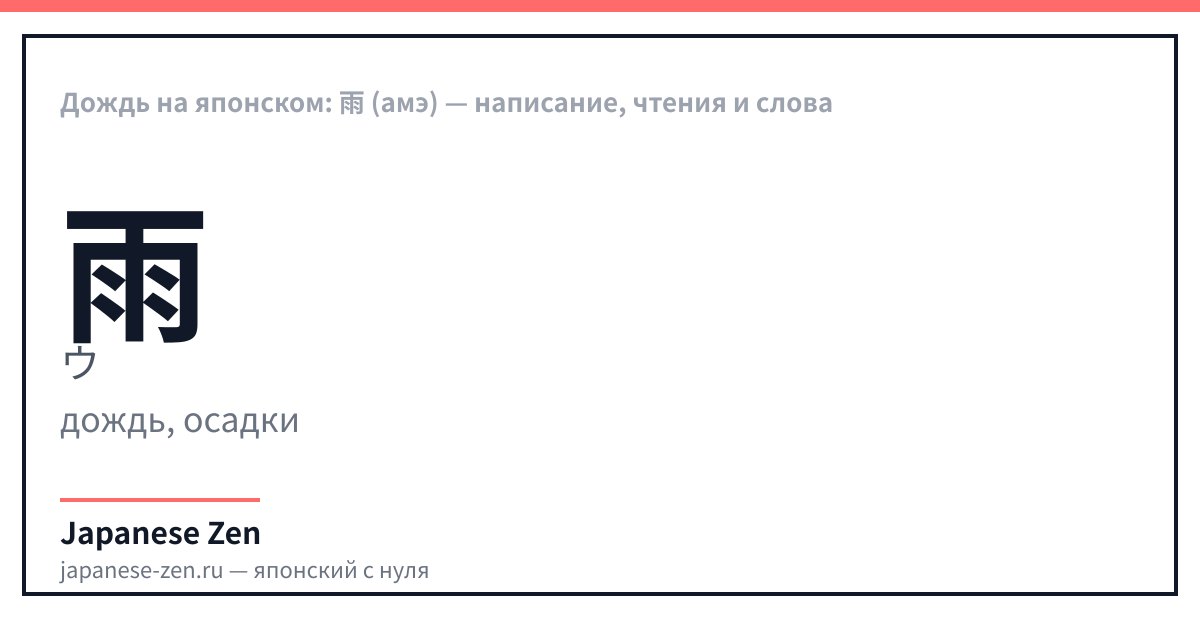
雨 — значение: rain, precipitation — онъёми: ウ — кунъёми: あめ、あま- — 8 штрих(ов).
"Ame" and "u" — kun and on in action
The character 雨 is an ancient pictogram: the horizontal line at the top represents the sky, and the dots below are raindrops. It also serves as a radical in other weather-related kanji: 雪 "snow," 雲 "cloud," 電 "electricity, lightning." The kun reading "ame" works as a standalone word, and in compounds it sometimes appears as "ama-": 雨具 "amagu," rain gear. The on reading "u" appears in literary compounds like 雨天 "uten" — rainy weather in official announcements.
Words about rain and the pair 雨/飴, which differ only in pitch
| Japanese | Reading | Translation |
|---|---|---|
| 雨 | ame · ame | Rain |
| 飴 | ame · ame | Candy, hard candy (sounds the same as "rain" but with a different pitch — the characters are not confused) |
| 梅雨 | tsuyu · tsuyu | Rainy season in June (formal reading of the same characters is "baiu") |
| 小雨 | kosame · kosame | Light rain |
| 大雨 | ōame · ōame | Heavy rain, downpour |
| 雨宿り | amayadori · amayadori | Taking shelter from the rain |
| 雨男 | ameotoko · ameotoko | A person who always brings rain |
Why "ame" rain and "ame" candy are not the same word
The pair 雨 and 飴 is cited in every textbook as proof that Japanese does distinguish pitch. In "rain," the pitch falls after the first syllable; in "candy," it stays level without a fall. In writing there is no confusion: the characters are different, but aurally, out of context, even an experienced student can genuinely mix them up. The 梅雨 "tsuyu" season stands apart from ordinary rain: it is a specific period from late May to July, not a synonym for "rainy."
Write 雨 yourself
Trace the character 雨 along the guides — the system will evaluate each stroke.
FAQ
- How do you say "rain" in Japanese?
- 雨 (ame). The character is a pictogram of drops under a line of sky, and it is also the radical in 雪 "snow" and 雲 "cloud."
- How is the character 雨 read — "ame" or "u"?
- As a standalone word, rain is called "ame." The reading "u" appears only in literary compounds, for example 雨天 "uten" — rainy weather.
- How does 雨 (rain) differ in sound from 飴 (candy) if both are read "ame"?
- Only pitch distinguishes them: in "rain," the pitch falls right after the first syllable; in "candy," it stays level. The characters themselves are completely different.
- What is tsuyu and why is it not just "rain"?
- 梅雨 (tsuyu) is a specific season of prolonged rains from late May to July, not a general word for rainy weather. Formally the same characters are also read "baiu."
- Who in Japan is called 雨男 or 雨女?
- A person who almost always brings rain to important events — this is a humorous everyday superstition, not an insult or a mythological omen.
- Is it true that Japanese has many separate names for rain?
- Yes: 小雨 "light rain," 霧雨 "drizzle," 大雨 "downpour" and others — the language distinguishes the intensity and character of precipitation with separate words, not just adjectives.
Sources
Updated: 2026-09-09