Sake: How Strong It Is, What It's Called in Japanese, and What 酒 Means
Sake is a rice drink with an alcohol content usually around 15–16%, though the law allows up to 22%. This strength comes from a special fermentation: the koji mold simultaneously turns rice starch into sugar while yeast turns sugar into alcohol, so the alcohol level ends up higher than in wine or beer. In Japanese, the word "sake" (酒) means any alcohol, while the rice drink is called something else — nihonshu or seishu.
"How strong is sake?" is one of the most common questions about the Japanese drink, and the answer is directly tied to how fermentation works. Let's look at where the alcohol comes from, how 日本酒 differs from 清酒 under Japanese law, what rice polishing means for junmai and ginjo, and why the word "sake" in Japanese doesn't mean "rice wine" at all.
How Strong Sake Is and Why It Turns Out That Way
The alcohol content of bottled sake is usually 15–16%: a high figure for a drink made by natural fermentation without distillation. By law, sake must be under 22%, but right after fermentation it can reach nearly 20% — by the time it's bottled, the drink has been diluted with water to the desired level.
Parallel Fermentation — Why Sake Is Stronger Than Wine
In grapes for wine, the sugar is already there: the yeast just has to turn it into alcohol, which is called single fermentation. Sake is different. Rice starch is useless to yeast on its own, so the koji mold first turns it into sugar — and it does this not in advance, but simultaneously with yeast fermentation. This method is called parallel complex fermentation, and it's what allows sake to reach a higher alcohol content than fermentation alone can achieve in brewing or winemaking.
Rice, Water, Koji — and No Distillation
Sake is brewed from rice, water, and rice koji — a mold cultivated on steamed rice in a warm, humid room called the koji-muro. No still is needed: all the alcohol in sake comes from fermentation, not from evaporating spirits, which is what sets it apart from shochu, which is distilled. The method is so distinctive that in 2024 UNESCO added traditional sake-making techniques, along with shochu, awamori, and mirin, to its list of intangible cultural heritage of humanity.
Sake, Nihonshu, Seishu: What 酒 Really Means
In Japanese, 酒 (sake) means alcohol in general — wine, beer, whiskey, and the rice drink all at once. The rice drink that English speakers call "sake" is more often called 日本酒 (nihonshu) or 清酒 (seishu) in Japan itself.
How 清酒 Differs from 日本酒
清酒 (seishu) is the legal name of the drink under the liquor tax law: rice, rice koji, and water, fermented and filtered, with an alcohol content under 22%. This definition also covers seishu brewed outside Japan from foreign rice. But 日本酒 (nihonshu) is a narrower concept: since 2015 it has been a protected geographical indication that can only be used on seishu brewed in Japan from Japanese rice. In other words, all nihonshu is seishu, but not all seishu is nihonshu.
御酒 and 甘酒 — Not Always About Alcohol Either
御酒 has two readings: goshu — a polite term for any alcoholic drink, and miki — sake offered to a deity in Shinto ritual. But 甘酒 (amazake), despite sharing the sake kanji, is usually not considered alcoholic: store-bought amazake made with rice koji contains less than 1% alcohol and is sold as a non-alcoholic drink. If it's made from the lees left after pressing sake, however, it can retain noticeably more alcohol.
Junmai, Ginjo, Daiginjo: Categories by Rice Polishing
Sake with a special designation, tokutei meisho, has clear requirements under the Japanese standard: the proportion of koji in the mash and seimaibuai — the degree of rice polishing, meaning what percentage of the grain remains after the outer layer is milled away. The lower the seimaibuai, the more the rice has been polished and, as a rule, the cleaner the flavor.
| Category | Rice polishing (seimaibuai) | Is alcohol added? |
|---|---|---|
| Junmai (純米) | No threshold — only the ingredients matter | No: only rice, koji, and water |
| Honjozo (本醸造) | 70% or less | Yes, up to 10% of the rice weight |
| Ginjo (吟醸) | 60% or less | May or may not be (junmai-ginjo) |
| Daiginjo (大吟醸) | 50% or less | May or may not be (junmai-daiginjo) |
Why Junmai Has No Polishing Requirement
Until 2004, junmai also had to be polished to at least 70%, but that requirement was later dropped. Today junmai is simply sake made from rice, koji, and water, with no added alcohol, regardless of how deeply the rice has been polished. Ginjo and daiginjo, by contrast, must undergo deeper polishing and usually ferment longer at lower temperatures — hence their bright fruity aroma.
The Kanji 酒: Why It Reads "Saka" in Compound Words
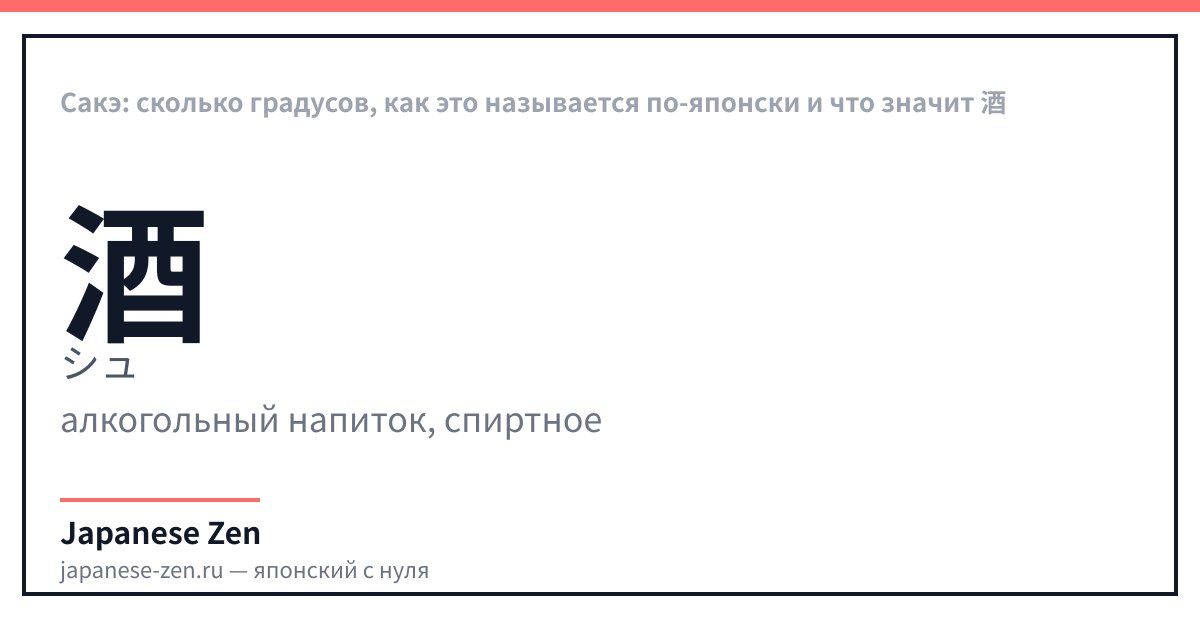
酒 — значение: alcoholic drink, liquor — онъёми: シュ — кунъёми: さけ、さか- — 10 штрих(ов). 酒 — "alcoholic drink" in the broadest sense: the same character appears in 酒屋 (sakaya) "liquor store" and in 日本酒 (nihonshu) — already referring to the specific rice drink.
Shu, Sake, Saka — Three Readings of One Character
The on'yomi of 酒 is shu (シュ), and the kun'yomi is sake (さけ). The kun reading has a variant saka-, used when the character comes before another root in compound words: 酒屋 (sakaya) "liquor store," 酒場 (sakaba) "bar." On its own the word is pronounced sake, but paired with another word the sound changes to saka — a common phenomenon in Japanese at the junction of roots.
| Japanese | Reading | Translation |
|---|---|---|
| 酒 | sake · sake | Alcohol, sake |
| 日本酒 | nihonshu · nihonshu | Japanese rice drink |
| 酒屋 | sakaya · sakaya | Liquor store |
| 杜氏 | tōji · tōji | Head brewmaster at a sake brewery |
| 麹 | kōji · kōji | The mold that turns rice starch into sugar |
| 御酒 | miki · miki | An elevated word for sake, especially when offered to a deity |
Write 酒 along the guides — the character that in Japan means any alcoholic drink, not just the rice one.
FAQ
- How strong is sake?
- Bottled sake is usually 15–16% alcohol, and by law it must be under 22%. Right after fermentation it can reach nearly 20% — the drink is diluted with water to the desired level before bottling.
- Why is sake stronger than wine if both are made by fermentation?
- In grapes, the sugar for fermentation is already there, but rice starch is not directly accessible to yeast. So in sake, the koji mold turns starch into sugar at the same time as yeast turns sugar into alcohol. This parallel complex fermentation produces a higher alcohol content than ordinary wine or beer fermentation.
- How does nihonshu differ from seishu?
- Seishu (清酒) is the general legal name for a drink made from rice, koji, and water, including sake brewed outside Japan. Nihonshu (日本酒) is a narrower concept: since 2015 it has been a protected geographical indication for seishu brewed in Japan from Japanese rice. All nihonshu is seishu, but not the other way around.
- Is it true that "sake" in Japanese means any alcohol?
- Yes: the kanji 酒 in Japanese refers to alcohol in general, whether wine, beer, or whiskey. The rice drink that English speakers call "sake" is usually called nihonshu or seishu in Japan, and the word 酒 itself is not tied to rice.
- How does junmai differ from ginjo and daiginjo?
- Junmai is brewed only from rice, koji, and water, with no added alcohol, and there is no polishing threshold for it. Ginjo requires rice polished to at least 60%, and daiginjo to at least 50%: both may or may not have added alcohol. Deeper polishing and long cold fermentation give them a bright fruity aroma.
- Is amazake also alcoholic?
- Usually not: store-bought amazake made with rice koji contains less than 1% alcohol and under Japanese law is sold as a non-alcoholic drink, suitable even for children. But if it's made from the lees left after pressing sake, it can retain noticeably more alcohol — that version is less common.
Sources
Updated: 2026-09-15