Noh Theater: Masks, Slow Dance, and About 650 Years of History
Noh theater (能) is the oldest still-performing Japanese theater: an actor in a mask moves slowly to the singing of a chorus and the sound of a flute and drums, enacting stories of spirits, warriors, and abandoned women. The form was shaped in the 14th century by the actors Kan'ami and his son Zeami under the patronage of shogun Ashikaga Yoshimitsu, and about 650 years have passed since then.
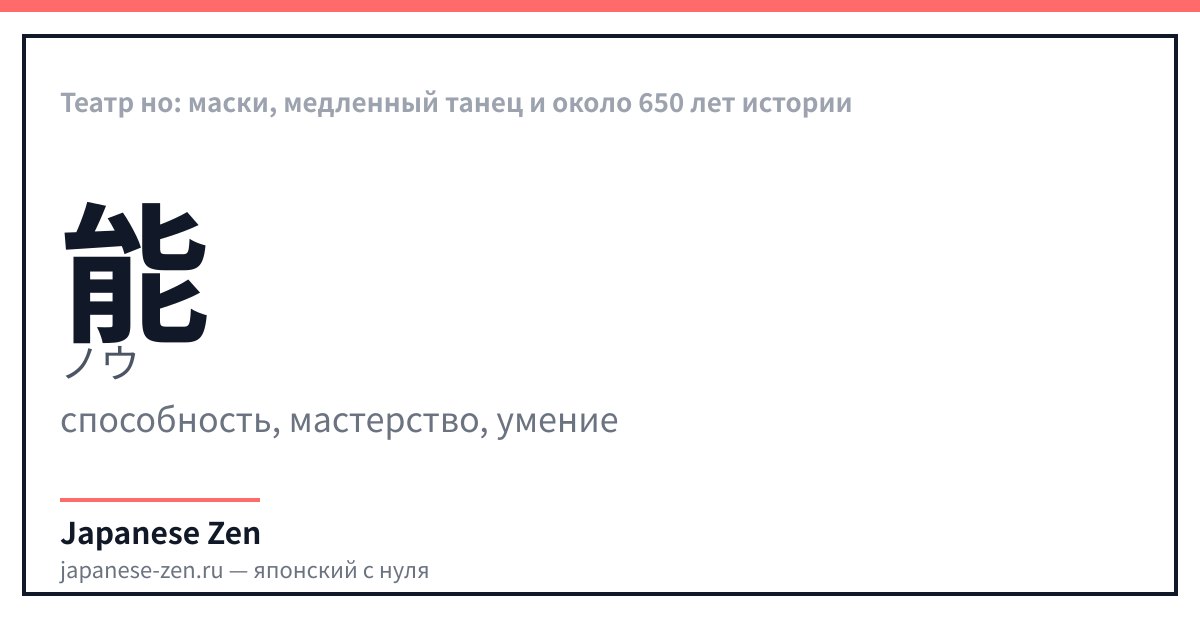
Noh theater is often confused with kabuki just because the words sound similar, though they are two different genres with different histories, pacing, and props. Let's break down who shite and waki are, why the same mask can look sad or angry depending on the tilt of the actor's head, and what the comic kyōgen interludes within a single program have to do with it.
How Kan'ami and Zeami Created a Slow Theater of Masks
In 1374 or 1375, the actor Kan'ami presented his troupe before the Imakumano Shrine in Kyoto. The young shogun Ashikaga Yoshimitsu was present—he was enchanted by the performance of Kan'ami's twelve-year-old son, Zeami, and from then on patronized both. Under this patronage, father and son perfected the strict form of the performance: the main character, the shite (仕手), often appears in a mask and embodies a spirit, warrior, or woman. The second character, the waki (脇), is usually a wandering monk who draws the shite into conversation. Behind them, throughout the play, a chorus sings and musicians play flute and drums, and the set is the same for any play—a pine tree painted on the kagamiita (鏡板) backdrop at the back of the stage.
Between noh plays, the troupe performs kyōgen (狂言)—short comic scenes with ordinary people and no masks, for contrast and a breather for the audience. Noh and kyōgen together are called by the general word nōgaku (能楽), and in 2001 UNESCO proclaimed nōgaku a Masterpiece of the Oral and Intangible Heritage of Humanity, and in 2008 inscribed it on the Representative List of the Intangible Cultural Heritage of Humanity.
Plots: Spirits, Ghosts, and Warriors
Many classical plays are called mugen-nō (夢幻能)—'noh of visions': a traveler meets an unusual person. In the second act, it turns out that this is the spirit of a dead warrior or an abandoned lover, who finally expresses what they had held inside after death.
能 — The Skill That Gave Its Name to the Whole Genre
能 — значение: ability, skill, proficiency — онъёми: ノウ — кунъёми: よ.く、あた.う — 10 штрих(ов). 能 — 'ability, skill': this same word is used for the whole genre. The same character appears in the common word 能力 (nōryoku) 'ability'.
能 meant 'skill, mastery' long before the theater and gradually became the name of the art itself—as opposed to ordinary words like 'performance' or 'spectacle'. Noh masks are called 能面 (nōmen): carvers distinguish about 60 basic types. The two most common are 小面 (ko-omote), the face of a young woman, and 翁 (okina), the face of an old deity from the most ancient ritual performance, which predates noh theater itself. The demoness mask hannya is also carved in this tradition, but it is used only in a few plots about jealousy and revenge.
Why the Noh Mask 'Changes Expression'
The wood itself is motionless, but the actor slightly lifts the mask—terasu (照らす)—and the face 'brightens', or lowers it—kumorasu (曇らす)—and the face 'darkens': the angle of light on the carved features changes the readable emotion. The skill of a noh actor is largely the ability to bring the mask to life with a single tilt of the head.
| Japanese | Reading | Translation |
|---|---|---|
| 能 | nō · nō | Noh theater |
| 能楽 | nōgaku · nōgaku | General term for noh and kyōgen |
| 能面 | nōmen · nōmen | Noh mask |
| 狂言 | kyōgen · kyōgen | Comic scenes between noh plays |
| 仕手 | shite · shite | Main character of the play |
| 幽玄 | yūgen · yūgen | 'Profound mystery'—the ideal of noh theater |
Write 能 along the guides—the character that gave its name to noh theater.
Noh Theater Is Not Kabuki and Not Only About Demons
- 'Noh and kabuki are the same thing.' Noh is a slow masked drama with a chorus and flute about spirits and warriors, while kabuki is a dynamic performance with an uncovered face and bold makeup; the genres developed in parallel, not one from the other.
- 'All noh masks are demonic.' Most masks depict ordinary people: young women, old men, monks, warriors. Demonic masks like hannya are used only in some plots.
- 'There is nothing funny in noh theater.' Between noh plays, comic kyōgen scenes are always performed—with ordinary people, simple language, and no masks—and together with noh they form a single nōgaku program.
FAQ
- What is noh theater?
- The oldest still-performing Japanese theater: an actor in a mask moves slowly to the singing of a chorus and the music of a flute and drums, enacting stories of spirits, warriors, and abandoned women. The form was shaped in the 14th century by Kan'ami and his son Zeami.
- How is noh theater different from kabuki?
- Noh is a slow masked drama with a chorus and spirits in the plots; kabuki is a dynamic performance with an uncovered face, bold makeup, and acrobatics. Both genres appeared at different times and developed in parallel, not one from the other.
- What are the masks in noh theater?
- Carvers distinguish about 60 basic types of noh masks: the young woman ko-omote, the old deity okina, warriors, monks, and only some plots use demonic masks like hannya. The actor's tilt of the mask changes the readable emotion.
- What is kyōgen?
- Short comic scenes performed between noh plays: ordinary people, the colloquial language of that era, and no masks. Noh and kyōgen together are called by the general word nōgaku—a single program of one performance.
- How is 'noh' written in kanji?
- 能, read as のう (nō)—'ability, skill'. The same character is used for a person's ability in general, and it gave noh theater its name as the art of the highest acting skill. In the word nōgaku (能楽)—the general name for noh and kyōgen—this same character stands next to 楽 'music, joy'.
Sources
Updated: 2026-09-14