Japanese Female Names and Their Meanings: 24 Names with Kanji
Japanese female names and their meanings are defined not by sound but by the chosen kanji: Sakura (桜) — "cherry blossom," Megumi (恵) — "blessing," Hanako (花子) — "flower child." The same name can be written with different characters, and the meaning changes with the writing. Classics are names ending in -ko like Keiko and Yoko, while today Himari, Yui, and Tsumugi are in fashion.
A Japanese name has no single "translation": the same sound can be written with several sets of kanji, and each choice changes the meaning. Let's look at a table of classic names like Yoko and Akiko and modern ones like Himari and Tsumugi, and see what characters they are built from. We'll explain which characters the law allows for a name, what changed in name registration in 2025, and why the -ko ending has fallen out of fashion.
Meanings of Japanese Female Names
Every Japanese name has a literal meaning — but not just one; it is exactly the meaning carried by the chosen kanji. The name Yuki, which sounds the same, can mean "snow" (雪) or "happiness" (幸): the sound is the same, the meaning is not. That's why in the table each name has one specific spelling and the meaning of those exact characters, not an abstract "translation."
| Name | Kanji | Reading | Meaning |
|---|---|---|---|
| Sakura | 桜 | さくら | "cherry blossom" |
| Yui | 結衣 | ゆい | "to tie" + "garment" |
| Aoi | 葵 | あおい | "hollyhock" (mallow) |
| Himari | 陽葵 | ひまり | "sun" + "hollyhock" |
| Rin | 凛 | りん | "strict, composed, full of dignity" |
| Mei | 芽依 | めい | "bud" + "to rely on" |
| Yuki | 雪 | ゆき | "snow" (also written 幸 — "happiness") |
| Haruka | 遥 | はるか | "distant" |
| Aiko | 愛子 | あいこ | "love" + "child" |
| Keiko | 恵子 | けいこ | "blessing, grace" + "child" |
| Yoko | 陽子 | ようこ | "sun" + "child" |
| Akiko | 明子 | あきこ | "bright, clear" + "child" |
| Hanako | 花子 | はなこ | "flower" + "child" |
| Megumi | 恵 | めぐみ | "blessing, grace, gift" |
| Nanami | 七海 | ななみ | "seven" + "sea" |
| Mio | 美緒 | みお | "beauty" + "thread, beginning" |
| Tsumugi | 紬 | つむぎ | "silk fabric woven from hand-spun thread" |
| Kaede | 楓 | かえで | "maple" |
| Hotaru | 蛍 | ほたる | "firefly" |
| Ai | 愛 | あい | "love" |
| Kaori | 香 | かおり | "fragrance" |
| Yume | 夢 | ゆめ | "dream" |
| Misaki | 美咲 | みさき | "beauty" + "to bloom" |
| Momo | 桃 | もも | "peach" |
One Name — Different Kanji
Yui is a good example: the name is written as 結衣 ("to tie" + "garment"), 由依 ("reason" + "to rely on"), or very simply 唯 ("the only one"). Three spellings sound the same but mean different things. Asking a Japanese person what characters their name is written with is not idle curiosity: it is the only way to understand what it means.
What Characters Female Names Are Built From
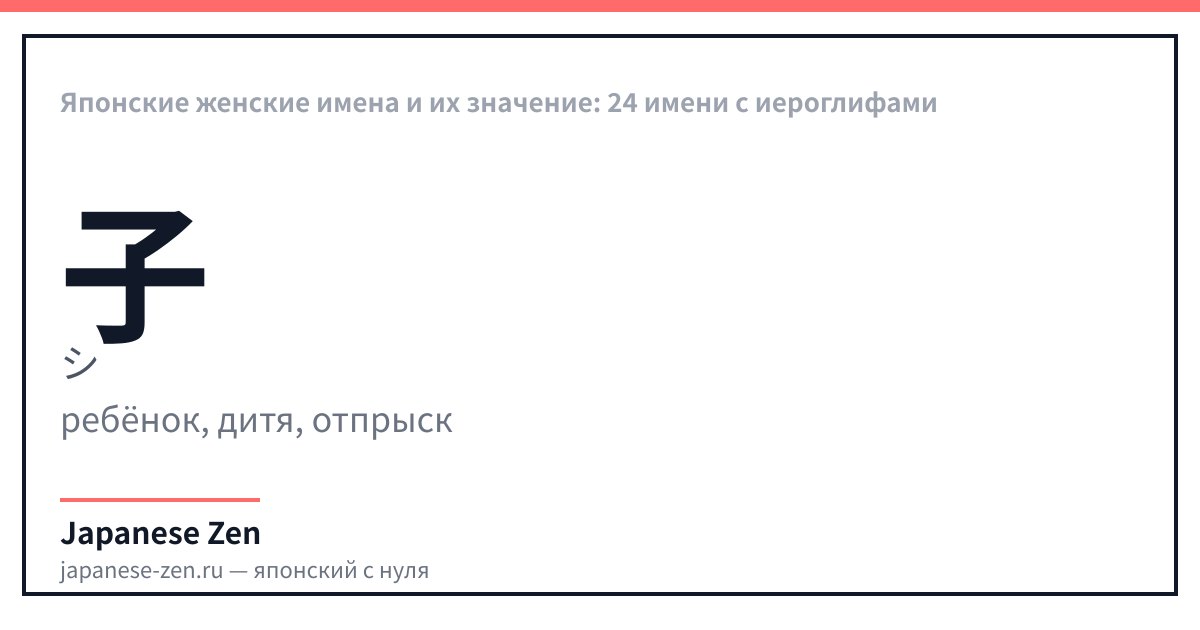
子 — значение: child, infant, offspring — онъёми: シ、ス、ツ — кунъёми: こ、-こ、ね — 3 штрих(ов). 子 — "child": a common final character in female names, as in 花子 (Hanako) or 恵子 (Keiko).
| Japanese | Reading | Translation |
|---|---|---|
| 子 | ko · ko | ending of many female names: "child" |
| 美 | mi · mi | "beauty" — a common element in female names |
| 花 | ka · ka | "flower," as in the name Hanako (花子) |
| 奈 | na · na | the character is valued for the sound "na"; it carries almost no meaning of its own in a name |
| 愛 | ai · ai | "love" — both a standalone name and a common element |
| 桜 | sakura · sakura | "cherry blossom" — a standalone female name |
Why Names Ending in -ko Have Fallen Out of Fashion
Until the 1960s, names ending in -ko (子) made up the majority of female names. Kazuko (和子) topped the Meiji Yasuda ranking 23 times between 1927 and 1952. Since the 1960s, the -ko fashion has declined, and in 1986 such names dropped entirely out of the top ten for the first time.
Write 子 along the guides — the character that ends many female names: Hanako, Keiko, Akiko.
How a Name for a Girl Is Chosen Today
According to the annual survey by the Meiji Yasuda insurance company, among newborn girls in 2025 the most common kanji spelling of a name was 翠 (read both "Sui" and "Midori"), and the most common reading was Ema. The character 愛 ("love") has remained the most used character in female names for the fourth year in a row.
- The law allows only characters from two official lists for a name — the 2,136 everyday 常用漢字 and about 863 additional "jimmeiyō kanji," totaling around 3,000 characters.
- Since May 26, 2025, the reading of a name is officially entered in the family register (戸籍) — previously the register stored the name only in kanji, without a reading.
- Names with unpredictable, "invented" readings are called kira-kira name (キラキラネーム) in Japan: キラキラ means "sparkling," ネーム is the English word name.
- The name of Nezuko, the heroine of Demon Slayer, also ends in -ko: 禰豆子. According to a popular fan interpretation, the characters 禰 (ancestral spirit shrine) and 豆 (beans) refer to the Setsubun ritual, when demons are driven away with beans; there is no official explanation from the manga author.
What Japanese People Put into a Name, and What the West Invented
Japanese parents really do choose characters with meaning: a wish is put into the name — that the daughter grow up bright (陽), loving (愛), or beautiful (美). Many also consult fortune-telling by stroke count (姓名判断). But the idea that a Japanese name is a ready-made "translation" with a single meaning or a prophecy about character is Western. Japanese people themselves see a name as the parents' wish, not destiny.
Common Myths About Female Names
- "A Japanese name has one meaning" — no: the meaning is set by the chosen kanji, not the sound. Yuki is "snow" (雪) or "happiness" (幸) depending on the spelling, and both versions are equally valid.
- "Sakura is the most popular name for Japanese girls" — no, that's more of an anime image. In the Meiji Yasuda ranking for 2025, the top spot for spelling is 翠, and for reading it's Ema.
- "You can use any kanji for a name as long as it looks nice" — no, the law allows only characters from official lists: a name with an arbitrary kanji simply won't be registered at the municipal office.
- "A Japanese name can be chosen by translating from English" — that would produce a set of characters based on sound, not a name with meaning: Japanese names are assembled anew from kanji, not translated from a ready-made word.
FAQ
- What do Japanese female names mean?
- The meaning is set by the specific kanji, not the sound: the same name written with different characters can mean different things. Megumi (恵) is "blessing, grace," and Hanako (花子) literally is "flower child." Before talking about the meaning of a name, you need to know what kanji it is written with.
- What was the most popular name for Japanese girls in 2025?
- The Meiji Yasuda insurance company's 2025 ranking puts the spelling 翠 in first place — it is read "Sui" or "Midori" — while Ema leads in reading. The most common kanji in girls' names is 愛 ("love"): it has been first for the fourth year in a row.
- Why is the same Japanese name written with different kanji?
- Because sound and writing in Japanese are not rigidly linked: parents choose characters for the desired meaning and a "beautiful" stroke count. The name Yui is written as 結衣 ("to tie" + "garment"), 由依 ("reason" + "to rely on"), or simply 唯 ("the only one") — it sounds the same but means different things.
- Why are names ending in -ko rare now?
- Until the 1960s, names ending in -ko (子) made up the majority of female names: Kazuko (和子) was first in the Meiji Yasuda ranking 23 times between 1927 and 1952. Then parents began choosing single-character and more sonorous names, and in 1986 names ending in -ko dropped entirely out of the top ten for the first time.
- Can any kanji be used in a girl's name?
- No: the law allows only characters from two official lists for a name — the 2,136 everyday 常用漢字 and about 863 additional "jimmeiyō kanji," totaling around 3,000 characters. Since May 26, 2025, another requirement has been added to the kanji — the reading of the name is officially entered in the family register (戸籍).
- What does the name Nezuko from Demon Slayer mean?
- There is no official explanation from the manga author. The name is written 禰豆子 and ends in -ko, like many female names; according to a popular fan interpretation, the characters 禰 (ancestral spirit shrine) and 豆 (beans) refer to the Setsubun ritual, when demons are driven away with beans.
Sources
Updated: 2026-09-13